The overall tone indicates strong support and curiosity about the study, with examples like support for its novel approach in identifying key pathways involved in spina bifida, and references to its potential impact on medical genetics. Words like 'groundbreaking' and 'significant' highlight enthusiasm while the mention of detailed methods shows active engagement with scientific aspects.
AgreementModerate agreement
Most discussions express support for the significance of the publication, citing its potential to advance understanding of genetic factors in spina bifida.
InterestHigh interest
The topics attract high interest, with many posts mentioning pathways, genetic analysis, and the implications for medical research.
EngagementModerate engagement
Posts often delve into the methodologies, like system biology and machine learning, showing active engagement with the scientific content.
ImpactModerate impact
The discussions reflect recognition of the research’s potential impact in genetic diagnostics and informing future therapies, though some remain speculative about immediate applications.
Abstract in brief
This study investigates the genetic factors behind spina bifida (SB), a serious birth defect, by analyzing whole-genome sequences of 298 cases and controls, focusing on gene disruptions and regulatory regions.
Using systems biology and machine learning, the researchers identified key pathways linked to SB, including those involved in inflammation, immune response, cytoskeletal regulation, and transcription, which may influence how the condition develops.
The findings highlight the importance of both coding and noncoding genetic variants, especially in regulatory regions of embryonic development genes, providing a new comprehensive approach to understanding complex genetic disorders like SB.]
Jun 19, 2025 · 78 likes · 19 shares · 8,124 followersView post →
PW
Pestinfo Wiki
@PestinfoW · X
The ecology of the invasive spotted lanternfly (Lycorma delicatula), a polyphagous #pest in North America. What are the most important wild and cultivated woody hosts? Article in Env. Ent. by @LJ_nixon19 and others like @BMSBresearch - https://t.co/Yh7HCGyPQa https://t.co/c1pjo43vsO
Oct 22, 2023 · 38 likes · 9 shares · 1,442 followersView post →
S
SciShow
@SciShow · X
Locusts are a HUGE threat to agriculture all over the world... except in North America. They disappeared from the continent in the 1880s, and were potentially a victim of colonization.
https://t.co/D0xNNXGcvn https://t.co/y38QzKkiGW
Aug 31, 2020 · 24 likes · 1 share · 113,786 followersView post →
AC
Ana R. Cabrera
@arcabrera78 · X
I’m happy to share that the manuscript me and my colleagues at @Bayer4CropsUS
Oct 16, 2024 · 16 likes · 4 shares · 182 followersView post →
KP
Karan Chahal, MS, PhD
@Karan_PlantPath · X
Happy to share new article from a #CollaborativeResearch with @MSUEntomology's #ForestEntomology lab! We identified #InsectVectors of #OakWilt
Oct 21, 2024 · 15 likes · 3 shares · 1,184 followersView post →
JB
Jeff Bradshaw
@true_bug · X
Finally published a project with @PetersonInsects , @BobWrightUNL , and several other wonderful people. In summary: maintaining a miniature wasp colony for deployment toward the biological control of western bean cutworm in western Nebraska was difficult. https://t.co/Q6X5Ce2eHZ
Nov 17, 2024 · 13 likes · 6 shares · 1,597 followersView post →
Locusts are a major agricultural pest except in North America. What happened to the Rocky Mountain locusts that once swarmed this continent? Researchers believe that colonization of the North American West may have…
In this episode, Ed discusses the Soybean tentiform leafminer, an emergent pest affecting soybeans, with Dr. Bob Koch from the University of Minnesota. Learn about its biology, impact, and research advancements in…
In this episode, Ed discusses the Soybean tentiform leafminer, an emergent insect pest of soybean, with Dr. Bob Koch from the University of Minnesota. The video explores its pest dynamics, highlighting recent studies…
Japanese Barberry promotes environments favorable for ticks and mice, increasing Lyme disease risk. Removing invasive plants helps protect ecosystems and human health.
This video discusses biorational control options for the Western Grapeleaf Skeletonizer, a rising pest in California. It covers parasitoids, granuloviruses, and pheromones used in integrated pest management.
Subscribe for weekly Zenthanol videos. This video covers the biology of Amyelois transitella, a key pest in nut crops, and discusses modern methods like radio frequency treatments and pheromone trapping for pest…
In this episode, Ed discusses the soybean tentiform leafminer, an emergent insect pest of soybean with Dr. Bob Koch from the University of Minnesota. The video highlights genetic research techniques, including…
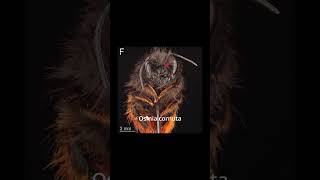
Osmia cornuta has been confirmed to be established in British Columbia and entomologists are sounding the alarm. They are wrong and here's why. Good research though.
Ed discusses the Soybean tentiform leafminer, an emergent insect pest of soybean, with Dr. Bob Koch of the University of Minnesota. This video highlights the importance of monitoring this pest and its implications on…
Excited to share our latest publication on volatile-mediated interactions between plants and insect herbivores, pollinators, and natural enemies!! Here, we review the literature on volatile multifunctionality and propose new ideas! https://t.co/JMx1r9EBR4
Lagos-Kutz DM, et al. 2025. Monitoring Eastern flower thrips and soybean thrips (Thysanoptera: Thripidae) and the generalist predator, insidious flower bug (Hemiptera: Anthocoridae) in the American Midwest Suction Trap Network. Environmental Entomology. https://t.co/xkCogW8IMD
Excited to share my latest publication with @entothompson.bsky.social and Emily Russvage. Here, we reviewed how plants leverage multifunctional volatiles to mediate plant-insect interactions simultaneously with multiple insect groups in agroecosystems. Check it out!
New paper out! Digestion of fruit by black soldier fly alters VOC production. Thanks to my colleagues at @FliesFacility for bringing me onto this project! We did a great job :)
#sustainability #blacksoldierfly
https://t.co/4sUil5B0kl
Sep 17, 2025 · 1 like · 1 share · 11 followersView post →
EL
Edel Pérez-López
@Edel_PLopez · X
Seasonal phenology of Empoasca fabae (Hemiptera: Cicadellidae) in Québec, Canada https://t.co/YA0NYamOEC
Digestion of fruit wastes by black soldier fly (Diptera: Stratiomyidae) larvae alters moisture content and emission of greenhouse gases, noxious gases, and odors https://t.co/ncwDXPjw2X
Exploring dynamics of nature’s raincoat: comparing how nano-scale silk fibers produced by dryland and tropical species of webspinning insects interact with water https://t.co/qbIa0cnzLK
#LiteratureNotice West et al. Reclaimed oil pads harbor higher #Carabidae ( #Coleoptera) abundances and species richness—but fall short of reestablishing the native prairie community doi.org/10.1093/ee/n... #Beetle #Beetles #GroundBeetles #CommunityEcology
Mycorrhizal fungus colonization on maize seedlings diminishes oviposition of fall armyworm females and affect larval performance https://t.co/9N78Fn9nlS
My recent emerald ash borer paper. Investigating how adult beetles feeding on different species of ash leaves impacts their reproductive success!
https://t.co/0a4PabukmH https://t.co/TRkKBY3KUN
#LiteratureNotice Audley et al. Woodborers and wood-decay related beetle responses to a major forest disturbance event in the central and southern Sierra Nevada, California doi.org/10.1093/ee/n... #Beetle #Beetles #DisturbanceEcology
#LiteratureNotice Schmitt et al. #Phenology and voltinism of the Asian #LonghornBeetles ( #Coleoptera: #Cerambycidae) in South Carolina, United States doi.org/10.1093/ee/n... #Beetle #Beetles #InvasiveSpecies
Excited with our new paper: “Wild bees show local spatial and temporal dynamics in southeastern US blueberry farmscapes”. We found that bee composition fluctuate seasonally, with distinct patterns across field interiors, edges, and adjacent forests.
https://t.co/TzXNN40uAU
New paper in Environmental Entomology using @gbif.org mediated data:
Pacific Northwest native plants and native cultivars, part I: pollinator visitation
While using larger tags in (pollinator )research over the last decades already, these tiny tags open up many more possibilities for experiments with much smaller species (not only
RT @true_bug: Finally published a project with @PetersonInsects , @BobWrightUNL , and several other wonderful people. In summary: maintaini…
Nov 18, 2024 · 6 shares · 4,201 followersView post →
JP
Julie Peterson
@PetersonInsects · X
RT @true_bug: Finally published a project with @PetersonInsects , @BobWrightUNL , and several other wonderful people. In summary: maintaini…
Nov 17, 2024 · 6 shares · 2,000 followersView post →
RW
Robert Wright
@BobWrightUNL · X
RT @true_bug: Finally published a project with @PetersonInsects , @BobWrightUNL , and several other wonderful people. In summary: maintaini…
Nov 17, 2024 · 6 shares · 1,728 followersView post →
JB
Jeff Bradshaw
@true_bug · X
Finally published a project with @PetersonInsects , @BobWrightUNL , and several other wonderful people. In summary: maintaining a miniature wasp colony for deployment toward the biological control of western bean cutworm in western Nebraska was difficult. https://t.co/Q6X5Ce2eHZ
Nov 17, 2024 · 13 likes · 6 shares · 1,597 followersView post →
KP
Karen Gomez, PhD
@PlantGomezlab · X
RT @UNCOBio: Congratulations to Eric Januszkiewicz on his recent cover photograph for "Environmental Ecology." His beautiful image features…
Congratulations to Eric Januszkiewicz on his recent cover photograph for "Environmental Ecology." His beautiful image features a pea aphid studied by the Gomez Lab: https://t.co/xmGNQIkIZn https://t.co/2BEryrDrLj
Nov 6, 2024 · 2 likes · 1 share · 170 followersView post →
EA
Entomological Society of America
@EntsocAmerica · X
RT @arcabrera78: I’m happy to share that the manuscript me and my colleagues at @Bayer4CropsUS
Oct 28, 2024 · 4 shares · 32,930 followersView post →
EA
Entomological Society of America
@EntsocAmerica · X
RT @Karan_PlantPath: Happy to share new article from a #CollaborativeResearch with @MSUEntomology's #ForestEntomology lab! We identified #I…
Oct 23, 2024 · 3 shares · 32,930 followersView post →
NS
Nancy Sharma
@Nancy_PhytoPath · X
RT @Karan_PlantPath: Happy to share new article from a #CollaborativeResearch with @MSUEntomology's #ForestEntomology lab! We identified #I…
Oct 22, 2024 · 3 shares · 154 followersView post →
RH
Ross Hatlen
@HatlenRoss · X
RT @Karan_PlantPath: Happy to share new article from a #CollaborativeResearch with @MSUEntomology's #ForestEntomology lab! We identified #I…
Oct 22, 2024 · 3 shares · 181 followersView post →
KP
Karan Chahal, MS, PhD
@Karan_PlantPath · X
Happy to share new article from a #CollaborativeResearch with @MSUEntomology's #ForestEntomology lab! We identified #InsectVectors of #OakWilt
Oct 21, 2024 · 15 likes · 3 shares · 1,184 followersView post →
KV
Kashish Verma
@kashishverma_ · X
RT @arcabrera78: I’m happy to share that the manuscript me and my colleagues at @Bayer4CropsUS
Oct 17, 2024 · 4 shares · 274 followersView post →
MR
Muhammad Rizwan
@MuhammadRizwanj · X
RT @arcabrera78: I’m happy to share that the manuscript me and my colleagues at @Bayer4CropsUS
RT @arcabrera78: I’m happy to share that the manuscript me and my colleagues at @Bayer4CropsUS
Oct 16, 2024 · 4 shares · 863 followersView post →
AC
Ana R. Cabrera
@arcabrera78 · X
I’m happy to share that the manuscript me and my colleagues at @Bayer4CropsUS
Oct 16, 2024 · 16 likes · 4 shares · 182 followersView post →
JK
James V. Kohl
@microRNApro · X
https://t.co/VGZIzhbZDp 9/27/24 Pattern recognition links the claims of the 2024 Nobel Laureates in Physiology or Medicine to 6000 years of light-matter linked ecological adaptations across kingdoms sans moronic theories.
@Kasiality @minicararnold https://t.co/HyEWgdEi5i this was the article you were referring to and while it agrees theyre not the end of the world as many originally worried about they still have an adverse effect on non invasive plants. I have no idea where you got it from that it doesnt damage plants
New publication! Wireworm species associated with corn and soybean agroecosystems in Ontario, Canada https://t.co/SKKSqAPHaA. Thanks to the growers who participated in that huge seed treatment study a few years ago @GrainFarmers @OntarioSoilCrop
Some avocado types, like 'Malama,' have fewer pests, while others, like 'Kahalu’u' and 'Sharwil,' get more bugs. Hybrid trees often have worse infestations, and sugary leaves attract more bugs. https://t.co/dJYdZgAVgS https://t.co/uOGSWbpPT7
RT @CalebJohnWilson: New paper is out now: We examined how tree diversity and ash density influenced emerald ash borer biocontrol in post-i…
Jun 25, 2024 · 4 shares · 179 followersView post →
AH
Alison Schreiber, PhD (she/her)
@alisonmarie526 · X
RT @CalebJohnWilson: New paper is out now: We examined how tree diversity and ash density influenced emerald ash borer biocontrol in post-i…
Jun 25, 2024 · 4 shares · 261 followersView post →
CW
Caleb J. Wilson
@CalebJohnWilson · X
New paper is out now: We examined how tree diversity and ash density influenced emerald ash borer biocontrol in post-invasion forests.
https://t.co/Jhfx7FQHbj
Jun 25, 2024 · 6 likes · 4 shares · 181 followersView post →
GR
Gary Ritchison
@GaryRitchison · X
Tree species richness and ash density have variable effects on emerald ash borer biological control by woodpeckers and parasitoid wasps in post-invasion white ash stands
https://t.co/r8zpRKP8BG
Optimizing trapping of the invasive brown marmorated stink bug (#Halyomorpha halys), a destructive and polyphagous #pest in North America - article in Environmental Entomology by P. Glynn Tillman and others like @kesheimerIPM - https://t.co/MWGDjrTeUn
Researchers counted nymphal ticks around 42 properties in Connecticut, finding differences in abundance based on types of landscaping and adjoining landscaping types. This information can improve targeted use acaricides. https://t.co/5YOwK4i6gc
Where do the corn earworm in Ontario originate? Mostly south of us. More sampling to come in eastern Canada in the next few years!
Continental-scale migration patterns and origin of Helicoverpa zea (Lepidoptera: Noctuidae) based on a biogeochemical marker https://t.co/8KNRRPXUMu
[3] Murman K et al. 2020. Distribution, Survival, and Development of Spotted Lanternfly on Host Plants Found in North America. Environmental Entomology, Volume 49, Issue 6. Available from https://t.co/yuMnUTPANa (accessed February 13, 2024).
[3] Murman K et al. 2020. Distribution, Survival, and Development of Spotted Lanternfly on Host Plants Found in North America. Environmental Entomology, Volume 49, Issue 6. Available from https://t.co/yuMnUTPANa (accessed February 13, 2024).
#LiteratureNotice Wang et al. Identification and Expression Profiles of Putative Soluble Chemoreception Proteins from Lasioderma serricorne (#Coleoptera: #Anobiidae) Antennal Transcriptome
doi.org/10.1093/ee/n...
#Beetle #Beetles #WoodwormBeetles #ChemicalCommunication
Oct 23, 2023 · 4 shares · 1,779 followersView post →
AS
Acarological Society
@AcarologicalSoc · X
Oct 23, 2023 · 9 likes · 4 shares · 901 followersView post →
GM
Giuseppe Mazza
@Giusepp96695724 · X
RT @PestinfoW: The ecology of the invasive spotted lanternfly (Lycorma delicatula), a polyphagous #pest in North America. What are the most…
Oct 23, 2023 · 9 shares · 123 followersView post →
PW
Pestinfo Wiki
@PestinfoW · X
The ecology of the invasive spotted lanternfly (Lycorma delicatula), a polyphagous #pest in North America. What are the most important wild and cultivated woody hosts? Article in Env. Ent. by @LJ_nixon19 and others like @BMSBresearch - https://t.co/Yh7HCGyPQa https://t.co/c1pjo43vsO
Oct 22, 2023 · 38 likes · 9 shares · 1,442 followersView post →
NB
Nadège Belouard
@NBelouard · X
RT @MRHelmus: This invasive pest is promiscuous at its core.
Multiple paternity increases from edge to core of the spotted lanternfly invas…
This invasive pest is promiscuous at its core.
Multiple paternity increases from edge to core of the spotted lanternfly invasive range. New surprising finding from an awesome former postdoc @NBelouard published by @EntsocAmerica https://t.co/RARL4z0yW6 #ecology #entomology https://t.co/w0rZnO3IQJ
New in Environmental Entomology using GBIF-mediated data: Local habitat type influences bumble bee pathogen loads and bee species distributions #CiteTheDOI: ✅ https://t.co/v58cxnbWUA
New in Environmental Entomology using GBIF-mediated data: The Invasion History of Diaphorina citri (Hemiptera: Liviidae) in Puerto Rico: Past, Present, and Future Perspectives
@sfiwc22 I think we may have a few stories!! Here is a photo of an EAB we excavated from a pupal chamber in our research (https://t.co/XdbXRvAhPY) https://t.co/mNJdwAY0kj
Feb 3, 2023 · 3 likes · 1 share · 162 followersView post →
PC
Paul CaraDonna
@paulcaradonna · X
RT @jacquelyn_fitz: "Ecological Drivers and Consequences of Bumble Bee Body Size Variation"
https://t.co/I18tKqgoA4
Pleased to share our…
@YetoLovesYeta @v2029 @ReplyGuyReviews @UselloStore Just ran across this today. I bet they could easily have said the same about locusts as you claim about mosquitoes. No one even noticed they were gone:
https://t.co/NuDEad0Nm3
RT @ksuhre: New @PNASNews paper on #SpinaBifida led by Betsy Ross from @WeillCornell and contributions from @WCMEnglanderIPM and @WCMQatar:…
Jan 24, 2022 · 3 shares · 1,391 followersView post →
WM
WCM Englander Institute for Precision Medicine
@WCMEnglanderIPM · X
RT @ksuhre: New @PNASNews paper on #SpinaBifida led by Betsy Ross from @WeillCornell and contributions from @WCMEnglanderIPM and @WCMQatar:…
Jan 24, 2022 · 3 shares · 6,173 followersView post →
OE
Olivier Elemento
@ElementoLab · X
RT @ksuhre: New @PNASNews paper on #SpinaBifida led by Betsy Ross from @WeillCornell and contributions from @WCMEnglanderIPM and @WCMQatar:…
Jan 24, 2022 · 3 shares · 6,250 followersView post →
KS
Karsten Suhre
@ksuhre · X
New @PNASNews paper on #SpinaBifida led by Betsy Ross from @WeillCornell and contributions from @WCMEnglanderIPM and @WCMQatar: "Systems biology analysis of human genomes points to key pathways conferring spina bifida risk" https://t.co/DSuPfmRPJq @SpinaBifidaAssn
Jan 24, 2022 · 6 likes · 3 shares · 2,565 followersView post →
B
Biology
@Elec_J_Bio · X
Systems biology analysis of human genomes points to key pathways conferring spina #bifida risk
https://t.co/RTlvDMYqjn
It’s not unusual for the US to relocate an invasive species... especially if there are crops they want destroyed to increase dependence on the US for a food source.
I think the locusts that “disappeared” from America got relocated to India and Kenya.
https://t.co/kqCYN0Jp3Z https://t.co/IpDBM5tPs5
Practical application of #Methylsalicylate for attracting #predators of #insect #pests remains elusive - see the study in #cotton at USDA Maricopa, Arizona (@USDA_ARS) published in Environmental Entomology (@EntsocAmerica) - https://t.co/NnwJUmJar8 https://t.co/Z7VexJqGMa
Jun 4, 2021 · 1 like · 1 share · 1,442 followersView post →
ሣገ
ሣህለ ገብርኤል።
@AAAquaponics · X
How Farmers Accidentally Killed Off North America's Locusts https://t.co/eJWLUg3xIj via @SciShow #HerdMentality https://t.co/ibPCUd3kZB
Locusts are a HUGE threat to agriculture all over the world... except in North America. They disappeared from the continent in the 1880s, and were potentially a victim of colonization.
https://t.co/D0xNNXGcvn https://t.co/y38QzKkiGW
Aug 31, 2020 · 24 likes · 1 share · 113,786 followersView post →
TG
Two Minutes in the Garden
@GardenMinutes · X
Japanese beetle traps that were yellow or clear were more likely to catch bees than traps of other colours (mentioned on the last episode)
https://t.co/qdLe4vlXGB https://t.co/jyvBpa3q58
RT @microbe_article: Microbes associated with black soldier fly (diptera: stratiomiidae) degradation of food waste. - Shelomi M et al. - ht…
Jan 10, 2020 · 1 share · 1,151 followersView post →
MA
Microbiome Articles
@microbe_article · X
Microbes associated with black soldier fly (diptera: stratiomiidae) degradation of food waste. - Shelomi M et al. - https://t.co/2XaxrN2Vgc #microbiome
Jan 7, 2020 · 1 like · 1 share · 7,156 followersView post →
MA
Microbiome Articles
@microbe_article · X
Bombus (hymenoptera: apidae) microcolonies as a tool for biological understanding and pesticide risk assessment. - Klinger EG et al. - https://t.co/IT9K8pvOQZ #microbiome





 KK
 MS
 DK
 エ
 コ
 T虫
 PL