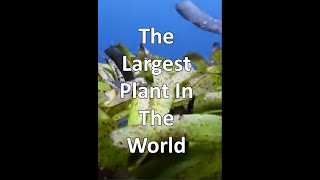
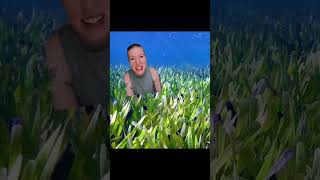
Various discussions highlight intriguing facts about the world's largest living organism, referring to the seagrass clone in Shark Bay. Phrases like 'super fascinating' and 'game changer' illustrate the enthusiastic tone, while references to its ecological significance signal the community's perception of the research's broader impact.
AgreementStrong agreement
Many discussions express strong support for the study's findings about seagrass expansion strategies.
InterestHigh interest
Contributors demonstrate high levels of curiosity, as evidenced by the sharing of related research and facts.
EngagementModerate engagement
While most discussions provide basic information, a few delve deeper into methodologies and evolutionary implications.
ImpactHigh impact
The overall sentiment indicates a belief in the significant ecological implications of the publication.
Abstract in brief
Extensive polyploid clonality has enabled seagrass, particularly Poseidon's ribbon weed in Shark Bay, Australia, to thrive in new submerged environments despite challenges like temperature and salinity extremes.
Research identified a rare, widespread polyploid clone across 180 km, which outcompeted diploid clones that were more geographically restricted.
The emergence of this polyploid clone likely resulted from whole-genome duplication and adaptations that took place over the last 8,500 years, allowing it to spread successfully into increasingly stressful habitats.
[原著論文]
Jane M. Edgeloe, et al. "Extensive polyploid clonality was a successful strategy for seagrass to expand into a newly submerged environment". Proceedings of the Royal Society B, 2022, 289, 1976. DOI: 10.1098/rspb.2022.0538
https://t.co/5O9UbKneQz
Jun 3, 2022 · 25 likes · 3 shares · 44,761 followersView post →
Jun 3, 2022 · 21 likes · 3 shares · 44,761 followersView post →
M
Micah
@nicejewishbutch · X
And the fact that a single plant of Posidonia australis (aka ribbon weed) is ~112 miles long is also insane. INSANE! This is a seagrass stan account!!!!!!!!! I wish I could breathe underwater so I could take a nap in a seagrass meadow
https://t.co/vxS3FICOTC
Jun 14, 2022 · 19 likes · 3,816 followersView post →
RP
Royal Society Publishing
@RSocPublishing · X
At no.2 on our list of 2022's most popular papers: Researchers discover the largest plant on Earth – estimated to be at least 4,500 years old.
Read the article in #ProcB: https://t.co/CqrxAYsu24 https://t.co/Pnfx1XoFUz
Dec 30, 2022 · 14 likes · 8 shares · 38,713 followersView post →
شا
شرف السفياني
@sharafalsofiani · X
يعتقد العلماء الأستراليون أنهم اكتشفوا أكبر نبات معمر في العالم عمره حوالي 4500 عام تقريباً.
وتم تحديد موقع الأعشاب البحرية القديمة في خليج القرش غرب استراليا.
والتي تمتد عبر (180 كم) من قبل باحثين من جامعة غرب أستراليا (UWA) وجامعة فليندرز.
تفاصيل البحث:
https://t.co/RzQILVs2on https://t.co/0LgsOhGB7K
Jun 17, 2022 · 10 likes · 24,310 followersView post →
RP
Royal Society Publishing
@RSocPublishing · X
One of #ProcB most read papers - Extensive polyploid clonality was a successful strategy for #seagrass to expand into a newly submerged environment #OpenAccess https://t.co/9D8a0Y6oPg https://t.co/yufQF7EpyG
The survey was carried out in Shark Bay, Australia, revealing how extensive polyploid clonality has enabled seagrass, particularly Poseidon's ribbon weed, to thrive in newly submerged environments. This study uncovers…
The biggest plant is a type of seagrass called Poseidon's ribbon weed. This remarkable clonal seagrass covers an area of 70 miles (180 km) and has successfully adapted to increasingly submerged environments through…
On this day, we delve into the role of extensive polyploid clonality in seagrass expansion. Particularly, the Poseidon's ribbon weed in Shark Bay thrives in submerged environments, effectively outcompeting diploid…
Check out seminar "Extensive polyploid clonality was a successful strategy for seagrass to..." presented by Dr. Elizabeth A. Sinclair and Jane Edgeloe @SeagrassLiz
@jane_edgeloe @BiolSci_UWA @RSocPublishing
Extensive polyploid clonality was a successful strategy for #seagrass to expand into a newly submerged environment #ProcB #WorldSeagrassDay https://t.co/E8dqiOoAA4 #OpenAccess https://t.co/DWrFNwc19M
Mar 1, 2023 · 1 like · 38,713 followersView post →
J
JimvanBelzen
@JimvanBelzen · X
RT @RSocPublishing: At no.2 on our list of 2022's most popular papers: Researchers discover the largest plant on Earth – estimated to be at…
Dec 30, 2022 · 8 shares · 1,203 followersView post →
BL
bingqing liu
@bingqingliu8 · X
RT @RSocPublishing: At no.2 on our list of 2022's most popular papers: Researchers discover the largest plant on Earth – estimated to be at…
Dec 30, 2022 · 8 shares · 214 followersView post →
PJ
priya joseph
@ayirpelle · X
RT @RSocPublishing: At no.2 on our list of 2022's most popular papers: Researchers discover the largest plant on Earth – estimated to be at…
Dec 30, 2022 · 8 shares · 4,927 followersView post →
CC
Coastal & Estuarine Research Federation (CERF)
@CERFScience · X
RT @RSocPublishing: At no.2 on our list of 2022's most popular papers: Researchers discover the largest plant on Earth – estimated to be at…
Dec 30, 2022 · 8 shares · 5,203 followersView post →
CS
Consortium of Aquatic Science Societies
@CASSocieties · X
RT @RSocPublishing: At no.2 on our list of 2022's most popular papers: Researchers discover the largest plant on Earth – estimated to be at…
Dec 30, 2022 · 8 shares · 800 followersView post →
MA
Mark Allen
@MarkAll69242372 · X
RT @RSocPublishing: At no.2 on our list of 2022's most popular papers: Researchers discover the largest plant on Earth – estimated to be at…
Dec 30, 2022 · 8 shares · 277 followersView post →
RP
Royal Society Publishing
@RSocPublishing · X
At no.2 on our list of 2022's most popular papers: Researchers discover the largest plant on Earth – estimated to be at least 4,500 years old.
Read the article in #ProcB: https://t.co/CqrxAYsu24 https://t.co/Pnfx1XoFUz
Dec 30, 2022 · 14 likes · 8 shares · 38,713 followersView post →
PD
Peter Davidson
@petedavo_au · X
RT @SeagrassLiz: You've no doubt heard the world’s largest plant is a #seagrass (https://t.co/0lhpu98WNG…)! Here’s the science behind how w…
Dec 23, 2022 · 46 shares · 1,000 followersView post →
AH
ACTi Hub
@ACTi_Hub · X
RT @RSocPublishing: #ProcB's Most Read paper of 2022 - 'Largest plant on Earth' about 4 500 years old and a #seagrass polyploid clone has c…
#ProcB's Most Read paper of 2022 - 'Largest plant on Earth' about 4 500 years old and a #seagrass polyploid clone has colonised a 180km region #Evolution https://t.co/4UsBe6Etni #OpenAccess #BES2022 https://t.co/FT7OdpfEj5
Dec 18, 2022 · 4 likes · 1 share · 38,713 followersView post →
WD
waqar dahri
@Dahri85Waqar · X
RT @angryhacademic: Fun fact: the worlds largest known living organism is a specimen of Posidonia australis seagrass, found in Western Aust…
Nov 25, 2022 · 6 shares · 457 followersView post →
MH
Michelle L Hall
@MichelleLHall6 · X
RT @RSocPublishing: #ProcB's Most Read paper of 2022 - 'Largest plant on Earth' about 4 500 years old and a #seagrass polyploid clone has c…
Nov 15, 2022 · 4 shares · 637 followersView post →
PH
Professor John R. Hutchinson
@JohnRHutchinson · X
RT @RSocPublishing: #ProcB's Most Read paper of 2022 - 'Largest plant on Earth' about 4 500 years old and a #seagrass polyploid clone has c…
Nov 15, 2022 · 4 shares · 14,067 followersView post →
H念
H.E. Lady M.J. Santos 念真青山
@mj_santos · X
RT @RSocPublishing: #ProcB's Most Read paper of 2022 - 'Largest plant on Earth' about 4 500 years old and a #seagrass polyploid clone has c…
Nov 15, 2022 · 4 shares · 3,280 followersView post →
RP
Royal Society Publishing
@RSocPublishing · X
#ProcB's Most Read paper of 2022 - 'Largest plant on Earth' about 4 500 years old and a #seagrass polyploid clone has colonised a 180km region #Evolution https://t.co/4UsBe6Etni #OpenAccess https://t.co/wQ620zNIKm
Nov 15, 2022 · 9 likes · 4 shares · 38,713 followersView post →
AA
ANDRADE_ACS
@ANDRADEACS1 · X
RT @SeagrassLiz: You've no doubt heard the world’s largest plant is a #seagrass (https://t.co/0lhpu98WNG…)! Here’s the science behind how w…
Oct 27, 2022 · 46 shares · 166 followersView post →
JG
Jason Gilchrist
@jgilchrist13 · X
RT @RSocPublishing: #ProcB's Most Read paper of 2022 - 'Largest plant on Earth' about 4 500 years old and a #seagrass polyploid clone has c…
Oct 21, 2022 · 3 shares · 2,681 followersView post →
原
原 拓史
@haltaq · X
RT @RSocPublishing: #ProcB's Most Read paper of 2022 - 'Largest plant on Earth' about 4 500 years old and a #seagrass polyploid clone has c…
Oct 21, 2022 · 3 shares · 3,485 followersView post →
RP
Royal Society Publishing
@RSocPublishing · X
#ProcB's Most Read paper of 2022 - 'Largest plant on Earth' about 4 500 years old and a #seagrass polyploid clone has colonised a 180km region #Evolution https://t.co/4UsBe6Etni #OpenAccess https://t.co/fbL5FoFL3j
Oct 21, 2022 · 3 likes · 3 shares · 38,713 followersView post →
LQ
Luis A. Quesada
@lualque · X
RT @RSocPublishing: One of #ProcB most read papers - Supergrass—in Shark Bay, a very successful #seagrass polyploid clone has colonised a 1…
Oct 4, 2022 · 3 shares · 1,079 followersView post →
EL
Exeter Fly Lab
@FLyLabEx · X
RT @RSocPublishing: One of #ProcB most read papers - Supergrass—in Shark Bay, a very successful #seagrass polyploid clone has colonised a 1…
One of #ProcB most read papers - Supergrass—in Shark Bay, a very successful #seagrass polyploid clone has colonised a 180km region, becoming perhaps the largest known clone on Earth #OpenAccess https://t.co/dqF8QWBKj8 https://t.co/poHYkttri1
Oct 4, 2022 · 3 likes · 3 shares · 38,713 followersView post →
One of #ProcB most read papers - Extensive polyploid clonality was a successful strategy for #seagrass to expand into a newly submerged environment #OpenAccess https://t.co/9D8a0Y6oPg https://t.co/yufQF7EpyG
Supergrass—in Western Australia, a very successful #seagrass polyploid clone has colonised a 180km region, becoming perhaps the largest known clone on Earth #ProcB #Evol2022 @Evol_mtg https://t.co/0JAXFNzJJG https://t.co/DuhnfA3MZH
Jun 25, 2022 · 3 likes · 2 shares · 38,713 followersView post →
BI
B i y o t e k n o l o j i
@Biyoteknolojitr · X
Yeryüzünün bilinen en büyük bitkisi Avustralya kıyılarında keşfedildi. Araştırmacılar, 20 bin futbol sahası büyüklüğündeki deniz çayırının yaşının yaklaşık 4500 olduğunu tahmin ediyor.
Jun 21, 2022 · 2 likes · 2,832 followersView post →
شا
شرف السفياني
@sharafalsofiani · X
يعتقد العلماء الأستراليون أنهم اكتشفوا أكبر نبات معمر في العالم عمره حوالي 4500 عام تقريباً.
وتم تحديد موقع الأعشاب البحرية القديمة في خليج القرش غرب استراليا.
والتي تمتد عبر (180 كم) من قبل باحثين من جامعة غرب أستراليا (UWA) وجامعة فليندرز.
تفاصيل البحث:
https://t.co/RzQILVs2on https://t.co/0LgsOhGB7K
Jun 17, 2022 · 10 likes · 24,310 followersView post →
PP
Pavel Pavelich
@ELAULLIDO1 · X
RT @Amor_y_Rabia: Encuentran la planta más grande del mundo, con una extensión de 180 kilometros, en Bahía Shark, en la costa oeste de Aust…
Jun 17, 2022 · 2 shares · 462 followersView post →
RP
Royal Society Publishing
@RSocPublishing · X
#ProcB in @nytimes | Extensive polyploid clonality was a successful strategy for seagrass to expand into a newly submerged environment: https://t.co/pVVTwZ7vZH https://t.co/XpA6zUe1cY
Jun 17, 2022 · 3 likes · 38,713 followersView post →
J
JMLeninMao
@juliolxxix · X
RT @Amor_y_Rabia: Encuentran la planta más grande del mundo, con una extensión de 180 kilometros, en Bahía Shark, en la costa oeste de Aust…
Jun 17, 2022 · 2 shares · 1,843 followersView post →
M
Micah
@nicejewishbutch · X
And the fact that a single plant of Posidonia australis (aka ribbon weed) is ~112 miles long is also insane. INSANE! This is a seagrass stan account!!!!!!!!! I wish I could breathe underwater so I could take a nap in a seagrass meadow
https://t.co/vxS3FICOTC
Jun 14, 2022 · 19 likes · 3,816 followersView post →
?
.
@yadavaman09087 · X
RT @RSocPublishing: The world's largest #plant discovered off the Western Australia coast #ProcB #OpenAccess @PhilippBayer @_MBreed @SiegyK…
RT @RSocPublishing: The world's largest #plant discovered off the Western Australia coast #ProcB #OpenAccess @PhilippBayer @_MBreed @SiegyK…
Jun 14, 2022 · 3 shares · 284 followersView post →
RP
Royal Society Publishing
@RSocPublishing · X
The world's largest #plant discovered off the Western Australia coast #ProcB #OpenAccess @PhilippBayer @_MBreed @SiegyK @BatleyLab @GaryAKendrick #Evolution #Genomics https://t.co/dnwdfhYHNb https://t.co/qwyl8wU8RR
Jun 14, 2022 · 3 likes · 3 shares · 38,713 followersView post →
B
BatleyLabUWA
@BatleyLab · X
RT @SeagrassLiz: You've no doubt heard the world’s largest plant is a #seagrass (https://t.co/0lhpu98WNG…)! Here’s the science behind how w…
Jun 13, 2022 · 46 shares · 521 followersView post →
HC
Harriet Carroll: Long Covid Scientific Consultancy
@angryhacademic · X
Fun fact: the worlds largest known living organism is a specimen of Posidonia australis seagrass, found in Western Australia. it covers ~200 square kilometres (77 square miles) which is more than 450 times bigger than Vatican City
https://t.co/uvuBxlGuZw
https://t.co/HqCyD22UwW
Jun 13, 2022 · 3 likes · 6 shares · 8,760 followersView post →
RP
Royal Society Publishing
@RSocPublishing · X
#ProcB in @newscientist | Extensive polyploid clonality was a successful strategy for seagrass to expand into a newly submerged environment: https://t.co/w0yaINxIt5 https://t.co/9BZTJE8UEI
Jun 11, 2022 · 2 likes · 38,713 followersView post →
JG
Jay Gutierrez
@salvicus2019 · X
A recent publication reports the finding of a gigantic, sparsely connected network of seagrass beds spreading across 180 km of the Shark Bay, Western Australia.
https://t.co/CmcCF4rEwk
Extensive polyploid clonality was a successful strategy for seagrass to expand into a newly submerged environment https://t.co/YSLdaWRv1P
地球上最大の植物を発見。4500年間水中で生き延び、180キロに渡って広がる - カラパイア
https://t.co/lC39P3YgPq via @karapaia
Jun 9, 2022 · 8 likes · 1 share · 3,143 followersView post →
GL
Green Seas Lab
@seas_green · X
RT @SeagrassLiz: You've no doubt heard the world’s largest plant is a #seagrass (https://t.co/0lhpu98WNG…)! Here’s the science behind how w…
Jun 8, 2022 · 46 shares · 215 followersView post →
三政
三浦猿弓@政治経済アカウント
@miura_eco_por · X
RT @Science_Release: シャーク湾の海藻「ポシドニア・アウストラリス」が世界最大のクローン個体群と分かったよ。リプで解説するね。
Jane M. Edgeloe, et al. "Extensive polyploid clonality was a suc…
Jun 7, 2022 · 166 shares · 1,972 followersView post →
こ
こねかけの上ポン ⚛️
@kazeno9071 · X
RT @Science_Release: シャーク湾の海藻「ポシドニア・アウストラリス」が世界最大のクローン個体群と分かったよ。リプで解説するね。
Jane M. Edgeloe, et al. "Extensive polyploid clonality was a suc…
Jun 7, 2022 · 166 shares · 673 followersView post →
猫ね
猫羽(ねこう)
@blackcatstail · X
RT @Science_Release: シャーク湾の海藻「ポシドニア・アウストラリス」が世界最大のクローン個体群と分かったよ。リプで解説するね。
Jane M. Edgeloe, et al. "Extensive polyploid clonality was a suc…
Jun 7, 2022 · 166 shares · 1,350 followersView post →
RP
Royal Society Publishing
@RSocPublishing · X
#Proc in @BBCNews | Extensive polyploid clonality was a successful strategy for seagrass to expand into a newly submerged environment: https://t.co/N9KbLRKIem https://t.co/qLwYC0CP4h
Jun 7, 2022 · 2 likes · 38,713 followersView post →
H
Herpasta
@Herpastaa · X
RT @SeagrassLiz: You've no doubt heard the world’s largest plant is a #seagrass (https://t.co/0lhpu98WNG…)! Here’s the science behind how w…
El artículo es Extensive polyploid clonality was a successful strategy for seagrass to expand into a newly submerged environment, Jane M. Edgeloe et al., Proceedings of the Royal Society B: Biological Sciences (2022) https://t.co/bRYCUFhoXD
Jun 6, 2022 · 8 likes · 1 share · 212,034 followersView post →
JR
Javier Rojas
@javierojase · X
RT @SeagrassLiz: You've no doubt heard the world’s largest plant is a #seagrass (https://t.co/0lhpu98WNG…)! Here’s the science behind how w…
Jun 5, 2022 · 46 shares · 508 followersView post →
Jun 5, 2022 · 63 shares · 2,931 followersView post →
フ
フルマックシャ
@midorimushi54 · X
RT @Science_Release: シャーク湾の海藻「ポシドニア・アウストラリス」が世界最大のクローン個体群と分かったよ。リプで解説するね。
Jane M. Edgeloe, et al. "Extensive polyploid clonality was a suc…
Jun 4, 2022 · 166 shares · 2,057 followersView post →
か
かるみら
@Carmillia_S · X
RT @Science_Release: シャーク湾の海藻「ポシドニア・アウストラリス」が世界最大のクローン個体群と分かったよ。リプで解説するね。
Jane M. Edgeloe, et al. "Extensive polyploid clonality was a suc…
Jun 4, 2022 · 166 shares · 125 followersView post →
日
日日月見
@Haisho_no_Tsuki · X
RT @Science_Release: シャーク湾の海藻「ポシドニア・アウストラリス」が世界最大のクローン個体群と分かったよ。リプで解説するね。
Jane M. Edgeloe, et al. "Extensive polyploid clonality was a suc…
Jun 4, 2022 · 166 shares · 94 followersView post →
T
taccato
@taccatoLHZ · X
RT @Science_Release: シャーク湾の海藻「ポシドニア・アウストラリス」が世界最大のクローン個体群と分かったよ。リプで解説するね。
Jane M. Edgeloe, et al. "Extensive polyploid clonality was a suc…
Jun 4, 2022 · 166 shares · 77 followersView post →
GV
Gustavo del Val
@val_gustavo · X
Extensive polyploid clonality was a successful strategy for seagrass to expand into a newly submerged environment | Proceedings of the Royal Society B: Biological Sciences https://t.co/sIcgzkWVsz https://t.co/4TrUqnS835
RT @Science_Release: シャーク湾の海藻「ポシドニア・アウストラリス」が世界最大のクローン個体群と分かったよ。リプで解説するね。
Jane M. Edgeloe, et al. "Extensive polyploid clonality was a suc…
Jun 4, 2022 · 166 shares · 199 followersView post →
AN
Amor y Rabia News
@Amor_y_Rabia · X
Encuentran la planta más grande del mundo, con una extensión de 180 kilometros, en Bahía Shark, en la costa oeste de Australia
1) https://t.co/ltfX50CHEZ
2) https://t.co/zroyZQL1EP https://t.co/A6zhRGRZSQ
Jun 4, 2022 · 1 like · 2 shares · 5,232 followersView post →
CL
Cross-cultural Ecology Lab
@XCultureEcology · X
RT @SeagrassLiz: You've no doubt heard the world’s largest plant is a #seagrass (https://t.co/0lhpu98WNG…)! Here’s the science behind how w…
Jun 4, 2022 · 46 shares · 295 followersView post →
しお
しんはやP@おじさん
@hayate___sh · X
RT @Science_Release: シャーク湾の海藻「ポシドニア・アウストラリス」が世界最大のクローン個体群と分かったよ。リプで解説するね。
Jane M. Edgeloe, et al. "Extensive polyploid clonality was a suc…
Jun 4, 2022 · 166 shares · 82 followersView post →
シ
シンユカ
@yukas99 · X
RT @Science_Release: シャーク湾の海藻「ポシドニア・アウストラリス」が世界最大のクローン個体群と分かったよ。リプで解説するね。
Jane M. Edgeloe, et al. "Extensive polyploid clonality was a suc…
Jun 4, 2022 · 166 shares · 209 followersView post →
草た
草野 たま
@kusAnotAma · X
RT @Science_Release: シャーク湾の海藻「ポシドニア・アウストラリス」が世界最大のクローン個体群と分かったよ。リプで解説するね。
Jane M. Edgeloe, et al. "Extensive polyploid clonality was a suc…
Jun 4, 2022 · 166 shares · 204 followersView post →
ま
まつこ
@ma31stm · X
Extensive polyploid clonality was a successful strategy for seagrass to expand into a newly submerged environment | Proceedings of the Royal Society B: Biological Sciences https://t.co/kbSk7MbhzW
Jun 3, 2022 · 3 shares · 3,485 followersView post →
原
原 拓史
@haltaq · X
RT @Science_Release: [原著論文]
Jane M. Edgeloe, et al. "Extensive polyploid clonality was a successful strategy for seagrass to expand into a…
Jun 3, 2022 · 3 shares · 3,485 followersView post →
蒼
蒼龍
@Souryuu2017 · X
RT @Science_Release: シャーク湾の海藻「ポシドニア・アウストラリス」が世界最大のクローン個体群と分かったよ。リプで解説するね。
Jane M. Edgeloe, et al. "Extensive polyploid clonality was a suc…
Jun 3, 2022 · 166 shares · 162 followersView post →
原
原 拓史
@haltaq · X
RT @Science_Release: シャーク湾の海藻「ポシドニア・アウストラリス」が世界最大のクローン個体群と分かったよ。リプで解説するね。
Jane M. Edgeloe, et al. "Extensive polyploid clonality was a suc…
Jun 3, 2022 · 166 shares · 3,485 followersView post →
S
Shelasta
@Shelasta_kk · X
RT @Science_Release: シャーク湾の海藻「ポシドニア・アウストラリス」が世界最大のクローン個体群と分かったよ。リプで解説するね。
Jane M. Edgeloe, et al. "Extensive polyploid clonality was a suc…
Jun 3, 2022 · 166 shares · 15 followersView post →
カ
カエナロ
@komogomo__ · X
RT @Science_Release: シャーク湾の海藻「ポシドニア・アウストラリス」が世界最大のクローン個体群と分かったよ。リプで解説するね。
Jane M. Edgeloe, et al. "Extensive polyploid clonality was a suc…
Jun 3, 2022 · 166 shares · 25 followersView post →
み三
みねこあ / みねこ(三猫)
@minekonya · X
RT @Science_Release: シャーク湾の海藻「ポシドニア・アウストラリス」が世界最大のクローン個体群と分かったよ。リプで解説するね。
Jane M. Edgeloe, et al. "Extensive polyploid clonality was a suc…
Jun 3, 2022 · 166 shares · 989 followersView post →
T
Tellur
@Tellur128 · X
RT @Science_Release: シャーク湾の海藻「ポシドニア・アウストラリス」が世界最大のクローン個体群と分かったよ。リプで解説するね。
Jane M. Edgeloe, et al. "Extensive polyploid clonality was a suc…
Jun 3, 2022 · 166 shares · 178 followersView post →
諸
諸葉
@zmoroha · X
RT @Science_Release: シャーク湾の海藻「ポシドニア・アウストラリス」が世界最大のクローン個体群と分かったよ。リプで解説するね。
Jane M. Edgeloe, et al. "Extensive polyploid clonality was a suc…
Jun 3, 2022 · 166 shares · 1,266 followersView post →
妖
妖怪メシ置いてけ ⋈
@catmans_suplex · X
RT @Science_Release: シャーク湾の海藻「ポシドニア・アウストラリス」が世界最大のクローン個体群と分かったよ。リプで解説するね。
Jane M. Edgeloe, et al. "Extensive polyploid clonality was a suc…
Jun 3, 2022 · 166 shares · 207 followersView post →
は
はんがー
@signal_army81 · X
RT @Science_Release: シャーク湾の海藻「ポシドニア・アウストラリス」が世界最大のクローン個体群と分かったよ。リプで解説するね。
Jane M. Edgeloe, et al. "Extensive polyploid clonality was a suc…
Jun 3, 2022 · 166 shares · 360 followersView post →
た
たびお
@taviocwx · X
RT @Science_Release: シャーク湾の海藻「ポシドニア・アウストラリス」が世界最大のクローン個体群と分かったよ。リプで解説するね。
Jane M. Edgeloe, et al. "Extensive polyploid clonality was a suc…
Jun 3, 2022 · 166 shares · 689 followersView post →
ベ
ベランダバイオーム
@veranda_biome · X
RT @Science_Release: シャーク湾の海藻「ポシドニア・アウストラリス」が世界最大のクローン個体群と分かったよ。リプで解説するね。
Jane M. Edgeloe, et al. "Extensive polyploid clonality was a suc…
Jun 3, 2022 · 166 shares · 71 followersView post →
NC
Noble's Cafe
@NoblesCafe1 · X
RT @Science_Release: シャーク湾の海藻「ポシドニア・アウストラリス」が世界最大のクローン個体群と分かったよ。リプで解説するね。
Jane M. Edgeloe, et al. "Extensive polyploid clonality was a suc…
Jun 3, 2022 · 166 shares · 1,025 followersView post →
PM
Penny Morgan
@PennyAMorgan · X
Extensive polyploid clonality was a successful strategy for seagrass to expand into a newly submerged environment | Proceedings of the Royal Society B: Biological Sciences https://t.co/2ZO0ucKx0K
Extensive polyploid clonality was a successful strategy for seagrass to expand into a newly submerged environment | Proceedings of the Royal Society B: Biological Sciences https://t.co/yJ5JYobKkQ
Jun 3, 2022 · 21 likes · 3 shares · 44,761 followersView post →
彩
彩恵りり
@Science_Release · X
[原著論文]
Jane M. Edgeloe, et al. "Extensive polyploid clonality was a successful strategy for seagrass to expand into a newly submerged environment". Proceedings of the Royal Society B, 2022, 289, 1976. DOI: 10.1098/rspb.2022.0538
https://t.co/5O9UbKneQz
Jun 3, 2022 · 25 likes · 3 shares · 44,761 followersView post →
GO
Gregor Hagedorn @wozukunft@fediscience.org
@wozukunft · X
@klimainitiative @helmholtz_de Wow, hab nachgelesen: Wurde mit Markern getestet, tatsächlich ein einziger Klon! Und super spannende Hypothese zu evolutionärem Vorteil der vermeintlichen „Sackgasse“ Polyploidie - so kann man klonal lange überleben …
https://t.co/G2vK5g5BOr
Jun 3, 2022 · 3 likes · 3,140 followersView post →
OT
Ollie Thomas
@OllieThomas0 · X
RT @SeagrassLiz: You've no doubt heard the world’s largest plant is a #seagrass (https://t.co/0lhpu98WNG…)! Here’s the science behind how w…
Jun 3, 2022 · 46 shares · 1,021 followersView post →
CP
CATANO Tony, MD, PhD
@CATANOTony1 · X
RT @RSocPublishing: Supergrass—in Shark Bay, Western Australia, a very successful #seagrass polyploid clone has colonised a 180km region, b…
Jun 3, 2022 · 7 shares · 3,996 followersView post →
PE
Phil Evans
@planteria_eu · X
RT @SeagrassLiz: You've no doubt heard the world’s largest plant is a #seagrass (https://t.co/0lhpu98WNG…)! Here’s the science behind how w…
Jun 3, 2022 · 46 shares · 991 followersView post →
SS
Sea Ranger Service
@searangersorg · X
RT @SeagrassLiz: You've no doubt heard the world’s largest plant is a #seagrass (https://t.co/0lhpu98WNG…)! Here’s the science behind how w…
Jun 3, 2022 · 46 shares · 632 followersView post →
IW
Inge v Westerlaak
@Geelgors1 · X
RT @RSocPublishing: Supergrass—in Shark Bay, Western Australia, a very successful #seagrass polyploid clone has colonised a 180km region, b…
RT @SeagrassLiz: You've no doubt heard the world’s largest plant is a #seagrass (https://t.co/0lhpu98WNG…)! Here’s the science behind how w…
Jun 3, 2022 · 46 shares · 2,107 followersView post →
AS
Australian Wildlife Society
@AustralianWild2 · X
RT @SeagrassLiz: You've no doubt heard the world’s largest plant is a #seagrass (https://t.co/0lhpu98WNG…)! Here’s the science behind how w…
Jun 3, 2022 · 46 shares · 636 followersView post →
HU
Hadayet Ullah
@HadayetEcohyd · X
RT @SeagrassLiz: You've no doubt heard the world’s largest plant is a #seagrass (https://t.co/0lhpu98WNG…)! Here’s the science behind how w…
Jun 3, 2022 · 46 shares · 347 followersView post →
TU
The Write Up
@WriteUpAU · X
RT @SeagrassLiz: You've no doubt heard the world’s largest plant is a #seagrass (https://t.co/0lhpu98WNG…)! Here’s the science behind how w…
Jun 3, 2022 · 46 shares · 2,437 followersView post →
MK
Maz and Kate,
@Guerilla_baby · X
RT @SeagrassLiz: You've no doubt heard the world’s largest plant is a #seagrass (https://t.co/0lhpu98WNG…)! Here’s the science behind how w…
Jun 2, 2022 · 46 shares · 1,069 followersView post →
MT
Magma Taishi
@TrubbellAtMill · X
RT @SeagrassLiz: You've no doubt heard the world’s largest plant is a #seagrass (https://t.co/0lhpu98WNG…)! Here’s the science behind how w…
Jun 2, 2022 · 46 shares · 2,495 followersView post →
UI
UWA Oceans Institute
@uwaoceans · X
RT @SeagrassLiz: You've no doubt heard the world’s largest plant is a #seagrass (https://t.co/0lhpu98WNG…)! Here’s the science behind how w…
Jun 2, 2022 · 46 shares · 3,703 followersView post →
RS
R⓪ss Mounce @rmounce@mastodon.social
@rmounce · X
@BBCNews @BBCScienceNews The article you're reporting on is here, and it's open access, so it's well worth linking-to for readers that want to know more, beyond the brief summary you've written: https://t.co/ClQmKLk2Ec
Jun 1, 2022 · 4 likes · 6,191 followersView post →
S
sina
@sinabooeshaghi · X
@Rachel_Austin_ @PhilippBayer @SeagrassLiz @jane_edgeloe @_MBreed Super interesting article! Could you point me to the paper? The doi link in the article appears to be incorrect: https://t.co/HuVDYiULNl
May 31, 2022 · 1 like · 4,166 followersView post →