The overall sentiment reflects high enthusiasm for the article's findings, with posts citing terms like 'wonderful net' and 'amazing designs,' illustrating admiration and curiosity. The technical references and discussions about blood flow protection showcase deep engagement, though the perceived practical impact remains moderate, highlighted by mentions of the study’s significance in neuroscience understanding.
AgreementStrong agreement
Most discussions strongly agree with the importance and function of retia mirabilia in protecting cetacean brains, evidenced by phrases like 'amazing blood vessels' and 'protect the brains of whales and dolphins.'
InterestHigh interest
The posts display high curiosity about how these vascular adaptations function, emphasizing terms like 'wonderful net' and 'mysterious' that show fascination with marine biology and neuroscience.
EngagementHigh engagement
Many discuss specific anatomical features, referencing scientific studies and models, indicating deep engagement and analytical interest in the research findings.
ImpactModerate impact
While the majority see this as significant biological adaptation, some comments suggest it could influence broader understanding of neurovascular protection, which denotes a moderate impact overall.
Abstract in brief
Cetaceans have complex vascular networks called retia mirabilia that potentially protect their brains from the high blood pressure pulses generated during movement.
The researchers hypothesize that cetaceans evolved a pulse-transfer system within these retia that reduces pulsatility in cerebral blood flow without losing the necessary pressure signals.
Using a computational model based on 11 species, they found that the retia's large arterial capacitance can decrease systemic pulsatility by up to 97%, likely as an adaptation linked to their swimming movements such as dorsoventral fluking.]
A “wonderful net” of cerebral vasculature helps protect the brains of deep-diving whales and dolphins from the pulses of blood pressure generated as they swim beneath the waves, according to a new study in Science.
Oct 2, 2022 · 152 likes · 32 shares · 4,512,015 followersView post →
SM
Science Magazine
@ScienceMagazine · X
A “wonderful net” of cerebral vasculature helps protect the brains of deep-diving whales and dolphins from the pulses of blood pressure generated as they swim beneath the waves, according to a new study in Science.
A “wonderful net” of cerebral vasculature helps protect the brains of deep-diving whales and dolphins from the pulses of blood pressure generated as they swim beneath the waves, according to a new study in Science.
The extensive array of blood vessels, or retia mirabilia, found in cetacean brains may protect their brain from extreme pressure.
#Science
#neuroscience
⏯️The Purpose of Dolphins’ Mysterious #Brain Net May Finally Be Understood
1-https://t.co/ZwyQwZr2Y1
2-https://t.co/8Oq0TfzD8M https://t.co/ACmGGqvseG
Explore the incredible biology of sperm whales, focusing on their vascular adaptations like retia mirabilia that protect their brains from high blood pressure pulses during movement.
Cetaceans have complex vascular networks called retia mirabilia that potentially protect their brains from high blood pressure pulses generated during movement. Researchers suggest these systems reduce pulsatility in…
Cetaceans possess complex vascular networks called retia mirabilia that safeguard their brains from high blood pressure pulses during movement. The study models how these structures reduce pulsatility by up to 97%, an…
Sperm whales Physeter macrocephalus are the only giants capable of diving into the deepest ocean layers. This video explores their unique adaptations and fascinating facts, including their name origin and their…
Cetaceans have complex vascular networks called retia mirabilia that potentially protect their brains from high blood pressure pulses generated during movement. A computational model shows these structures can decrease…
Adaptions in the vascular plexus supplying the brain of whales protect the cerebral microvasculature from pulsatile damage during the massive surges in flow that happen when moving their massive tails. #neuroscience #cetaceans @UVMHeartBrain
https://t.co/0L92x0lw8u https://t.co/Y8zPLsL4tR
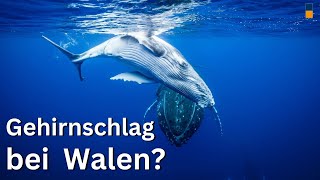
Wie verhindern Wale einen #Hirnschlag beim Tauchen? https://t.co/ohGArFvz3C via @YouTube
Nov 11, 2022 · 2 likes · 1 share · 47 followersView post →
DS
Dr. Claire Simeone
@Claire_Simeone · X
It means "wonderful net".
These amazing blood vessels in cetacean brains (and other parts) stabilize blood pressure from the massive changes with diving and swimming.
Via @ScienceMagazine, Lillie et al. @StephenRaverty
https://t.co/cEPbGJcMCK
Nov 7, 2022 · 3 likes · 6,057 followersView post →
RT @ubclifesciences: LSI Paper of the Day☀️
Vascular plexuses ensure steady arterial pressure and cerebral blood flow as cetaceans undulat…
Oct 6, 2022 · 3 shares · 2,016 followersView post →
UI
UBC Life Sciences Institute
@ubclifesciences · X
LSI Paper of the Day☀️
Vascular plexuses ensure steady arterial pressure and cerebral blood flow as cetaceans undulate through the water while holding their breath.
New in findings in @ScienceMagazine from Drs. Robert Shadwick, A. Wayne Vogl et al. https://t.co/q33b0wXPOX https://t.co/OjCis6tyx3
Oct 6, 2022 · 3 likes · 3 shares · 4,043 followersView post →
RT @ScienceMagazine: A “wonderful net” of cerebral vasculature helps protect the brains of deep-diving whales and dolphins from the pulses…
Oct 2, 2022 · 32 shares · 328 followersView post →
い死
いっぺん、死んでみる?
@laylamajusi · X
RT @ScienceMagazine: A “wonderful net” of cerebral vasculature helps protect the brains of deep-diving whales and dolphins from the pulses…
Oct 2, 2022 · 32 shares · 1,282 followersView post →
RC
Rt Hon Achusim Chike Collins
@AchusimChike · X
RT @ScienceMagazine: A “wonderful net” of cerebral vasculature helps protect the brains of deep-diving whales and dolphins from the pulses…
Oct 2, 2022 · 32 shares · 188 followersView post →
SM
Science Magazine
@ScienceMagazine · X
A “wonderful net” of cerebral vasculature helps protect the brains of deep-diving whales and dolphins from the pulses of blood pressure generated as they swim beneath the waves, according to a new study in Science.
Oct 2, 2022 · 152 likes · 32 shares · 4,512,015 followersView post →
シ
シャチゴンドウ
@foolinthemush · X
Retia mirabilia: Protecting the cetacean brain from locomotion-generated blood pressure pulses https://t.co/aCIyMJGMKx
鯨が深海の水圧に耐える仕組みの解明
A “wonderful net” of cerebral vasculature helps protect the brains of deep-diving whales and dolphins from the pulses of blood pressure generated as they swim beneath the waves, according to a new study in Science.
❓Did you know that locomotion can cause pressure spikes in the brain that can cause damage? Humans breath in and out to compensate, but whales have other means... [DOI: 10.1126/science.abn3315]
#successinscience #bloodpressure #zoology #biophysics #sciencenews #funfacts #STEM
The extensive array of blood vessels, or retia mirabilia, found in cetacean brains may protect their brain from extreme pressure.
#Science
#neuroscience
⏯️The Purpose of Dolphins’ Mysterious #Brain Net May Finally Be Understood
1-https://t.co/ZwyQwZr2Y1
2-https://t.co/8Oq0TfzD8M https://t.co/ACmGGqvseG
“Retia mirabilia: Protecting the cetacean brain from locomotion-generated blood pressure pulses” by Robert Shadwick et al. Science
https://t.co/vQ2cUjKbrG https://t.co/MdwtMkj211
Sep 23, 2022 · 1 like · 24,265 followersView post →
HR
Hugh Ross
@RTB_HRoss · X
Life Design: Study reveals yet more amazing designs that protect the brains of whales during deep dives while facilitating fluking locomotion: https://t.co/l42QEHI4i9; https://t.co/Ls0rL3oK5S
#ScienceMag Retia mirabilia: Protecting the cetacean brain from locomotion-generated blood pressure pulses https://t.co/hJZtQO6Bzu
Modification of cerebral vasculature helps to cushion the brains of whales and dolphins against submergence injury https://t.co/zE0tTWt8id @Uhandrea https://t.co/Q4gRQHsQrH
“Retia mirabilia: Protecting the cetacean brain from locomotion-generated blood pressure pulses” by Robert Shadwick et al. Science
https://t.co/T6HW0D9LeN
A “wonderful net” of cerebral vasculature helps protect the brains of deep-diving whales and dolphins from the pulses of blood pressure generated as they swim beneath the waves, according to a new study in Science.
"Researchers in Canada have a theory as to how cetaceans—dolphins, whales and porpoises—manage to protect their brain from these swimming-induced blood pressure pulses."
From @ScienceMagazine
Sep 22, 2022 · 1 like · 1 share · 4,867 followersView post →
UZ
UBC Zoology
@ZoologyUBC · X
New
Sep 22, 2022 · 1 like · 2,016 followersView post →
TJ
Thomas R. Holtz, Jr.
@TomHoltzPaleo · X
Retia mirabilia: Protecting the cetacean brain from locomotion-generated blood pressure pulses https://t.co/o7kbkTm0R0