Edwin Kite
@edwinkite · X
Venus: always dead?
Mar 11, 2023 · 19 likes · 1 share · 1,601 followers
View post →
Mentions
Extended reach
Total likes
Video views
AI synopsis
Various discussions explore the research's implications, using words like 'interesting' and questions about Venus's past habitability to express curiosity. The tone ranges from casual curiosity to humorous warnings, reflecting both engagement with scientific details and broader concerns about planetary evolution.
Most discussions acknowledge the research's findings, with comments like 'Venus: always dead?' and 'They better hurry up' showing cautious support and recognition of the study’s implications.
Posts demonstrate high curiosity and engagement, indicated by questions about Venus's habitability and comments like 'Very interesting!' which highlight active curiosity.
Several posts engage deeply by referencing specific details such as oxygen loss, radiogenic argon degassing, and planetary evolution, showing thoughtful consideration of the scientific content.
Overall, these discussions suggest that the article influences perceptions of planetary habitability, with some comments humorously linking Earth's climate issues to Venus's history, indicating an awareness of broader implications.
Venus: always dead?
How long could liquid water have persisted on Venus? A recent modeling study led by @space_for_sasha finds that hypothesized habitable conditions on Venus (involving liquid water on the surface) should have ended 3 billion years ago! Read more
#Venus could have had oceans long after life started on Earth @PNASNews https://t.co/tKhVx2ijwK https://t.co/jbzo5gpwOd
Si queréis leer el artículo, lo tenéis en PNAS. "Narrow range of early habitable Venus scenarios permitted by modeling of oxygen loss and radiogenic argon degassing" Warren et al. (2023) https://t.co/jv1inlbH81 https://t.co/2hVZSbdjzG
If you have not yet discovered the youtube channel of Anton Petrov (@WhatDaMath), you're in for a treat! Today's topic: Venus!! https://t.co/PMuwE54Zfy
please watch, retweet and/or favorite this worthy and worthwhile YouTube video: Venus Had a Volcanic Eruption and Other Important Discoveries https://t.co/t0eTiNYkLQ
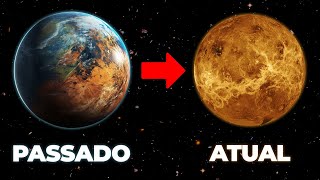
Venus, the most Earth-like planet in size and composition, likely once had liquid water and possibly life. This video explores how Venus transformed from a potentially habitable world to a hostile environment due to…

This video explores unexpected discoveries from Venus, focusing on surface changes observed on a volcano during the Magellan mission. Notably, a significant 22-square-kilometer volcanic vent exhibited shape changes in…
youtu.be/3ysda_jcpQg?...
RT @edwinkite: Venus: always dead?
@EdKrassen Uh, no. https://t.co/DDTdt7IC2v
@Cocoaisadog @LabourOutOfScot @ScienceBlog3 @GillesnFio @Gladfly1 @priscian @DaleGribble_666 @CymaticWave @EQKimball7 @Athol94519002 @Over400ppm @ILuvCO2 @3GHtweets @AtomsksSanakan @jonsaxon67 @EdwardBernays7 @Billybobtn @willyv96 @Canadian_logic_ @Ancientengineer @GregoryMakles @EdDarrell @1_TMF_ @craigthomler @brandonrgates @Tokyo_Tom @4TimesAYear @CitronCockatoo @MonkeyMyBack @GustavoRejivik @miked194765 @Mark_Fraser_ @NoelTurner194 @JoKiwi55 @climatefrauds @icarus62 @usanorthcoast @drwaheeduddin @FriendsOScience @LindsayyuleS @climatecancel @kmpetersson @dblebuck @Tea4gunsSC @nstokesvic @wattsupwiththat @RichardAMuller @ProfBrianCox @hausfath Would you settle for early Earth like? Your friend the sun and a lot of greenhouse gases cooked the water vapor out of the system https://t.co/rJYAJ4Vty9
@cfhinor @DavidUllrich202 @dangerousbeenz You quoted part of what Eric said in 2010, in a dogmatic sense? Why did not you quote Vogue magazine as The Great Truth? Eric published it moinths after your quote: https://t.co/OrjYmU65N0 and this was published in 2023. https://t.co/XCKBBDmPbb https://t.co/Esz0VtZjc6
Como VÊNUS virou um INFERNO? youtu.be/3ysda_jcpQg?... via @YouTube
RT @unveilvenus: How long could liquid water have persisted on Venus? A recent modeling study led by @space_for_sasha finds that hypothesiz…
RT @unveilvenus: How long could liquid water have persisted on Venus? A recent modeling study led by @space_for_sasha finds that hypothesiz…
RT @unveilvenus: How long could liquid water have persisted on Venus? A recent modeling study led by @space_for_sasha finds that hypothesiz…
RT @unveilvenus: How long could liquid water have persisted on Venus? A recent modeling study led by @space_for_sasha finds that hypothesiz…
RT @unveilvenus: How long could liquid water have persisted on Venus? A recent modeling study led by @space_for_sasha finds that hypothesiz…
How long could liquid water have persisted on Venus? A recent modeling study led by @space_for_sasha finds that hypothesized habitable conditions on Venus (involving liquid water on the surface) should have ended 3 billion years ago! Read more
Very Unexpected Discoveries From Venus https://t.co/8E4YNW8OyG via @YouTube
Very Unexpected Discoveries From Venus https://t.co/96Lkul4qXT via @YouTube
Venus Had a Volcanic Eruption and Other Important Discoveries https://t.co/7oMWckpsP7 via @YouTube
Venus Had a Volcanic Eruption and Other Important Discoveries https://t.co/B9LOZkAi0R via @YouTube
Venus Had a Volcanic Eruption and Other Important Discoveries https://t.co/XWLKgtnLA3 via @YouTube
please watch, retweet and/or favorite this worthy and worthwhile YouTube video: Venus Had a Volcanic Eruption and Other Important Discoveries https://t.co/t0eTiNYkLQ
Venus Had a Volcanic Eruption and Other Important Discoveries https://t.co/oVwuSw2bp1 via @YouTube https://t.co/mmYfk7tWhh
The planet Venus in our solar system had a surprising volcanic eruption
Venus Updates: Volcanoes https://t.co/lqDoYaNYMj
RT @ExoCytherean: If you have not yet discovered the youtube channel of Anton Petrov (@WhatDaMath), you're in for a treat! Today's topic: V…
If you have not yet discovered the youtube channel of Anton Petrov (@WhatDaMath), you're in for a treat! Today's topic: Venus!! https://t.co/PMuwE54Zfy
https://t.co/gGZd4HMUWn
Venus Had a Volcanic Eruption and Other Important Discoveries https://t.co/Vo3NOzs5ap via @YouTube
Narrow range of early habitable Venus scenarios permitted by modeling of oxygen loss and radiogenic argon degassing | Proceedings of the National Academy of Sciences https://t.co/Wx8bNDJjwH
Narrow range of early habitable Venus scenarios permitted by modeling of oxygen loss and radiogenic argon degassing | Proceedings of the National Academy of Sciences https://t.co/RqUaNGTDAe
なるのかを94,080回シミュレーションしました。その結果、 現在の金星に近い範囲にあったのはわずか数百回であり、それによると金星の居住可能時代は30億年前以前に終了し、全表面の最大海洋深度は300mであることが必要だったことがわかりました。この結果は、これまでの推定https://t.co/OvBlcQZdaq
Narrow range of early habitable Venus scenarios permitted by modeling of oxygen loss and radiogenic argon degassing -- PNAS https://t.co/O99o1oV5x7
Venus: always dead?
Si queréis leer el artículo, lo tenéis en PNAS. "Narrow range of early habitable Venus scenarios permitted by modeling of oxygen loss and radiogenic argon degassing" Warren et al. (2023) https://t.co/jv1inlbH81 https://t.co/2hVZSbdjzG
RT @physorg_com: #Venus could have had oceans long after life started on Earth @PNASNews https://t.co/tKhVx2ijwK https://t.co/jbzo5gpwOd
#Venus could have had oceans long after life started on Earth @PNASNews https://t.co/tKhVx2ijwK https://t.co/jbzo5gpwOd
RT @physorg_com: #Venus could have had oceans long after life started on Earth @PNASNews https://t.co/tKhVx2ijwK https://t.co/jbzo5gpwOd
Was Venus once habitable? A model of how the modern Venusian atmosphere could have evolved from a state with liquid water suggests plausible—if unlikely— pathways that the planet could have taken in eons past. In PNAS: https://t.co/uPAqnXiACD https://t.co/goyhaQx7Fu
RT @Ashmedaidemon: 'Narrow range of early habitable Venus scenarios permitted by modeling of oxygen loss and radiogenic argon degassing' T…
'Narrow range of early habitable Venus scenarios permitted by modeling of oxygen loss and radiogenic argon degassing' They better hurry up, a few more train derailments and soon Earth will be indistinguishable from Venus https://t.co/HrDiR9DRhA
Very interesting! Narrow range of early habitable Venus scenarios permitted by modeling of oxygen loss and radiogenic argon degassing | Proceedings of the National Academy of Sciences https://t.co/StGzDG0zcw
Narrow range of early habitable Venus scenarios permitted by modeling of oxygen loss and radiogenic argon degassing | Proceedings of the National Academy of Sciences https://t.co/StGzDG0zcw