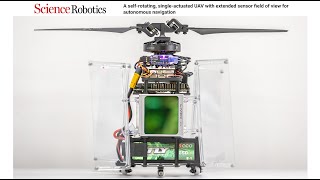
Many contributions highlight the PULSAR UAV's innovative features, referencing phrases like 'mechanical and software tour de force' and noting its energy efficiency and obstacle detection capabilities. The tone is optimistic and excited, which emphasizes the perceived revolutionary nature of the UAV, capturing attention through descriptions like 'redefines UAV agility' and 'welcome to dystopia where less is relentlessly more'.
AgreementStrong agreement
The majority of discussions exhibit positive reactions, suggesting strong endorsement of the UAV's capabilities.
InterestHigh interest
Participants demonstrate a high level of curiosity, indicating the topic is captivating for the audience.
EngagementModerate engagement
Although some posts delve deeply into technical details, many are more surface-level and reiterative.
ImpactHigh impact
Contributors widely acknowledge the significant implications this UAV could have on various fields, especially in technology and exploration.
Abstract in brief
A new UAV called PULSAR uses self-rotation to enhance its sensor field of view, allowing for better navigation and obstacle detection without needing additional power.
This UAV operates with a single motor that controls both thrust and movement, reducing energy consumption by 26.7% compared to traditional quadcopters.
With its onboard LiDAR sensor, PULSAR can autonomously explore unknown environments while avoiding both static and dynamic obstacles, improving task efficiency and flight safety.
If you want to know what state of the art drone mapping looks like, this is a mechanical *and* software tour de force: PULSAR, a self-rotating, single-actuated UAV with extended sensor field of view ... https://t.co/HOc1ALRQh0 via @YouTube
Nov 19, 2023 · 100 likes · 10 shares · 14,236 followersView post →
SM
Science Magazine
@ScienceMagazine · X
Thanks to its self-rotate ability, a new, highly energy efficient drone can detect and respond to obstacles with its LiDAR sensor during various testing scenarios, including mapping and exploration of a cave. https://t.co/tx1CeRluSG @SciRobotics https://t.co/aNlpNjoSNM
Thanks to its self-rotate ability, a new, highly energy efficient drone can detect and respond to obstacles with its LiDAR sensor during various testing scenarios, including mapping and exploration of a cave. https://t.co/94hhs4qfeS https://t.co/Tta7JEPQU8
Mar 20, 2023 · 74 likes · 9 shares · 27,673 followersView post →
SM
Science Magazine
@ScienceMagazine · X
Thanks to its self-rotate ability, a new, highly energy efficient drone can detect and respond to obstacles with its LiDAR sensor during various testing scenarios, including mapping and exploration of a cave. https://t.co/TtBC4z4EGI @SciRobotics https://t.co/eA8QlrZiwh
Thanks to its self-rotate ability, a new, highly energy efficient drone can detect and respond to obstacles with its LiDAR sensor during various testing scenarios, including mapping and exploration of a cave. https://t.co/9rU0jZIJgI @SciRobotics https://t.co/wyiNSb8r2X
Thanks to its self-rotate ability, a new, highly energy efficient drone can detect and respond to obstacles with its LiDAR sensor during various testing scenarios, including mapping and exploration of a cave. https://t.co/UkbHboJCrv @SciRobotics https://t.co/SbvXt6OoDj
Uncrewed aerial vehicles (UAVs) often face limitations in perception due to narrow sensor fields of view (FoV). This video introduces PULSAR, a self-rotating UAV that enhances its sensor FoV through unique design and…
Exploring the innovative development of miniature robots for biomedical applications, this video focuses on their ability to navigate the intricate pathways within the human body. Challenges in adaptive locomotion and…
Unleashing PULSAR: A solitary motor defies gravity and redefines UAV agility, slashing power use by 26.7%. Autonomous navigation through chaos, LiDAR eyes piercing the unknown. Welcome to dystopia—where less is relentlessly more. #TechRevolution
https://t.co/Q57QeHSOwc
RT @fdellaert: If you want to know what state of the art drone mapping looks like, this is a mechanical *and* software tour de force: PULSA…
Nov 21, 2023 · 10 shares · 243 followersView post →
MF
Mustafa Fanaswala
@mfanaswala · X
RT @fdellaert: If you want to know what state of the art drone mapping looks like, this is a mechanical *and* software tour de force: PULSA…
Nov 20, 2023 · 10 shares · 260 followersView post →
Η
ηοεho
@BallaNoeho · X
RT @fdellaert: If you want to know what state of the art drone mapping looks like, this is a mechanical *and* software tour de force: PULSA…
Nov 20, 2023 · 10 shares · 516 followersView post →
JD
JP Deblonde
@jp_axs4ll · X
RT @fdellaert: If you want to know what state of the art drone mapping looks like, this is a mechanical *and* software tour de force: PULSA…
Nov 20, 2023 · 10 shares · 616 followersView post →
MH
Maciej Halber
@maciejhalber · X
RT @fdellaert: If you want to know what state of the art drone mapping looks like, this is a mechanical *and* software tour de force: PULSA…
Nov 20, 2023 · 10 shares · 125 followersView post →
ML
Mike Xiangyu Liu
@MikeXiangyuLiu · X
RT @fdellaert: If you want to know what state of the art drone mapping looks like, this is a mechanical *and* software tour de force: PULSA…
Nov 20, 2023 · 10 shares · 40 followersView post →
D
dfarmer
@dfarmer · X
RT @fdellaert: If you want to know what state of the art drone mapping looks like, this is a mechanical *and* software tour de force: PULSA…
Nov 19, 2023 · 10 shares · 375 followersView post →
R
Robot
@Random_W23 · X
RT @fdellaert: If you want to know what state of the art drone mapping looks like, this is a mechanical *and* software tour de force: PULSA…
Nov 19, 2023 · 10 shares · 51 followersView post →
AD
artie dins
@ArtieDins · X
RT @fdellaert: If you want to know what state of the art drone mapping looks like, this is a mechanical *and* software tour de force: PULSA…
Nov 19, 2023 · 10 shares · 26 followersView post →
A
Appanacca
@Appanacca · X
RT @fdellaert: If you want to know what state of the art drone mapping looks like, this is a mechanical *and* software tour de force: PULSA…
Nov 19, 2023 · 10 shares · 112 followersView post →
FD
Frank Dellaert
@fdellaert · X
If you want to know what state of the art drone mapping looks like, this is a mechanical *and* software tour de force: PULSAR, a self-rotating, single-actuated UAV with extended sensor field of view ... https://t.co/HOc1ALRQh0 via @YouTube
Nov 19, 2023 · 100 likes · 10 shares · 14,236 followersView post →
A
Abelus
@abelusmx · X
RT @TechXplore_com: Team develops a revolutionary unpiloted aerial vehicle inspired by #sciencefiction @hkuniversity @SciRobotics https://t…
May 30, 2023 · 5 shares · 379 followersView post →
PT
Phys.org Technology
@physorg_tech · X
RT @TechXplore_com: Team develops a revolutionary unpiloted aerial vehicle inspired by #sciencefiction @hkuniversity @SciRobotics https://t…
May 30, 2023 · 5 shares · 13,171 followersView post →
SX
Science X
@sciencex_com · X
RT @TechXplore_com: Team develops a revolutionary unpiloted aerial vehicle inspired by #sciencefiction @hkuniversity @SciRobotics https://t…
May 30, 2023 · 5 shares · 3,526 followersView post →
PO
Phys.org
@physorg_com · X
RT @TechXplore_com: Team develops a revolutionary unpiloted aerial vehicle inspired by #sciencefiction @hkuniversity @SciRobotics https://t…
May 30, 2023 · 5 shares · 1,023,859 followersView post →
T
TechXplore
@TechXplore_com · X
Team develops a revolutionary unpiloted aerial vehicle inspired by #sciencefiction @hkuniversity @SciRobotics https://t.co/lKFqp82Jnl https://t.co/T88bmLzFsX
May 30, 2023 · 10 likes · 5 shares · 21,311 followersView post →
JS
John Sears
@JohnSears2077 · X
RT @ScienceMagazine: Thanks to its self-rotate ability, a new, highly energy efficient drone can detect and respond to obstacles with its L…
ScienceMagazine: Thanks to its self-rotate ability, a new, highly energy efficient drone can detect and respond to obstacles with its LiDAR sensor during various testing scenarios, including mapping and exploration of a cave. https://t.co/bQiRmlXiCc @Sc… https://t.co/KJ7LARn8dq
Thanks to its self-rotate ability, a new, highly energy efficient drone can detect and respond to obstacles with its LiDAR sensor during various testing scenarios, including mapping and exploration of a cave. https://t.co/TtBC4z4EGI @SciRobotics https://t.co/eA8QlrZiwh
ScienceMagazine: Thanks to its self-rotate ability, a new, highly energy efficient drone can detect and respond to obstacles with its LiDAR sensor during various testing scenarios, including mapping and exploration of a cave. https://t.co/E7x7YGkQDs @Sc… https://t.co/ji2m87i9db
Thanks to its self-rotate ability, a new, highly energy efficient drone can detect and respond to obstacles with its LiDAR sensor during various testing scenarios, including mapping and exploration of a cave. https://t.co/UkbHboJCrv @SciRobotics https://t.co/SbvXt6OoDj
ScienceMagazine: Thanks to its self-rotate ability, a new, highly energy efficient drone can detect and respond to obstacles with its LiDAR sensor during various testing scenarios, including mapping and exploration of a cave. https://t.co/4zx2DPLKBS @Sc… https://t.co/2bmdZnjJrW
Thanks to its self-rotate ability, a new, highly energy efficient drone can detect and respond to obstacles with its LiDAR sensor during various testing scenarios, including mapping and exploration of a cave. https://t.co/tx1CeRluSG @SciRobotics https://t.co/aNlpNjoSNM
ScienceMagazine: Thanks to its self-rotate ability, a new, highly energy efficient drone can detect and respond to obstacles with its LiDAR sensor during various testing scenarios, including mapping and exploration of a cave. https://t.co/d4Ur4IWVfp @Sc… https://t.co/3aAA2FS3OL
Thanks to its self-rotate ability, a new, highly energy efficient drone can detect and respond to obstacles with its LiDAR sensor during various testing scenarios, including mapping and exploration of a cave. https://t.co/9rU0jZIJgI @SciRobotics https://t.co/wyiNSb8r2X
RT @SciRobotics: Thanks to its self-rotate ability, a new, highly energy efficient drone can detect and respond to obstacles with its LiDAR…
Mar 20, 2023 · 9 shares · 405 followersView post →
LG
Lorenzo H. Gomez
@lgomezperu · X
@SciRobotics
Thanks to its self-rotate ability, a new, highly energy efficient #drone can detect and respond to obstacles with its LiDAR sensor during various testing scenarios, including mapping and exploration of a cave. https://t.co/oq8Asp5So7
Thanks to its self-rotate ability, a new, highly energy efficient drone can detect and respond to obstacles with its LiDAR sensor during various testing scenarios, including mapping and exploration of a cave. https://t.co/94hhs4qfeS https://t.co/Tta7JEPQU8
Mar 20, 2023 · 74 likes · 9 shares · 27,673 followersView post →
LJ
Le Web Journal
@le_web_journal · X
RT @ScienceMagazine: New in @SciRobotics: Researchers present a new type of uncrewed aerial vehicle able to capture a 360-degree field of v…
Mar 20, 2023 · 8 shares · 1,645 followersView post →
V
VirginSlayerIncelius
@VIncelius · X
ScienceMagazine: New in @SciRobotics: Researchers present a new type of uncrewed aerial vehicle able to capture a 360-degree field of view without consuming additional energy while doing so.
Learn more: https://t.co/zlittSxdoi https://t.co/W3FmmfLSJQ
New in @SciRobotics: Researchers present a new type of uncrewed aerial vehicle able to capture a 360-degree field of view without consuming additional energy while doing so.
Learn more: https://t.co/n69iDw4hIO https://t.co/qKdSSUPFJj
Mar 20, 2023 · 33 likes · 8 shares · 4,516,466 followersView post →
Researchers present a new type of uncrewed aerial vehicle able to capture a 360-degree field of view without consuming additional energy while doing so.
Learn more: https://t.co/yP9OE1VduO https://t.co/YUb1K2qhW3
Mar 15, 2023 · 13 likes · 7 shares · 27,673 followersView post →