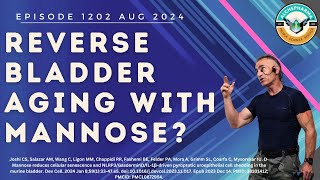
Posts reflect a strong interest in the topic, with references to the mechanisms involved, such as autophagy and inflammation, and even mentions of the publication's potential to reverse bladder aging. The tone varies from curiosity to cautious optimism, with discussions centered around the significance of D-Mannose as a possible therapy and the article's contribution to urology research, demonstrating both engagement and recognition of its potential impact.
AgreementModerate agreement
Most discussions acknowledge the significance of the findings, with some expressing curiosity or cautious optimism about D-Mannose's potential benefits.
InterestHigh interest
Many posts are highly interested, referencing the research directly and highlighting its potential implications for bladder health and aging.
EngagementModerate engagement
Participants engage by sharing related articles, discussing mechanisms like autophagy and inflammation, and expressing positive opinions about the research's relevance.
ImpactModerate impact
While some recognize the potential therapeutic impact, the overall tone suggests awareness rather than immediate widespread application or revolutionary change.
Abstract in brief
The study shows that aging in female mice leads to impaired cellular health in the bladder's lining, including accumulation of damaged lysosomes, increased oxidative stress, and signs of cell aging, which results in urothelial cell loss and higher susceptibility to urinary tract infections (UTIs).
Aged mice exhibit increased inflammation and cell death driven by NLRP3 inflammasome and pyroptosis, worsening bladder dysfunction and infection risk, with cells showing a senescence-associated secretory phenotype (SASP).
Treatment with D-mannose, a natural sugar, helps reverse these aging-related issues by improving cell cleanup processes (autophagy), reducing inflammation, and decreasing cell shedding, suggesting it could be used as a therapy to combat age-related bladder problems.]
Online now: D-Mannose reduces cellular senescence and NLRP3/GasderminD/IL-1β-driven pyroptotic uroepithelial cell shedding in the murine bladder https://t.co/CSNOSWYxuq
Dec 14, 2023 · 10 likes · 3 shares · 39,235 followersView post →
C
CAIRIBU
@CAIRIBU1 · X
Have You Read This? Check out this article, written by CAIRIBU affiliated investigators, by clicking the link below!
Link: https://t.co/ggq8TdC0aV
Discover other relevant articles to jump start your lit search HERE: https://t.co/Vlh8oWA2ri
#Urology #MedTwitter https://t.co/INfWPWUmgO
Jan 10, 2024 · 3 likes · 2 shares · 355 followersView post →
DM
Dr. Indira Mysorekar
@MysorekarLab · X
RT @CAIRIBU1: Have You Read This? Check out this article, written by CAIRIBU affiliated investigators, by clicking the link below!
Link:…
Jan 10, 2024 · 2 shares · 2,671 followersView post →
Aging impairs bladder cellular health, increasing UTI vulnerability. This video examines how D-mannose helps reduce cellular senescence, inflammation, and cell shedding in the bladder, offering potential strategies for…
Aging impairs bladder cellular health, increasing UTI risk. This video explores how D-mannose can reduce cellular aging, inflammation, and cell shedding, improving bladder function and reducing infection susceptibility…
Reverse Bladder Aging with Mannose? Ep. 1202 AUG 2024 https://t.co/7JieMJoNRg via @YouTube Aging is often accompanied by a decline in organ function, and the urinary tract is no exception. This video explores how cellular aging within the bladder contributes to increased
RT @CAIRIBU1: Have You Read This? Check out this article, written by CAIRIBU affiliated investigators, by clicking the link below!
Link:…
Jan 10, 2024 · 2 shares · 1,180 followersView post →
DM
Dr. Indira Mysorekar
@MysorekarLab · X
RT @CAIRIBU1: Have You Read This? Check out this article, written by CAIRIBU affiliated investigators, by clicking the link below!
Link:…
Jan 10, 2024 · 2 shares · 2,671 followersView post →
C
CAIRIBU
@CAIRIBU1 · X
Have You Read This? Check out this article, written by CAIRIBU affiliated investigators, by clicking the link below!
Link: https://t.co/ggq8TdC0aV
Discover other relevant articles to jump start your lit search HERE: https://t.co/Vlh8oWA2ri
#Urology #MedTwitter https://t.co/INfWPWUmgO
Jan 10, 2024 · 3 likes · 2 shares · 355 followersView post →