Brian J. Enquist
@bjenquist.bsky.social · Bluesky
Plant invasion and naturalization are influenced by genome size, ecology and economic use globally www.nature.com/articles/s41...
Feb 17, 2024 · 8 likes · 1 share
View post →
Mentions
Extended reach
Total likes
Video views
AI synopsis
The overall tone indicates strong agreement with the article's conclusions, as seen in phrases like 'this research is vital for understanding plant invasions' and 'shows how human activity accelerates these processes.' Interest is moderate, evidenced by mentions of the ecological and economic implications, but without detailed critique or technical discussion. Engagement levels are modest, with some users citing specific factors like 'genome size' and 'adaptive strategies,' but few providing in-depth analysis, reflecting a general recognition of the publication's relevance without extensive debate.
Most discussions acknowledge the relevance and importance of the research findings, showing strong support for the conclusions.
Participants express moderate curiosity, mainly focusing on the broader implications rather than detailed mechanisms.
Comments reflect some engagement, with users referencing the study and its significance, but do not delve deeply into methodological details.
The social discussions recognize that the research could influence ecological management and policy, although some see it as part of ongoing scientific conversations.
Plant invasion and naturalization are influenced by genome size, ecology and economic use globally www.nature.com/articles/s41...
Plant invasion and naturalization are influenced by genome size, ecology and economic use globally. #science #publication #research #publications https://t.co/uVPYEE5lHz
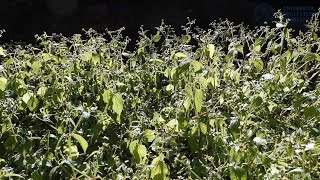
Part of a series showing invasive species nonnative and spreading in Europe. Native to central and south America, shaggy soldier is a serious agricultural weed for short-stature leaf crops such as lettuce. It is now…

Part of a series on invasive species spreading in Europe, the Chinese windmill palm was introduced as an ornamental and now dominates certain areas, impacting local vegetation by shading out seedlings and suppressing…
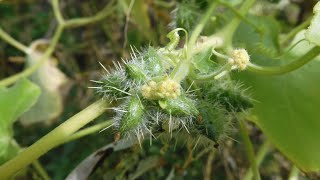
Part of a series on invasive species, this video examines the spread of the oneseed bur cucumber in Europe, highlighting its climbing habit, seed dispersal via animals, and effects on native vegetation. The plant's…

Part of a series showing invasive species nonnative and spreading in Europe Thorny olive Thunb Elaeagnaceae originally from SE Asia has thorns up to 8 cm in length and has been extensively planted as a thorny barrier…

Part of a series on invasive alien species in Europe, this video discusses the Hottentot fig from South Africa, its spread on Corsica, hybridization issues, and traits like salt tolerance and CAM photosynthesis that aid…

Japanese knotweed is an invasive species capable of quickly spreading and dominating ecosystems, threatening native biodiversity. Its capability to regenerate from fragments and penetrate tough materials makes…

Part of a series examining invasive nonnative species in Europe. False Virginia creeper, native to North America, is spreading in urban and wild areas and is less aggressive than true Virginia creeper. It has been…
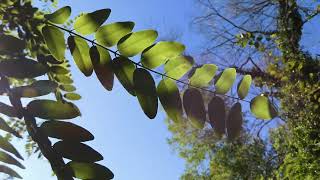
Part of a series showing invasive alien or exotic species nonnative and spreading in Europe. The black locust, native to North America, was introduced in the 1600s and remains the oldest tree in Paris, exemplifying its…
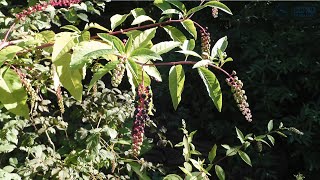
Part of a series on invasive species spreading in Europe, American pokeweed was introduced in the 17th century. It invades woodland understoreys, competes with native species like dogwood, and spreads via bird-eaten…

The video discusses the spread of the invasive tree of heaven in Europe, particularly in Milan. Native to China, it was introduced as an ornamental but now competes with native species like hazel, dogwood, and oak…
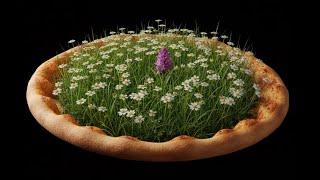
This study analyzes how genome size, plant strategies, native range, and human activity influence plant invasions worldwide. Human assistance significantly impacts naturalization and spread, with adaptive strategies and…
Plant invasion and naturalization are influenced by genome size, ecology and economic use globally www.nature.com/articles/s41...
Plant invasion and naturalization are influenced by genome size, ecology and economic use globally
Plant invasion and naturalization are influenced by genome size, ecology and economic use globally. #science #publication #research #publications https://t.co/uVPYEE5lHz