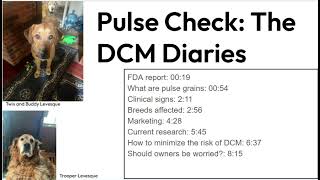
Many discussions highlight key findings, such as the association between high-pulse diets and increased VPCs, with some posts debating the significance of these irregularities. The tone shifts between cautious curiosity and supportive acknowledgment, reflecting an interest in how this research may affect future dietary guidelines for dogs, but overall engagement remains moderate.
AgreementModerate agreement
Most discussions acknowledge the study's findings, with some users supporting the link between high-pulse diets and heart irregularities.
InterestNeutral interest
Interest levels are moderate; some users express curiosity, but many show neutral reactions or focus on general aspects.
EngagementModerate engagement
Several participants delve into details about the methods and implications, indicating active engagement.
ImpactModerate impact
The discussions suggest the research could influence dietary recommendations for Irish Wolfhounds, though the overall impact is viewed as preliminary.
Abstract in brief
The study found that Irish Wolfhounds eating highpulse diets showed a higher prevalence of ventricular premature complexes (VPCs), which may indicate early signs of heart problems, compared to those eating lowpulse diets.
There were no significant differences in echocardiographic measurements, such as heart size and function, between dogs on highpulse and lowpulse diets.
The research suggests that highpulse diets could be linked to early cardiac abnormalities in Irish Wolfhounds, but more studies are needed to understand this relationship fully.]
echocardiographic and electrocardiographic findings in Irish Wolfhounds eating high-pulse or low-pulse diets. In this retrospective study of apparently healthy Irish Wolfhounds, high-pulse #diets were associated with a higher prevalence of #VPCs https://t.co/buadsXFIaC
Golden retrievers are more likely to develop taurine deficiency and dilated cardiomyopathy when fed certain commercial diets, especially grain-free or legume-rich options that are not tested for safety. Most affected…
Irish Wolfhounds on highpulse diets exhibited a higher prevalence of ventricular premature complexes, indicating potential early signs of heart issues, compared to those on lowpulse diets. No significant differences…
echocardiographic and electrocardiographic findings in Irish Wolfhounds eating high-pulse or low-pulse diets. In this retrospective study of apparently healthy Irish Wolfhounds, high-pulse #diets were associated with a higher prevalence of #VPCs https://t.co/buadsXFIaC
 SD