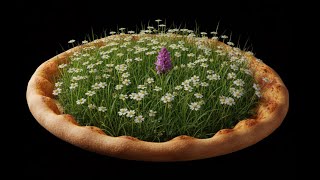
The discussions show a balanced view, with phrases like 'it depends' and references to large data sets, such as over 12,000 vegetation plots, showcasing thoughtful engagement. The tone combines curiosity about the complexities of the hypothesis with an appreciation of the detailed analysis, reflecting moderate interest and recognition of the research’s importance.
AgreementModerate agreement
Most discussions acknowledge that Elton's hypothesis is supported under certain conditions but also emphasize the nuanced findings that show the relationship depends on invasion stages.
InterestModerate interest
The conversations display moderate interest, focusing on the complexities and implications rather than just praising or dismissing the study.
EngagementModerate engagement
Participants engage by referencing specific details like the number of vegetation plots and the idea that outcomes vary by invasion stage, indicating deeper understanding.
ImpactModerate impact
While the discussions highlight the significance of the research, they mainly inform rather than prompt immediate practical action, resulting in a moderate impact score.
Abstract in brief
Elton's biotic resistance hypothesis suggests that communities with more species are better at resisting invasive species, but the relationship between species, phylogenetic, and functional richness with invasions is complicated and influenced by various factors.
Analyzing data from over 12,000 plant communities in the Czech Republic, the study found that species richness and functional richness often negatively affected the presence and richness of alien species, but this effect changed depending on the stage of invasion.
The findings indicate that support for or against Elton's hypothesis can vary depending on the invasion stage, suggesting that other theories regarding invasions might also need to be reconsidered based on these complexities.
New Article: "Stage dependence of Elton’s biotic resistance hypothesis of biological invasions" https://t.co/QOplsNYTmZ
Elton’s hypothesis: species-rich communities are more resistant to plant invasion. Conclusion after analysis of 12000 Czech vegetation plots : it depends. https://t.co/ccmrLZsC7V
New Article: "Stage dependence of Elton’s biotic resistance hypothesis of biological invasions" rdcu.be/dSTdH
Elton’s hypothesis: species-rich communities are more resistant to plant invasion. Conclusion after analysis of 12000 vegetation plots in the Czech Republic: it depends.
Part of a series showing invasive species nonnative and spreading in Europe. Native to central and south America, shaggy soldier is a serious agricultural weed for short-stature leaf crops such as lettuce. It is now…
Part of a series on invasive species spreading in Europe, the Chinese windmill palm was introduced as an ornamental and now dominates certain areas, impacting local vegetation by shading out seedlings and suppressing…
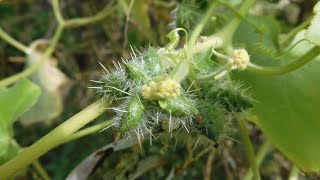
Part of a series on invasive species, this video examines the spread of the oneseed bur cucumber in Europe, highlighting its climbing habit, seed dispersal via animals, and effects on native vegetation. The plant's…
Part of a series showing invasive species nonnative and spreading in Europe Thorny olive Thunb Elaeagnaceae originally from SE Asia has thorns up to 8 cm in length and has been extensively planted as a thorny barrier…
Part of a series on invasive alien species in Europe, this video discusses the Hottentot fig from South Africa, its spread on Corsica, hybridization issues, and traits like salt tolerance and CAM photosynthesis that aid…
Japanese knotweed is an invasive species capable of quickly spreading and dominating ecosystems, threatening native biodiversity. Its capability to regenerate from fragments and penetrate tough materials makes…
Part of a series examining invasive nonnative species in Europe. False Virginia creeper, native to North America, is spreading in urban and wild areas and is less aggressive than true Virginia creeper. It has been…
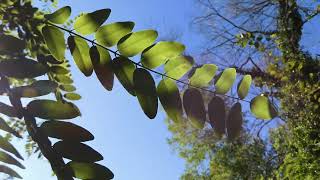
Part of a series showing invasive alien or exotic species nonnative and spreading in Europe. The black locust, native to North America, was introduced in the 1600s and remains the oldest tree in Paris, exemplifying its…
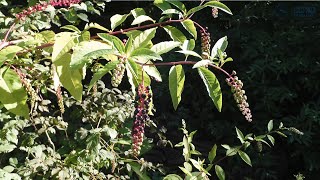
Part of a series on invasive species spreading in Europe, American pokeweed was introduced in the 17th century. It invades woodland understoreys, competes with native species like dogwood, and spreads via bird-eaten…
The video discusses the spread of the invasive tree of heaven in Europe, particularly in Milan. Native to China, it was introduced as an ornamental but now competes with native species like hazel, dogwood, and oak…
This study analyzes how genome size, plant strategies, native range, and human activity influence plant invasions worldwide. Human assistance significantly impacts naturalization and spread, with adaptive strategies and…
New Article: "Stage dependence of Elton’s biotic resistance hypothesis of biological invasions" rdcu.be/dSTdH
Elton’s hypothesis: species-rich communities are more resistant to plant invasion. Conclusion after analysis of 12000 vegetation plots in the Czech Republic: it depends.
New Article: "Stage dependence of Elton’s biotic resistance hypothesis of biological invasions" https://t.co/QOplsNYTmZ
Elton’s hypothesis: species-rich communities are more resistant to plant invasion. Conclusion after analysis of 12000 Czech vegetation plots : it depends. https://t.co/ccmrLZsC7V