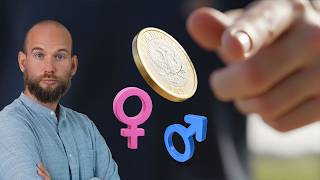
Sex at birth may not be purely random, according to a new @ScienceAdvances study. Instead, each family’s likelihood of having only male or only female children is a “weighted coin toss” influenced by maternal age and genetics. https://t.co/msMvLfLuuz https://t.co/s0piZutfDB
Is sex at birth a biological coin toss? Insights from a longitudinal and GWAS analysis.
Mentions
Extended reach
Total likes
Video views
Mentions per month
Jul 2025 – Sep 2025Where it's discussed
-
News166 articles
-
X / Twitter99 posts
-
Bluesky9 posts
-
YouTube4 videos
-
Blogs4 articles
-
Facebook2 posts
AI synopsis
What people are saying
The overall discussion reveals a strong curiosity and acceptance of the research, with posts citing specific examples, such as families with multiple children of the same sex (e.g., María's case of having three daughters) and referencing the genetic and age-related factors that influence this phenomenon. The tone varies from scientific to conversational, highlighting both academic interest and real-world implications, which underpins the high scores in interest and impact.
Most discussions accept that the study suggests sex at birth is influenced by factors like genetics and maternal age, challenging the idea of a purely random process.
Posts demonstrate high interest, referencing specific findings, such as the influence of maternal age and genetic markers, and sharing links to the original study.
Many users reference the details, methods, and implications, engaging deeply with concepts like weighted coin tosses and genetic predispositions.
The discussion indicates the study could significantly alter how people perceive biological randomness in sex determination, potentially affecting societal views and family planning debates.
Abstract in brief
- Some families tend to have children of only one sex, raising questions about the randomness of sex at birth.
- The study analyzed data from over 58,000 women and found that offspring sex follows a beta-binomial distribution, meaning each family has a distinct likelihood of having male or female children, similar to a weighted coin toss.
- Maternal factors, such as age and specific genetic markers, influence the likelihood of having children of only one sex.
Top posts
Most liked on X and BlueskyWhat causes this? Older maternal age is a factor, as are single nucleotide polymorphisms (SNPs): changes in NSUN6 are associated with many daughters, and changes inTSHZ1 with many sons Source: https://t.co/UKMuI1baLF
Sex at birth may not be purely random, according to a new @ScienceAdvances study. Instead, each family’s likelihood of having only male or only female children is a “weighted coin toss” influenced by maternal age and genetics. https://t.co/msMvLfLuuz https://t.co/BKXsxZt6Kj
6/6
#Analysis of over 146,000 births suggests some families have a #GeneticPredisposition toward having #Children of a single sex, deviating from the expected 50–50 probability model. @ScienceAdvances https://t.co/o9OvCAVq3C https://t.co/nK7zwKnhRt
Is sex at birth a biological coin toss? Insights from a longitudinal and GWAS analysis | Science Advances https://t.co/fOHBuiFDGp (論文)出生時の性はランダム? 母親の要因が子孫の性別の分布に影響を与えることを示唆する論文
All mentions
Dogs Detect Parkinson's Disease Odor for Early Diagnosis
Trained dogs have shown effectiveness in detecting the odor associated with Parkinson's disease, offering a promising method for early diagnosis. In a study, two dogs accurately distinguished between skin swabs from…
Genetic and Maternal Factors Affect Offspring Sex Probability
Some families tend to have children of only one sex, raising questions about the randomness of sex at birth. The study analyzed data from over 58,000 women and found that offspring sex follows a beta-binomial…
Genetic and Maternal Factors Influencing Offspring Sex at Birth
Genetic and Biological Factors Influence Child's Sex at Birth
Recent research shows that a child's sex at birth is not entirely random. Maternal factors, genetic variants, and biological environments can influence whether a family has only sons or only daughters, challenging the…
Questa è infatti la conclusione di un articolo pubblicato a Luglio sulla prestigiosa Science Advances (link
先日threadか何かで、同性の兄弟姉妹を産んだ場合、次も同じ性になる確率が高くなる(例えば上2人が男児の場合、次の子も男児)って投稿をちらっと見かけたけど、論文見つけて読んでみたら面白かった。 →初産年齢が高い群(28歳以上)ほど、同性出産傾向がある https://t.co/bEv9GiSPoi
子供の性別は50%の確率で男か女かに割り振られると思ってたけど、そうとも言えないっぽい。 男の子が3連続で産まれた場合、4人目は61%の確率で男の子で、3連続で女の子ならその次は58%の確率で女の子になるらしい。 出生比率自体は半々でも家庭単位だと偏るんだとか。 https://t.co/NVOq43fUwA
年轻女性,子女性别更随机。 大龄女性,子女性别更一致。 https://t.co/ksWKFnylCc
RT @gerelt_tsamkhag: Хүүхдийн хүйсийг эмэгтэйн удамшил тодорхойлдог,өндөн эс сонгодог гэж хэлж л бсан даа
Хүүхдийн хүйсийг эмэгтэйн удамшил тодорхойлдог,өндөн эс сонгодог гэж хэлж л бсан даа
Zoals gebruikelijk, voor de liefhebbers hier de link naar de oorspronkelijke studie. https://t.co/Ftcr3YM1Ve
Interesting research on sex at birth: https://t.co/RCZbZamZrk
Is sex at birth a biological coin toss? Insights from a longitudinal and GWAS analysis | Science Advances https://t.co/48EGzsnm8Z
Who'd have thunk it - maternal age and other family specifc odds produce girl or boy babies. !!!https://www.science.org/doi/10.1126/sciadv.adu7402
Ref. Wang, Siwen et al. “Is sex at birth a biological coin toss? Insights from a longitudinal and GWAS analysis.” Science advances vol. 11,29 (2025): eadu7402. doi:10.1126/sciadv.adu7402
@manoo_hcqghm https://t.co/bmGEQOACnV
Is sex at birth a biological coin toss? Insights from a longitudinal and GWAS analysis | Science Advances https://t.co/GsOy3b9BKN
這八個嬰兒的父母都有「三人」!|禁斷的黑洞合併事件發生了|狗聞出帕金森氏症味道有新進展!【泛科學NEWS】 https://t.co/s6zQ3QyjB6 via @YouTube
RT @ScienceMagazine: Sex at birth may not be purely random, according to a new @ScienceAdvances study. Instead, each family’s likelihood…
Neat. Though a newborn's sex has an approximate 50% chance of being either or at birth, odds may change for their prospective siblings. Mothers who had three or more children were more likely to have either all girls or all boys, and age may play a role. https://t.co/xyvgloCyxr
RT @ScienceMagazine: Sex at birth may not be purely random, according to a new @ScienceAdvances study. Instead, each family’s likelihood…
這八個嬰兒的父母都有「三人」!|禁斷的黑洞合併事件發生了|狗聞出帕金森氏症味道有新進展!【泛科學NEWS】 https://t.co/05JwJAIHpi 來自 @YouTube
https://t.co/NsJKv4scX6
RT @ScienceMagazine: Sex at birth may not be purely random, according to a new @ScienceAdvances study. Instead, each family’s likelihood…
RT @HansCollin2: María, 32, está embarazada y tiene tres hijas, ¿las probabilidades de que ésta vez dé a luz a un niño son >50%? Al revés.…
RT @ScienceMagazine: Sex at birth may not be purely random, according to a new @ScienceAdvances study. Instead, each family’s likelihood…
Sex at birth may not be purely random, according to a new @ScienceAdvances study. Instead, each family’s likelihood of having only male or only female children is a “weighted coin toss” influenced by maternal age and genetics. https://t.co/msMvLfLuuz https://t.co/s0piZutfDB
https://t.co/tz7nIvpN0t Is sex at birth a biological coin toss? Insights from a longitudinal and GWAS analysis | Science Advances
Sex of the children of the same mother is like a weighted coin toss, not like a fair coin: https://t.co/LFAqLOX7yk
出生時の性別は生物学的なコイントスか?縦断的研究とGWAS分析からの洞察 | Science Advances https://t.co/lPyrwlucD8 これ、「発見しない方が良い事実」の可能性無い?
RT @DrSamuelBHume: What causes this? Older maternal age is a factor, as are single nucleotide polymorphisms (SNPs): changes in NSUN6 are a…
RT @ScienceMagazine: Sex at birth may not be purely random, according to a new @ScienceAdvances study. Instead, each family’s likelihood…
生まれる子供の男女の偏りに、新知見 特定の遺伝子を持つ女性は、男女どちらかだけを産みやすいことが判明 面白いのはそれ以外に、初産が29歳以上、高身長の女性で、同じ性別の子供ばかり産む可能性が高まるそうです 人種、BMI(体格)、血液型、生活リズムは無関係だそう https://t.co/xS5927puBo
RT @ScienceMagazine: Sex at birth may not be purely random, according to a new @ScienceAdvances study. Instead, each family’s likelihood…
Sex at birth may not be purely random, according to a new @ScienceAdvances study. Instead, each family’s likelihood of having only male or only female children is a “weighted coin toss” influenced by maternal age and genetics. https://t.co/msMvLfLuuz https://t.co/BKXsxZt6Kj
最新研究。出産で 男子か生まれるか 女子が生まれるかの確率は完全にランダムではなく、母親の年齢や遺伝子に影響を受ける可能性。 https://t.co/adkTR4CzwA
RT @OleksandrKashu2: Is sex at birth a biological coin toss? Insights from a longitudinal and GWAS analysis https://t.co/hVG4AWTsNQ
Is sex at birth a biological coin toss? Insights from a longitudinal and GWAS analysis www.science.org/doi/10.1126/...
Is sex at birth a biological coin toss? Insights from a longitudinal and GWAS analysis https://t.co/hVG4AWTsNQ
Sex at birth may not be purely random, according to a new study. Instead, each family’s likelihood of having only male or only female children is a “weighted coin toss” influenced by maternal age and genetics. https://t.co/CUJKidLFkh https://t.co/p9tD9SJJdY
Is sex at birth a biological coin toss? Insights from a longitudinal and GWAS analysis | Science Advances https://t.co/apvoJehPD0
RT @BatyaCohen1: 6/6
Is sex at birth a biological coin toss? That’s the question posed in a new study by researchers, and their findings appear to show that there might be a biological bias after all. www.iflscience.com/some-people-...
6/6
Thiscchallenges what people have been told about their baby’s sex, which is that for each pregnancy, there is an equal chance of having either a boy or a girl. Is sex at birth a biological coin toss? Insights from a longitudinal and GWAS analysis www.science.org/doi/... 2/2
Thiscchallenges what people have been told about their baby’s sex, which is that for each pregnancy, there is an equal chance of having either a boy or a girl. Is sex at birth a biological coin toss? Insights from a longitudinal and GWAS analysis […]
@yacky_sanfu https://t.co/w8bOgej1Jy https://t.co/EE1AKRxsf1 先生、今月公開された論文で、母親の遺伝子によっては男女に偏りが出る、という研究結果が出たみたいです。 アメリカでの研究なので日本人にそのまま当てはまるかは不明ですが・・・
RT @physorg_com: #Analysis of over 146,000 births suggests some families have a #GeneticPredisposition toward having #Children of a single…
#Analysis of over 146,000 births suggests some families have a #GeneticPredisposition toward having #Children of a single sex, deviating from the expected 50–50 probability model. @ScienceAdvances https://t.co/o9OvCAVq3C https://t.co/nK7zwKnhRt
Is sex at birth a biological coin toss? Insights from a longitudinal and GWAS analysis https://t.co/33TS2NijsN
RT @DrSamuelBHume: What causes this? Older maternal age is a factor, as are single nucleotide polymorphisms (SNPs): changes in NSUN6 are a…
María, 32, está embarazada y tiene tres hijas, ¿las probabilidades de que ésta vez dé a luz a un niño son >50%? Al revés. Al parecer, la edad importa. Si la madre tiene >29 años, las probabilidades de que tenga solo niñas o solo niños son 13% mayores.
What causes this? Older maternal age is a factor, as are single nucleotide polymorphisms (SNPs): changes in NSUN6 are associated with many daughters, and changes inTSHZ1 with many sons Source: https://t.co/UKMuI1baLF
The "choice" between all-boy and all-girl sibship is not random! Illuminating insights into complexities of sex-associated differences in offspring sex determination! doi.org/10.1126/sciadv.adu7402 #sabv #ossd #sexdifferences #humanhealth #sexgenetics
The paper in "Science Advances" the above "Nature" article is based upon, & links to: “Is sex at birth a biological coin toss? Insights from a longitudinal and GWAS analysis” 2/2 https://t.co/dIpQGwpaxS
Is sex at birth a biological coin toss? Insights from a longitudinal and GWAS analysis | Science Advances www.science.org/doi/10.1126/...
"Until then, families desiring offspring of more than one sex who have already had two or three children of the same sex should be aware that when trying for their next one, they are probably doing a coin toss with a two-headed coin." https://t.co/3NWDIz81ex
Is sex at birth a biological coin toss? Insights from a longitudinal and GWAS analysis | Science Advances https://t.co/3NWDIz8z45
男兄弟続くと次も男 女姉妹続くと次も女 になる確率高いそうです。 そして初産ので年齢高いほどこの傾向は強いそうです。 https://t.co/2qDUesOW9z
#GWAS Per la probabilità di un terzo figlio ♂️ o ♀️ conta l'età della madre, ma l'analisi dei genomi "ha anche mostrato che alcune donne avevano una delle due varianti genetiche associate a figli di un determinato sesso". Paper gratis https://t.co/XEDJMudXgZ https://t.co/ZlPbzFMU3W
Source: https://t.co/Vtlhe7SaVf
【高齢出産は性別が偏る】28歳以上で初産した場合、第2子以降の赤ちゃんの性別は初子と同じ性別に偏る傾向が23歳未満で初産した場合に比べて有意に高いことが分かりました
https://t.co/9jKUnMs2Xi
https://t.co/O4698Y26js hm sex at birth in families is beta-binomial?
生男生女并不随机 哈佛大学的研究团队分析了 1956-2015 年 58007 名有过两次及以上生育的女性,结果发现一个家庭更容易出生单一性别的孩子,母亲的年龄越大越容易出现这种情况 (29 岁比 22 岁只生单一性别的概率高出 13%)。 https://t.co/kbhPAmrC6L https://t.co/HpezqZ1mXt
(2) Publicação do estudo: https://t.co/Bz9M0TUI3Y (3) Referência adicional: https://t.co/2WgLvwDyXY https://t.co/Ex7r40cQMf
“…each family may have a unique probability of male or female births, akin to a weighted coin toss” https://t.co/atHLMD3u0K
出生性别是生物学上的抛硬币决定的吗?纵向和全基因组关联分析的启示 | 科学进展 https://t.co/3eQYeljnxh
RT @hayano: Is sex at birth a biological coin toss? Insights from a longitudinal and GWAS analysis | Science Advances https://t.co/fOHBuiFD…
RT @takatoh_life: 【原著論文】 "Is sex at birth a biological coin toss? Insights from a longitudinal and GWAS analysis" Science Advances, 18 Jul…
Is sex at birth a biological coin toss? Insights from a longitudinal and GWAS analysis | Science Advances https://t.co/dWPEOBjW6m
RT @hayano: Is sex at birth a biological coin toss? Insights from a longitudinal and GWAS analysis | Science Advances https://t.co/fOHBuiFD…
RT @takatoh_life: 【原著論文】 "Is sex at birth a biological coin toss? Insights from a longitudinal and GWAS analysis" Science Advances, 18 Jul…
RT @hayano: Is sex at birth a biological coin toss? Insights from a longitudinal and GWAS analysis | Science Advances https://t.co/fOHBuiFD…
This study of 58,000+ families found sex at birth is not a perfect coin toss. Some parents are more likely to have all boys or all girls, possibly linked to age and maternal genes. https://t.co/iBs6EDYkRR
RT @hayano: Is sex at birth a biological coin toss? Insights from a longitudinal and GWAS analysis | Science Advances https://t.co/fOHBuiFD…
Is sex at birth a biological coin toss? Insights from a longitudinal and GWAS analysis | Science Advances https://t.co/fOHBuiFDGp (論文)出生時の性はランダム? 母親の要因が子孫の性別の分布に影響を与えることを示唆する論文
RT @takatoh_life: 【原著論文】 "Is sex at birth a biological coin toss? Insights from a longitudinal and GWAS analysis" Science Advances, 18 Jul…
【原著論文】 "Is sex at birth a biological coin toss? Insights from a longitudinal and GWAS analysis" Science Advances, 18 Jul 2025, Vol 11, Issue 29 https://t.co/DlLf4vXMpO
This study of 58,000+ families found sex at birth is not a perfect coin toss. Some parents are more likely to have all boys or all girls, possibly linked to age and maternal genes. https://t.co/y1NbCxSelf
FV
א