Overall, the digital discussions demonstrate a balanced interest in knee biomechanics during squats, with users supporting the article's implications for safety and training. The tone varies from supportive comments about research findings to debates on exercise safety, illustrating a moderate but thoughtful engagement that recognizes the article's potential impact on exercise practices.
AgreementModerate agreement
Most discussions acknowledge the findings of the article, with some supporting the idea that squats within certain knee angles are safer or more effective.
InterestModerate interest
Participants express moderate interest, discussing knee forces, injury risk, and exercise choices with some curiosity about biomechanical implications.
EngagementModerate engagement
Posts include references to studies, specific exercises, and personal opinions, indicating active engagement with the research and its applications.
ImpactModerate impact
The discussions reflect recognition of the study's relevance for training, rehabilitation, and injury prevention, suggesting they view it as moderately influential.
Abstract in brief
The review explains that during a dynamic squat, different knee forces and muscle activities change depending on the knee's bend angle, with forces increasing as the knee flexes.
It highlights that performing squats within a knee flexion range of 0 to 50 degrees results in lower knee forces, making it potentially safer for knee rehabilitation patients, while healthy athletes can perform deeper squats up to 100 degrees without injury.
The findings suggest that squats are beneficial for knee strength and stability, are safe for healthy knees, and can be effectively used in injury rehabilitation, especially for ligament or patellofemoral issues.]
@PureSports01 @consultantPT @DrJump @RehabGuru Hey Rhys,
Some studies show increased joint forces with deep squat (https://t.co/4sYVCepaiO)
Also, ⬆️ OA risk in powerlifters
However, I do have an irrational hatred of squats - much prefer unilateral exercise for athletes who sprint
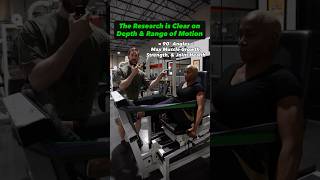
Research confirms that partial squats at 90 degrees are optimal for muscle growth, strength, and joint health. The video discusses biomechanics, power output, and training recommendations based on scientific studies and…
Research shows that training at 90 degrees knee flexion maximizes muscle growth while minimizing joint stress. Going beyond this angle offers no additional hypertrophy and may affect long-term strength and recovery.
Research shows training at 90 degrees knee flexion is optimal for muscle growth and joint health. Going beyond this range does not enhance hypertrophy and may hinder strength and stability, impacting long-term progress.
This video discusses the impact of exercise order on maximizing strength in untrained young men. Referencing key studies, it explores various training methods and their effectiveness in strength development.
Squat truths explained through science show that partial squats at 90 degree joint angles are superior for muscle growth, strength, and joint health, especially for non-competitive athletes. Deep squats up to 100…
May 2, 2024 · 3 shares · 1,657 followersView post →
DB
Doctor Bob
@DarthIrritable · X
@TraderCombat @AmyCrx_ I mean that differs from this one, which is clear that depth increases activation to about 90-100 degrees. Again, if you're talking max power, sure you need the breaks, but generally there's little proven value, and no reduction of injury risk. https://t.co/8hxhY4WwFA
@PureSports01 @consultantPT @DrJump @RehabGuru Hey Rhys,
Some studies show increased joint forces with deep squat (https://t.co/4sYVCepaiO)
Also, ⬆️ OA risk in powerlifters
However, I do have an irrational hatred of squats - much prefer unilateral exercise for athletes who sprint
 鈴I
鈴I NC
NC GR
GR TD
TD BT
BT



 DB
DB