Participants show strong interest and moderate engagement by referencing specific biological processes like testosterone conversion to DHT and providing links for further reading, which highlights their desire to deepen understanding and share knowledge about the article's content.
AgreementModerate agreement
The discussion shows recognition of the publication's explanation of androgenetics and the link to testosterone and DHT, indicating general agreement.
InterestHigh interest
The use of educational language and references to further learning suggests a high level of curiosity and engagement.
EngagementModerate engagement
Participants actively reference and share additional information, indicating moderate depth in their discussions.
ImpactModerate impact
The discussion seems to foster understanding and promotes further research or learning, though not necessarily transforming perspectives significantly.
Abstract in brief
Androgenetic alopecia affects both men and women, characterized by patterned hair loss driven by genetic factors and circulating androgens, with up to 50% of white males affected by age 50.
The condition involves changes in hair follicle cycles, shifting from long growth phases to shorter ones, leading to follicle miniaturization, which is dependent on androgens and multiple genes, including the androgen receptor (AR).
Current treatments like finasteride and minoxidil have variable success, but ongoing research into the genetic basis, especially concerning the AR gene, may lead to more targeted and effective therapies in the future.
@Sir_Omboto254 @jeanbrendah @Lilndenga Yes, that's why it's called androgenetic alopecia. Testosterone is an androgen and can be converted to DHT which is the principal androgen linked to said alopecia. Here is an article on its pathogenesis. You can learn more by clicking the links at the end
https://t.co/5X6mXqVyyA
Jan 21, 2025 · 1 like · 2,611 followersView post →
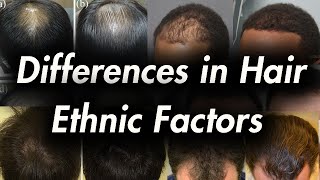
This video explores hair growth traits in 2,249 young adults from 24 ethnic groups. It highlights significant differences in hair density, growth rates, and characteristics influenced by gender and geography, revealing…
This video explores a study analyzing hair growth traits in 2249 young adults from 24 ethnic groups worldwide. Key findings highlight significant differences in hair density and growth rates, revealing a complex…
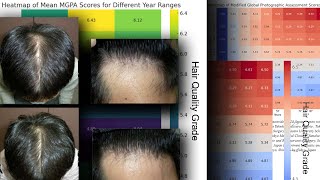
Finasteride 1 mg daily effectively treats male androgenetic alopecia, with benefits continuing or improving over 10 years. Older men over 30 tend to see better results, and initial improvements can predict long-term…
Finasteride 1 mg daily is effective for male androgenetic alopecia, with benefits improving or continuing over 10 years. Older men over 30 tend to see better results, and initial improvement predicts long-term success…
Asian hair is characterized by its straightness, dark color, and larger diameter, with a thicker and more compact cuticle layer. This video reviews Asian hair properties and discusses skin disorders more common in Asian…
This video examines a study on hair growth traits in 2,249 young adults from 24 ethnic groups. It highlights differences in hair density, growth rates, and characteristics such as color and curliness, providing insights…
@Sir_Omboto254 @jeanbrendah @Lilndenga Yes, that's why it's called androgenetic alopecia. Testosterone is an androgen and can be converted to DHT which is the principal androgen linked to said alopecia. Here is an article on its pathogenesis. You can learn more by clicking the links at the end
https://t.co/5X6mXqVyyA
Jan 21, 2025 · 1 like · 2,611 followersView post →