Nick
@upRootNutrition · X
1/8 No problem!
Sep 24, 2022 · 28 likes · 8 shares · 9,507 followers
View post →
Mentions
Extended reach
Total likes
Video views
AI synopsis
The collective discussions highlight a nuanced debate about LDL particle measurement, with some posters emphasizing its importance and others dismissing its relevance, using technical language and referencing studies to support claims, which reflects a high level of engagement and moderate perceived impact in shaping health perspectives.
The discussions show mixed opinions, with some dismissing the research and others supporting the link between lipid markers and cardiovascular risk.
Participants demonstrate moderate curiosity, especially regarding the relationship between LDL particle number and heart disease.
Posts involve detailed explanations, references, and debates about the methodologies and implications, indicating deep engagement.
The conversations suggest the article influences opinions, prompting debates about measurement techniques and clinical significance.
1/8 No problem!
LDL-C or LDL-P/ApoB? A high TG/HDL ratio is a correlate for elevated LDL-P/ApoB, and LDL-C's effects on increasing CVD risk almost never survives adjustment for LDL-P/ApoB in multivariable adjustment models.
2/10 Philip's focus on "metabolic health" over "LDL" is misguided. High TG and low HDL is a proxy for ApoB/LDLp. If you have high ApoB in the context of low TG and high HDL, you're likely still at risk. ApoB tracks tightly with atherogenic dyslipidemia. https://t.co/htHMTV65Q0 https://t.co/ukqxOh0xTJ
Bonus reference, here. The TG/HDL ratio is basically just a correlate for a higher LDL particle count in the general population. Just because keto might lower TG, that shouldn't be taken as an indication that keto would abolish the risk. https://t.co/htHMTV65Q0 https://t.co/VJHNZLkizs
@Springandashura It's a proxy for ApoB under usual circumstances. However, keto can have the effect of dropping TGs and increasing HDL-C, but ALSO increasing ApoB. So it's unclear that keto is even beneficial at all in this regard. https://t.co/htHMTV65Q0 https://t.co/DyFT1sWkVx
Reference: https://t.co/htHMTUOuYs

Dr. Eric Berg reviews his wife's cholesterol values and discusses the relationship between total cholesterol, dietary cholesterol, and cardiovascular risk, highlighting current scientific guidelines and the importance…
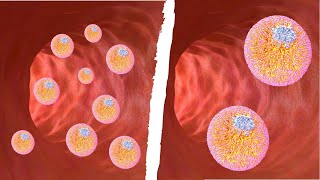
This video examines whether small dense LDLs are more atherogenic or if LDL particle number is a more relevant risk indicator, highlighting recent evidence favoring particle number as a superior predictor of…

This video explains the role of LDL particles in coronary heart disease, emphasizing that measuring LDL particle number through nuclear magnetic resonance provides a more accurate risk assessment than traditional LDL…

Your total cholesterol level is not the sole factor in heart disease risk. This video explores various contributors such as triglycerides, LDL particle number, and endothelial damage, along with reference ranges and…

This video explores the role of LDL particles in causing coronary heart disease and discusses why measuring LDL particle number can be a more accurate predictor of risk than traditional LDL cholesterol levels.

This video explains the importance of LDL particles in heart disease development, highlighting that measuring LDL particle number, especially via nuclear magnetic resonance, is a better predictor of risk than…
@s4m4rn0ld @JWiseWrld @AddyMuncher @nutrition_facts “90 seconds” Doesn’t refute my point. That’s called confirmation bias. It's untrue that LDL tells you nothing. That's just a complete misunderstanding. LDL-C and ApoB are very rarely discordant outside of the range of atherogenic dyslipidemia. https://t.co/NO3uAnJCWX
RT @TheNutrivore: 1/8 No problem!
RT @TheNutrivore: 1/8 No problem!
RT @TheNutrivore: 1/8 No problem!
RT @TheNutrivore: 1/8 No problem!
RT @TheNutrivore: 1/8 No problem!
RT @TheNutrivore: 1/8 No problem!
RT @TheNutrivore: 1/8 No problem!
RT @TheNutrivore: 1/8 No problem!
1/8 No problem!
Bonus reference, here. The TG/HDL ratio is basically just a correlate for a higher LDL particle count in the general population. Just because keto might lower TG, that shouldn't be taken as an indication that keto would abolish the risk. https://t.co/htHMTV65Q0 https://t.co/VJHNZLkizs
@Springandashura It's a proxy for ApoB under usual circumstances. However, keto can have the effect of dropping TGs and increasing HDL-C, but ALSO increasing ApoB. So it's unclear that keto is even beneficial at all in this regard. https://t.co/htHMTV65Q0 https://t.co/DyFT1sWkVx
2/10 Philip's focus on "metabolic health" over "LDL" is misguided. High TG and low HDL is a proxy for ApoB/LDLp. If you have high ApoB in the context of low TG and high HDL, you're likely still at risk. ApoB tracks tightly with atherogenic dyslipidemia. https://t.co/htHMTV65Q0 https://t.co/ukqxOh0xTJ
@JonInternet It's untrue that LDL tells you nothing. That's just a complete misunderstanding. LDL-C and ApoB are very rarely discordant outside of the range of atherogenic dyslipidemia. Again, I do not have atherogenic dyslipidemia. https://t.co/htHMTUOuYs https://t.co/RJ4xYRmtML
Reference: https://t.co/htHMTUOuYs
RT @The_Nutrivore: LDL-C or LDL-P/ApoB? A high TG/HDL ratio is a correlate for elevated LDL-P/ApoB, and LDL-C's effects on increasing CVD…
RT @The_Nutrivore: LDL-C or LDL-P/ApoB? A high TG/HDL ratio is a correlate for elevated LDL-P/ApoB, and LDL-C's effects on increasing CVD…
RT @The_Nutrivore: LDL-C or LDL-P/ApoB? A high TG/HDL ratio is a correlate for elevated LDL-P/ApoB, and LDL-C's effects on increasing CVD…
LDL-C or LDL-P/ApoB? A high TG/HDL ratio is a correlate for elevated LDL-P/ApoB, and LDL-C's effects on increasing CVD risk almost never survives adjustment for LDL-P/ApoB in multivariable adjustment models.
@aware_crackbear @dylanarmbruste3 @foodbeforepills @mosca_matthew I'm not convinced the TG/HDL ratio would really survive an adjustment for ApoB/LDLp at the end of the day. Perhaps some residual risk from TG, but probably not much by comparison. https://t.co/htHMTV65Q0 https://t.co/nrfHbddwzi
RT @The_Nutrivore: @DrPaulMason @dylanarmbruste3 @TheBhupiThakur @StolteThiago @Tom_Babington1 @DrMavro @NutritionMadeS3 @AviBittMD I'm not…
RT @The_Nutrivore: @DrPaulMason @dylanarmbruste3 @TheBhupiThakur @StolteThiago @Tom_Babington1 @DrMavro @NutritionMadeS3 @AviBittMD I'm not…
@DrPaulMason @dylanarmbruste3 @TheBhupiThakur @StolteThiago @Tom_Babington1 @DrMavro @NutritionMadeS3 @AviBittMD I'm not sure why the author's expectations should be taken as direct evidence of anything. But the effect of lowering HDL and increasing TG on CVD risk is a function of ApoB. The TG/HDL ratio is merely a correlate for ApoB. https://t.co/htHMTV65Q0