 S
Stefan
@skinchemically · X
Sumber: 1. https://t.co/tU6s8wbz7Z 2. https://t.co/XRVD96eaEm
Dec 23, 2021 · 2 likes · 5,920 followers
View post →
Mentions
Extended reach
Total likes
Video views
AI synopsis
The collective reactions reflect cautious curiosity, with references to prior studies like those by Wohlrab and the safety assessment report, yet many users dismiss certain claims or show limited engagement, indicated by phrases like 'I'll pass!!!!' and minimal elaboration. The tone suggests a neutral or mildly skeptical attitude, with interest centered around safety and efficacy concerns.
The discussion seems neutral, with few expressing strong opinions either for or against the publication's safety conclusions.
Participants show some curiosity, especially in referencing related studies and historical data, but overall engagement remains limited.
Most comments are brief or dismissive, with little deep analysis or extensive discussion of methodologies.
The discussions are somewhat academic and don't appear to influence broader opinions or behaviors significantly.
Sumber: 1. https://t.co/tU6s8wbz7Z 2. https://t.co/XRVD96eaEm
- Johannes Wohlrab, D. K. (2014). Niacinamide – Mechanisms of Action and. Skin Pharmacol Physiol, 311-315. Panel, C. E. (2005). Final Report of the Safety Assessment of Niacinamide and Niacin. International Journal of Toxicology Volume 24, Issue 5, 1-30.
[Ref] https://t.co/Z2TbogvKAc
@celestialbe1ng "Niacinamide can moderate the induction of tumors by established carcinogens" I'll pass!!!! https://t.co/v9ZqSNMVno
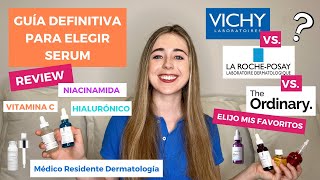
This video compares popular serums from Vichy, La Roche Posay, and The Ordinary, focusing on ingredients like Vitamin C, Niacinamide, and Hyaluronic Acid to help you select the most effective option for skin…

Niacinamide is a popular ingredient in many skincare products. This video explores its effectiveness in reducing skin pigmentation by inhibiting melanosome transfer, backed by scientific research and clinical trials…
@celestialbe1ng "Niacinamide can moderate the induction of tumors by established carcinogens" I'll pass!!!! https://t.co/v9ZqSNMVno
[Ref] https://t.co/Z2TbogvKAc
- Johannes Wohlrab, D. K. (2014). Niacinamide – Mechanisms of Action and. Skin Pharmacol Physiol, 311-315. Panel, C. E. (2005). Final Report of the Safety Assessment of Niacinamide and Niacin. International Journal of Toxicology Volume 24, Issue 5, 1-30.
Sumber: 1. https://t.co/tU6s8wbz7Z 2. https://t.co/XRVD96eaEm
 S
 เอ
 PL