Florian Verdier
@floriannechekuv.bsky.social · Bluesky
En audio : t.co/G55cHwln8Z En vidéo : youtu.be/s47FUJ2a_7Y
Mar 28, 2024
View post →
Mentions
Extended reach
Total likes
Video views
AI synopsis
The discussions include references to visual and audio materials related to the study, with posts like 'En audio' and 'En vidéo' highlighting different media formats. The tone varies from neutral curiosity to mild appreciation, with some posts questioning the significance of Kiwi birds' sensory adaptations, reflecting a moderate interest and engagement level.
The posts show mixed feelings about the study, with some acknowledging its importance while others question or remain neutral.
The discussions indicate a modest curiosity, especially in the video content, but overall interest remains moderate.
Participants engage by sharing thoughts and references, but the depth of discussion varies, suggesting a basic level of involvement.
The posts do not suggest that this publication has sparked widespread or profound influence, though some appreciation for its insights is evident.
En audio : t.co/G55cHwln8Z En vidéo : youtu.be/s47FUJ2a_7Y
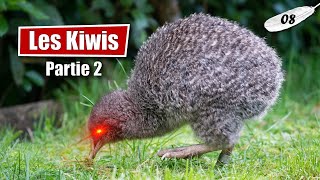
Kiwi birds are nocturnal and flightless, relying less on vision and more on tactile and olfactory senses, showing convergent evolution with nocturnal mammals to navigate low-light forest habitats.

Kiwi birds are nocturnal and flightless, relying less on vision and more on tactile and olfactory senses to navigate their environment. This adaptation exemplifies convergent evolution with nocturnal mammals that depend…

Kiwi birds are nocturnal and flightless, relying less on vision and more on tactile and olfactory senses. This adaptive evolution demonstrates convergent development of sensory systems in low-light environments, similar…
En audio : t.co/G55cHwln8Z En vidéo : youtu.be/s47FUJ2a_7Y