Participants frequently reference the original study from 2008, emphasizing that zoonotic diseases, especially from wildlife, are rising due to human environmental impact. Their tone includes concern and urgency, citing examples like the link between biodiversity and disease emergence, and highlighting the ongoing relevance of these findings today.
AgreementModerate agreement
Most discussion participants agree that emerging infectious diseases are increasing and often originate from wildlife, aligning with the article's findings.
InterestHigh interest
Posts show high interest, with many referencing the importance of zoonoses, ecological factors, and global health implications.
EngagementModerate engagement
There is moderate engagement, with posters citing specific data, critiquing past predictions, and emphasizing the relevance of ecological conservation.
ImpactHigh impact
Discussions reflect an awareness of significant impacts, especially the connection between human activities, wildlife biodiversity, and disease spread.
Abstract in brief
Emerging infectious diseases (EIDs) are increasingly impacting global health and economies, with patterns influenced by socio-economic, environmental, and ecological factors.
The study highlights that most EIDs are zoonotic, originating from wildlife, with a significant rise over time, especially during the 1980s, and many are caused by bacteria or rickettsia, including drug-resistant microbes.
The research indicates that EID hotspots are often at lower latitudes with less reporting, suggesting current global efforts may be misallocated, focusing on regions less likely to produce new EIDs.]
Massentierhaltung erzeugt immer wieder Infektionskrankheiten, die durch Bakterien, Parasiten, Pilze, Prionen oder Viren von Tier auf Mensch übertragen werden. Der Klimawandel begünstigt all dies. Erreger mutieren und bilden Resistenzen.
#GoVegan bitte
その2)
Kate Jonesの研究はたぶんこのNature論文ではないか。「1960年から2004年までに出現した335 疾病のうち少なくとも60%が動物起源」と述べていますね。この論文2008年だからそれ以後研究もたぶん進んでいるのだと思う
Global trends in emerging infectious diseases
https://t.co/fD3SlAXJwN
@Pillboxman @WWF @G7 Jones, K.E., Patel, N.G., Levy, M.A., Storeygard, A., Balk, D., Gittleman, J.L. & Daszak, P. (2008). Global trends in emerging infectious diseases.
Jun 18, 2021 · 3 likes · 3,127 followersView post →
RR
Random paper from RePEc
@random-repec-paper.bsky.social · Bluesky
Global trends in emerging infectious diseases
by Kate E. Jones & Nikkita G. Patel & Marc A. Levy & Adam Storeygard & Deborah Balk & John L. Gittleman & Peter Daszak (2008)
found this from 2008 predicting where infectious diseases can originate. "Global trends in emerging infectious diseases" from 2008 not 2020. https://t.co/gxT6J7JFDU https://t.co/6d5OmJOXZr
@Chantal_Jouanno b) Global trends in emerging infectious diseases.
Nature 451, 990–993 (2008)
https://t.co/Zlr72P67bI
La densité de population joue de loin le rôle le plus important dans l'émergence des zoonoses d'origine sauvage.
La biodiversité de la faune sauvage la favorise. https://t.co/20t3LIGLEG
The next pandemic could originate from Brazil, highlighting the threat zoonoses pose to public health. This scientific exploration delves into the origins of pandemics and the role of animal-borne diseases in…
After exploring Amazonian caves and analyzing bats, I understand the importance of ecological approaches to prevent future pandemics, focusing on zoonotic origins and environmental factors influencing disease emergence.
The conserved environment promotes health, while a degraded environment poses risks. Diseases are multi-causal, influenced by socio-environmental determinants. The emergence of modern risks includes urban lifestyles…
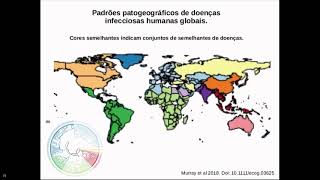
This video discusses the diversity of emerging infectious diseases and their regionalization. It examines the effects of biogeographic and human factors on the distribution of these diseases, highlighting the risks and…
@FlorianDreaming @KorlDa Zoonosen passieren ständig. Ich kann in diesen Daten keinen Anstieg in jüngerer Zeit erkennen. Im Gegenteil. https://t.co/kfB3x0UM9f
Adaptive ecosystem restoration to mitigate zoonotic risks
https://www.newsbeep.com/uk/184051/
Jones, K. E. et al. Global trends in emerging infectious diseases. Nature 451, 990–993 (2008). Article CAS PubMed …
Adaptive ecosystem restoration to mitigate zoonotic risks
https://www.newsbeep.com/ie/65583/
Jones, K. E. et al. Global trends in emerging infectious diseases. Nature 451, 990–993 (2008). Article CAS PubMed …
Global trends in emerging infectious diseases
by Kate E. Jones & Nikkita G. Patel & Marc A. Levy & Adam Storeygard & Deborah Balk & John L. Gittleman & Peter Daszak (2008)
Study from China reviews global trends in emerging infectious diseases.
Highlights gaps in animal models, vaccine R&D, and the role of AI in prevention.
Urgent need for faster responses to pathogens like Ebola and SARS-CoV-2.
https://t.co/0qlOARjiJy
Massentierhaltung erzeugt immer wieder Infektionskrankheiten, die durch Bakterien, Parasiten, Pilze, Prionen oder Viren von Tier auf Mensch übertragen werden. Der Klimawandel begünstigt all dies. Erreger mutieren und bilden Resistenzen.
#GoVegan bitte
EcoHealth Alliance then became The Wildlife Trust in 1999.
In February 2008, they published a paper in Nature entitled “Global trends in emerging infectious diseases” which featured an early rendition of a global disease hotspot map. Using epidemiological, social, and
He adds that developing countries in the tropics, where wildlife diversity is greatest, should be the front line of this battle against viruses.
2/21/08 ( at this point, it is as if you are reading an advertisement )
https://t.co/1fBcd6wasm
https://t.co/w8CiIHxKNs
@Stechpalme6 @Friedemann1 Jones K.E., Patel N.G., Levy M.A., Storeygard A., Balk D., Gittleman J.L. & Daszak P. (2008). – Global trends in emerging infectious diseases. Nature, 451 (7181), 990–993. doi:10.1038/nature06536.
Bilden Sie sich fort!
@Pillboxman @WWF @G7 Jones, K.E., Patel, N.G., Levy, M.A., Storeygard, A., Balk, D., Gittleman, J.L. & Daszak, P. (2008). Global trends in emerging infectious diseases.
Jun 18, 2021 · 3 likes · 3,127 followersView post →
UY
UERM Red Cross Youth
@UERM_RCYC · X
Second Topic: Global Trends in Emerging Infectious Diseases by Dr Abhishek Rimal from the IFRC!
#ViralThanVirus https://t.co/CxcyFZBf0L
@h24_ol @SeriousCharly @BryanSupaberg @AnthooAlgodon Je cite notamment l'abstact de "Global trends in emerging infectious diseases
" : "EID events have risen significantly over time after controlling for reporting bias" (publié dans Nature, cité + de 500 fois)
@Taifun987 @42Fragen @JuleStinkesocke Das ist der Stand der Forschung (z.B. https://t.co/9RcDUhzruA). Deshalb ist die Zahl der auftretenden zoonotischen Erreger auch am Ansteigen (https://t.co/GHE4pYNm9T), und wird es wohl auch weiter tun (i.e. die Wahrsch. dass soetwas wie COVID sich wiederholt steigt leider).
... Her work showed that new diseases are on the increase and that they usually originate from contact with wild animals as our species occupies and further exploits natural areas on the planet." https://t.co/SOnGOOSORU 4/4
RT @Davidsegarra: Global trends in emerging infectious diseases.
https://t.co/2vZmLkFlud https://t.co/9s9WcAOP3K
May 9, 2020 · 2 shares · 20,051 followersView post →
في
فَصَبْرٌ جَمِيلٌ
@Davidsegarra · X
Global trends in emerging infectious diseases.
https://t.co/2vZmLkFlud https://t.co/9s9WcAOP3K
May 9, 2020 · 2 shares · 20,051 followersView post →
LL
Lidia Lidia
@justLidiaLidia · X
According to the study 'Global trends in emerging infectious diseases' The increase and the spread of these diseases is a hidden ‘cost’ of human economic development. #coronavirus #facemask #COVIDー19 #COVID19 https://t.co/YI3aksc35F
Selon "Global trends in emerging infectious diseases" de
K. E. Jones, la crise sanitaire du Covid-19 est due à l'empreinte écologique favorisant la promiscuité entre les différentes espèces – et la nôtre – avec pour effet de nouveaux hôtes intermédiaires propageant les virus.
2 articles à lire cette semaine (en libre accès) :
Global trends in emerging infectious diseases https://t.co/bzVV65TwoE
Global hotspots and correlates of emerging zoonotic diseases https://t.co/FKPdiKcKkZ
@Chantal_Jouanno c) Global trends in emerging infectious diseases.
Nature 451, 990–993 (2008)
https://t.co/Zlr72P67bI
Compte tenu de ce contexte, il est étrange de voir conclure ceci ⤵️
Mais c'est un fait que c'est ainsi que se construisent les assertions du type "il est clair que". https://t.co/ouYNkEXxde
Apr 16, 2020 · 1 like · 1,476 followersView post →
PV
Patrick Vincourt
@PVincourt · X
@Chantal_Jouanno b) Global trends in emerging infectious diseases.
Nature 451, 990–993 (2008)
https://t.co/Zlr72P67bI
La densité de population joue de loin le rôle le plus important dans l'émergence des zoonoses d'origine sauvage.
La biodiversité de la faune sauvage la favorise. https://t.co/20t3LIGLEG
found this from 2008 predicting where infectious diseases can originate. "Global trends in emerging infectious diseases" from 2008 not 2020. https://t.co/gxT6J7JFDU https://t.co/6d5OmJOXZr
その2)
Kate Jonesの研究はたぶんこのNature論文ではないか。「1960年から2004年までに出現した335 疾病のうち少なくとも60%が動物起源」と述べていますね。この論文2008年だからそれ以後研究もたぶん進んでいるのだと思う
Global trends in emerging infectious diseases
https://t.co/fD3SlAXJwN
RT @juli_cortes: Article: Global trends in emerging infectious diseases. "Efforts to conserve areas rich in wildlife diversity by reducing…
Mar 31, 2020 · 2 shares · 551 followersView post →
JC
Juliana Cortés
@juli_cortes · X
Article: Global trends in emerging infectious diseases. "Efforts to conserve areas rich in wildlife diversity by reducing anthropogenic activity may have added value in reducing the likelihood of future zoonotic disease emergence" (Jones et al., 2008).
https://t.co/jUw5oey021 https://t.co/OUqMHfLbfi
Mar 31, 2020 · 2 likes · 2 shares · 242 followersView post →
JG
Javier N. Gelfo
@Javier_N_Gelfo · X
necedad.
Referencias:
1. Jones, K. E., Patel, N. G., Levy, M. A., Storeygard, A., Balk, D., Gittleman, J. L., & Daszak, P. (2008). Global trends in emerging infectious diseases. Nature, 451(7181), 990-993.
2. Morens, D. M., Folkers, G. K. & Fauci, A. S. The challenge of emerging
If you're looking for answers as to the root causes of this #COVIDー19 situation
Jones et al (2008) Global trends in emerging infectious diseases. Nature
https://t.co/l1LSFxUwQl
#OneHealth #animals #health
4/ https://t.co/F0qDndCUc0
Mar 23, 2020 · 1 like · 2,429 followersView post →
CF
CD11c-CRE-STAT3^Flox/Flox
@non_coding_rnas · X
@drjcavalcanti A epidemia causado pela Influenza A H1N5 (gripe aviária) foi em 2007 (não em 2004).
K.E. Jones, N.G. Patel, M.A. Levy, A. Storeygard, D. Balk, J.L. Gittleman, P. Daszak Global trends in emerging infectious diseases Nature, 451 (7181) (2008), p. 990.
@DavidNdii @cswekesa @DataRuckus Diseases that jump from animals/wildlife to humans are called Zoonoses, in "Global trends in emerging infectious diseases(EID)" https://t.co/JZ5QSf2KNI zoonoses make up (60.3% of EIDs),71.8% jump from wildlife( SARS-COV-19,Ebola etc). what's the basis for your contrarian opinion?
 石
 TC
 J
 PV


 BB
 T
 PR
 DU
 IS
 BV
 RC
 M
 TU
 UY
 L
 JB
 DN
 في
 JM
 LL
 P
 PB
 N
 人自
 N
 JC
 JG
 CF
 NM
 K
 SR