Dr Shawn Baker
@SBakerMD · X
Pharma Nonsense: Sugar DOESN'T Cause Diabetes?! https://t.co/grvtzttdoo via @YouTube
Jul 8, 2023 · 138 likes · 19 shares · 358,939 followers
View post →
Mentions
Extended reach
Total likes
Video views
AI synopsis
- **The primary focus of the digital discussions revolves around controversial perspectives on diabetes management, particularly questioning mainstream views on insulin resistance and the role of sugar in diabetes development.** - **Many posts criticize pharmaceutical narratives, with phrases like "Pharma Nonsense: Sugar DOESN'T Cause Diabetes?!" echoing skepticism towards established medical guidelines. The tone is generally rebellious and critical, highlighting a strong distrust in pharmaceutical companies while advocating for alternative methods to manage diabetes, such as referencing the carnivore diet or questioning prescribed medication. Discussions that reference the ACCORD trial also demonstrate an educational intent, suggesting that followers are looking for deeper insights into diabetes treatment beyond standard practices.** - **These discussions tie back to the publication on intensive glucose lowering in type 2 diabetes by emphasizing that there is significant contention surrounding traditional diabetes management. The article highlights the risks of intensive therapy, such as increased mortality rates without substantial cardiovascular benefits, reflecting the concerns raised in the social discussions about the adequacy of common approaches to diabetes treatment. Participants contextualize these sentiments in light of newer perspectives that suggest alternative treatment paths, underscoring a demand for more nuanced discussions about managing diabetes.**
Pharma Nonsense: Sugar DOESN'T Cause Diabetes?! https://t.co/grvtzttdoo via @YouTube
The ACCORD study, one of the largest studies of type 2 diabetics reported an increased risk of mortality in those on intensive glycemic control. Additionally, intensive glucose did not significantly reduce major cardiovascular events. https://t.co/uUKQPv7Los
血糖値だけ改善しても却って死亡リスクは上がる 120歳本でも書いているホモシステイン問題とか 長年の自堕落な生活を改善する 10万6千kmもある全身の血管を改善するには数年ではどうにもならない 中途半端にやったりやらなかったりなら辞めたら? 一生涯の生活習慣の改善 https://t.co/Ja4ubHP7uM
El lunes. ¡Elijamos que vamos a revisar en el Journal Club de esta semana! Aquí la última sesión: https://t.co/kAFHHwTZLR Links relevantes del Journal Club: Live (Jueves 19:00 hora de la CDMX): https://t.co/XNJTyyay1H Grupo de WhatsApp: https://t.co/YWYQkNQ4n0
El estudio "clásico" es el ACCORD. ¿Qué tan estrictos hay que ser con el control glucémico? https://t.co/lNtBbo7iTV
★知っておきたい糖尿研究:ACCORD 心血管疾患または心血管(CV)リスク因子のある2型糖尿病患者において,HbA1cを正常範囲に低下させる強化療法のCVイベント減少を標準療法と比較 HbA1c値を正常に低下させる強化療法は,標準療法に比し死亡率を上昇,CVイベント低下を認めず https://t.co/CwhOv1hB9O

This video examines the effects of intensive glucose lowering on cardiovascular events in type 2 diabetes patients. A study involving over 10,000 patients revealed concerning trends in mortality rates and complications…

This video explores the fundamental principles of quantum computing, discussing its potential applications and implications for various fields. Viewers will gain insights into how quantum algorithms differ from…

This video analyzes a study on intensive glucose lowering effects in type 2 diabetes patients with cardiovascular risk. It discusses the findings that intensive therapy led to higher mortality rates despite lower…

This video explains why insulin resistance is a natural protective mechanism against excess insulin and glucose, and discusses how current treatments may interfere with this process, potentially causing harm in type 2…
This video analyzes the effects of intensive glucose lowering on diabetes, highlighting a study with over 10,000 patients. It revealed that while intensive therapy may lower hemoglobin levels, it can increase mortality…
This video reviews 'The Diabetes Code' by Dr. Jason Fung, focusing on insulin resistance and hyperinsulinemia. Dr. Fung discusses reversing type 2 diabetes naturally, emphasizing the pitfalls of standard therapies and…

This video delves into the effects of climate change on marine ecosystems. It explores how rising temperatures and ocean acidification threaten various species, emphasizing the need for urgent conservation actions to…

This video delves into the fascinating world of quantum entanglement, a key phenomenon in quantum mechanics. Discover how entangled particles communicate instantaneously across distances, the implications for quantum…

This video reviews a study on the effects of intensive glucose lowering in type 2 diabetes patients. The research involved over 10,000 subjects and revealed that while intensive treatment lowered blood glucose levels…

This video analyzes the ACCORD trial, which studied intensive glucose lowering in over 10,000 diabetes patients with cardiovascular risks. The results revealed that targeting A1c levels below 6% led to a higher…

Intensive glucose control in patients with type 2 diabetes reduces microvascular complications like nephropathy but does not significantly improve macrovascular events or mortality, and increases hypoglycemia risk…
There are 2 big lies about Type 2 Diabetes. It is often seen as a progressive, incurable disease, but in reality, it is primarily a lifestyle and nutritional disorder that can be reversed through dietary changes…


Increasing dietary fiber intake, especially soluble fiber, can improve blood sugar control and lipid profiles in patients with type 2 diabetes. A high-fiber diet (50g per day) significantly lowers blood glucose…

Prof Johannes Mann presents the FLOW study results demonstrating the nephroprotective effects of Semaglutide in 3533 chronic kidney disease patients, emphasizing recent advances in managing blood pressure in CKD.

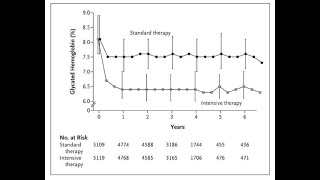
The study ACCORD explores the benefits and risks of intensive glucose control in type 2 diabetes, highlighting its impact on microvascular complications, macrovascular outcomes, and hypoglycemia risk over five years.


This video discusses a study on lixisenatide, a medication for type 2 diabetes, examining its effects on cardiovascular outcomes in patients with recent heart attacks or unstable angina. The medication was found to be…

This video explores the surprising findings from the ACCORD trial, revealing that targeting an HbA1c below 6 increased mortality compared to standard targets. Learn about the study design, key results, and the…
Attention diabetic! ACCORD Trial revealed that the use of intensive therapy to get normal levels of Hb1AC, increased mortality & did not significantly reduce major cardiovascular events. (https://t.co/Q7whQ4SbBK) Why? Bcoz drugs reduce blood sugar, not insulin resistance
<(ドクター用)フリースタイルリブレによる血糖トレンド(血糖推移)> ACCORD試験などの結果から、低血糖は死亡のリスクを高めることがわかっている。そのため低血糖を回避しつつ、HbA1cを7.0%未満に抑えること、TIRを70%以上にすることが治療目標となる。 https://t.co/F9Rf8q3G0z
<(ドクター用)フリースタイルリブレによる血糖トレンド(血糖推移)②> https://t.co/F9Rf8q3G0z ・夜間の低血糖時の不整脈およびそれに伴う不整脈死が問題となっている。
“As compared with standard therapy, the use of intensive [insulin] therapy to target normal glycated hemoglobin levels for 3.5 years increased mortality and did not significantly reduce major cardiovascular events.” https://t.co/dRStJHHRr4
「ローリングストーン誌が選ぶ歴代最高の論文500」みたいなのがあればACCORD試験が何位になるかは気になる。 Effects of intensive glucose lowering in type 2 diabetes - PubMed https://t.co/W4nWYAodFy
@docramiro También agrego el estudio ACCORD https://t.co/re5l1cvlAR
Book review of THE DIABETES CODE by Jason Fung, MD. Fung goes against the mainstream in explaining insulin resistance and hyperinsulinemia. The big problem is too much insulin. Explains what causes insulin resistance, how to reverse insulin resistance. https://t.co/YUHOtiqGBI
As compared with standard therapy, the use of intensive therapy to target normal glycated hemoglobin levels for 3.5 years increased mortality and did not significantly reduce major #cardiovascular events
RT @je_pala: @XBayona Se sabe que objetivos muy estrictos de control en personas de alto riesgo con diabetes son peligrosos desde 2008, cua…
RT @je_pala: @XBayona Se sabe que objetivos muy estrictos de control en personas de alto riesgo con diabetes son peligrosos desde 2008, cua…
RT @je_pala: @XBayona Se sabe que objetivos muy estrictos de control en personas de alto riesgo con diabetes son peligrosos desde 2008, cua…
@XBayona Se sabe que objetivos muy estrictos de control en personas de alto riesgo con diabetes son peligrosos desde 2008, cuando se interrumpió la rama del estudio ACCORD que se planteaba objetivos más intensos de control de la HbA1c, por aumento de la mortalidad https://t.co/9a264o0c80
@MAMelby @paritybydesign @HolyroodDaily as for examples of studies, here are two: https://t.co/AIOklH2DOg https://t.co/74nh9s6Knk
結局、論文論文いうけど、お前、論文読んでなにがどうなんのさ、論文なんてピンキリだろ
@lakartidn En konsekvent motreferens är ACCORD-studien. https://t.co/zijsLio353
Pharma Nonsense: Sugar DOESN'T Cause Diabetes?! https://t.co/65pqU0QfrY via @YouTube
@ganthonyfernan1 @McfarlaneGlenda Pharma Nonsense: Sugar DOESN'T Cause Diabetes?! https://t.co/EZLYU8wXRS via @YouTube
RT @GerryK22141809: Pharma Nonsense: Sugar DOESN'T Cause Diabetes?! https://t.co/EZLYU8wXRS via @YouTube
Pharma Nonsense: Sugar DOESN'T Cause Diabetes?! https://t.co/EZLYU8wXRS via @YouTube
@Square1Wellness Pharma Nonsense: Sugar DOESN'T Cause Diabetes?! https://t.co/aZOwk7sZVu
Ortopedkirurg kommenterar cynisk och smaklös reklam från Pfizer, ett företag som till stor del finansieras av skattesubventionerade system och/eller förmåner som tillhandahålls av arbetsgivare världen över. https://t.co/HroTtqpUdv
RT @SBakerMD: Pharma Nonsense: Sugar DOESN'T Cause Diabetes?! https://t.co/grvtzttdoo via @YouTube
I am appalled by this recklessly inaccurate advertisement https://t.co/U3j47i2peh
Dr Shawn baker https://t.co/XFCtaeri6a
RT @SBakerMD: Pharma Nonsense: Sugar DOESN'T Cause Diabetes?! https://t.co/grvtzttdoo via @YouTube
Pharma Nonsense: Sugar DOESN'T Cause Diabetes?! https://t.co/XJ46VD65Gb via @YouTube
RT @SBakerMD: Pharma Nonsense: Sugar DOESN'T Cause Diabetes?! https://t.co/grvtzttdoo via @YouTube
RT @SBakerMD: Pharma Nonsense: Sugar DOESN'T Cause Diabetes?! https://t.co/grvtzttdoo via @YouTube
Diabetes https://t.co/wFBTlp6xhM
RT @SBakerMD: Pharma Nonsense: Sugar DOESN'T Cause Diabetes?! https://t.co/grvtzttdoo via @YouTube
RT @SBakerMD: Pharma Nonsense: Sugar DOESN'T Cause Diabetes?! https://t.co/grvtzttdoo via @YouTube
https://t.co/qajJwcwN9T
Pharma Nonsense: Sugar DOESN'T Cause Diabetes?! https://t.co/Epj1VDjbDv via @YouTube
RT @SBakerMD: Pharma Nonsense: Sugar DOESN'T Cause Diabetes?! https://t.co/grvtzttdoo via @YouTube
RT @SBakerMD: Pharma Nonsense: Sugar DOESN'T Cause Diabetes?! https://t.co/grvtzttdoo via @YouTube
RT @SBakerMD: Pharma Nonsense: Sugar DOESN'T Cause Diabetes?! https://t.co/grvtzttdoo via @YouTube
RT @SBakerMD: Pharma Nonsense: Sugar DOESN'T Cause Diabetes?! https://t.co/grvtzttdoo via @YouTube
製薬会社が「糖質が糖尿病の原因ではない!」と言う! 本当に? https://t.co/mG0ZFYWsAW
RT @SBakerMD: Pharma Nonsense: Sugar DOESN'T Cause Diabetes?! https://t.co/grvtzttdoo via @YouTube
RT @SBakerMD: Pharma Nonsense: Sugar DOESN'T Cause Diabetes?! https://t.co/grvtzttdoo via @YouTube
https://t.co/tvpzAsDQPH
RT @SBakerMD: Pharma Nonsense: Sugar DOESN'T Cause Diabetes?! https://t.co/grvtzttdoo via @YouTube
RT @SBakerMD: Pharma Nonsense: Sugar DOESN'T Cause Diabetes?! https://t.co/grvtzttdoo via @YouTube
RT @SBakerMD: Pharma Nonsense: Sugar DOESN'T Cause Diabetes?! https://t.co/grvtzttdoo via @YouTube
RT @SBakerMD: Pharma Nonsense: Sugar DOESN'T Cause Diabetes?! https://t.co/grvtzttdoo via @YouTube
Pharma Nonsense: Sugar DOESN'T Cause Diabetes?! https://t.co/uctIOjQBoZ via @SBakerMD
RT @SBakerMD: Pharma Nonsense: Sugar DOESN'T Cause Diabetes?! https://t.co/grvtzttdoo via @YouTube
RT @SBakerMD: Pharma Nonsense: Sugar DOESN'T Cause Diabetes?! https://t.co/grvtzttdoo via @YouTube
RT @SBakerMD: Pharma Nonsense: Sugar DOESN'T Cause Diabetes?! https://t.co/grvtzttdoo via @YouTube
Pharma Nonsense: Sugar DOESN'T Cause Diabetes?! https://t.co/NOPhF994q9 via @YouTube go carnivore period.
RT @SBakerMD: Pharma Nonsense: Sugar DOESN'T Cause Diabetes?! https://t.co/grvtzttdoo via @YouTube
RT @SBakerMD: Pharma Nonsense: Sugar DOESN'T Cause Diabetes?! https://t.co/grvtzttdoo via @YouTube
Pharma Nonsense: Sugar DOESN'T Cause Diabetes?! https://t.co/grvtzttdoo via @YouTube
https://t.co/NDe0bdwsED
Pharma Nonsense: Sugar DOESN'T Cause Diabetes?! https://t.co/M696oeBVtK via @YouTube
RT @Sona_unplugged: A study that still makes me wonder to this day. What if sugar control alone is really not the real target to prevent…
A study that still makes me wonder to this day. What if sugar control alone is really not the real target to prevent death in Type 2 DM rather the component of insulin resistance
RT @cardiomet_CE: 13) #ACCORD found increased mortality with intensive (#HbA1c <6%) versus standard (HbA1c 7–7.9%) glycemic control targets…
13) #ACCORD found increased mortality with intensive (#HbA1c <6%) versus standard (HbA1c 7–7.9%) glycemic control targets, although this trial was not conducted in patients with advanced #CKD.
13) #ACCORD found increased mortality with intensive (#HbA1c <6%) versus standard (HbA1c 7–7.9%) glycemic control targets, although this trial was not conducted in patients with advanced #CKD.
@ezeforte Te paso las fuentes : https://t.co/22z3SlhiN7 https://t.co/BYdJYNyFTU https://t.co/sh9i6TM0dm
@robertlufkinmd The ACORD study proved that. You cannot medicate away poor nutrition. The study had to be stopped because mortality increased with more treatment. https://t.co/03u1uwpOWc
@DimitriRadoux @ZahcM @richcollins @Gearoidmuar @DIY_Tardis @ScepticalDoctor Additionally, several RCTs in T2D populations have shown lower hba1c and worse cardiovascular outcomes, such as LOOK-AHEAD study and ACCORD study. https://t.co/H4yRnqbhKf
@DrGRuralMD The Accord trial, a large clinical study, showed that aggressive lowering of A1C or sugar levels after 70-75 does not offers benefits, on the contrary. https://t.co/ecJUCulhhq
Aggressive insulin treatment is not the solution to our Diabetes epidemic, reversing insulin resistance through intermittent fasting is... #IntermittentFasting #diabetes #MedTwitter https://t.co/q79SNaxz1V
https://t.co/MpD247vuk1
RT @ShigekiKanamori: 血糖値だけ改善しても却って死亡リスクは上がる 120歳本でも書いているホモシステイン問題とか 長年の自堕落な生活を改善する 10万6千kmもある全身の血管を改善するには数年ではどうにもならない 中途半端にやったりやらなかったりなら辞め…
血糖値だけ改善しても却って死亡リスクは上がる 120歳本でも書いているホモシステイン問題とか 長年の自堕落な生活を改善する 10万6千kmもある全身の血管を改善するには数年ではどうにもならない 中途半端にやったりやらなかったりなら辞めたら? 一生涯の生活習慣の改善 https://t.co/Ja4ubHP7uM
ACCORD試験 Effects of Intensive Glucose Lowering in Type 2 Diabetes | NEJM https://t.co/rwberjg2iv
What is the goal glucose level in diabetes? Check out our video on the ACCORD trial to find out! https://t.co/ixcFsDCG9N #MedTwitter #MedEd #NurseTwitter #nursepractitioner #healthcare #HealthTips https://t.co/jqulv6FxlI
https://t.co/kkpJrYYMGk a study published in The New England Journal of Medicine which is among the most prestigious peer-reviewed medical journals.
Check out our new video on the ACCORD trial: https://t.co/ixcFsDUhyn #MedStudentTwitter #MedEd #medschool #MedTwitter #nurses
Check out our new video on the ACCORD trial: https://t.co/ixcFsDUhyn #MedStudentTwitter #MedEd #medschool #MedTwitter #nurses https://t.co/cjUbIRYzqH
The original study: https://t.co/jBmS6pxwqS
El lunes. ¡Elijamos que vamos a revisar en el Journal Club de esta semana! Aquí la última sesión: https://t.co/kAFHHwTZLR Links relevantes del Journal Club: Live (Jueves 19:00 hora de la CDMX): https://t.co/XNJTyyay1H Grupo de WhatsApp: https://t.co/YWYQkNQ4n0
RT @Ad_SotoMota: ¡Ayer revisamos el ACCORD y el ADVANCE! Es MUY ilustrativo comparar dos RCTs que sobre la misma pregunta y que se publica…
RT @Ad_SotoMota: ¡Ayer revisamos el ACCORD y el ADVANCE! Es MUY ilustrativo comparar dos RCTs que sobre la misma pregunta y que se publica…
RT @Ad_SotoMota: ¡Ayer revisamos el ACCORD y el ADVANCE! Es MUY ilustrativo comparar dos RCTs que sobre la misma pregunta y que se publica…
RT @Ad_SotoMota: ¡Ayer revisamos el ACCORD y el ADVANCE! Es MUY ilustrativo comparar dos RCTs que sobre la misma pregunta y que se publica…
RT @Ad_SotoMota: ¡Ayer revisamos el ACCORD y el ADVANCE! Es MUY ilustrativo comparar dos RCTs que sobre la misma pregunta y que se publica…
RT @Ad_SotoMota: ¡Ayer revisamos el ACCORD y el ADVANCE! Es MUY ilustrativo comparar dos RCTs que sobre la misma pregunta y que se publica…
RT @Ad_SotoMota: ¡Ayer revisamos el ACCORD y el ADVANCE! Es MUY ilustrativo comparar dos RCTs que sobre la misma pregunta y que se publica…
Rayos me perdí el JClub en vivo de nuevo
RT @Ad_SotoMota: El estudio "clásico" es el ACCORD. ¿Qué tan estrictos hay que ser con el control glucémico? https://t.co/lNtBbo7iTV
El estudio "clásico" es el ACCORD. ¿Qué tan estrictos hay que ser con el control glucémico? https://t.co/lNtBbo7iTV
@grouchyLida @erudenko https://t.co/Mfn2ioCovz
@irenass05 olej tabletki ;) https://t.co/PQ5LPNhFhj
RT @SlavaVan: @henrykp4015 @Elka68354587 https://t.co/BKldqe8zmm https://t.co/f6BAYo5Vyx https://t.co/7FjkI4KOqK
@henrykp4015 @Elka68354587 https://t.co/BKldqe8zmm https://t.co/f6BAYo5Vyx https://t.co/7FjkI4KOqK
@ZsoltNagy7 @MacroFour @ThomastheFlint @The_Nutrivore @NutritionMadeS3 @drcateshanahan There may even be harms. Effects of intensive glucose lowering in type 2 diabetes "The use of intensive therapy to target normal glycated hemoglobin levels for 3.5 years increased mortality and did not significantly reduce major cardiovascular events." https://t.co/HU6h0VMONC
Диабет 2 типа. Руководство по выживанию. Часть 1. https://t.co/SJoeONTgKz через @YouTube
RT @njerikamenju: The ACCORD study, one of the largest studies of type 2 diabetics reported an increased risk of mortality in those on inte…
RT @njerikamenju: The ACCORD study, one of the largest studies of type 2 diabetics reported an increased risk of mortality in those on inte…
RT @njerikamenju: The ACCORD study, one of the largest studies of type 2 diabetics reported an increased risk of mortality in those on inte…
RT @njerikamenju: The ACCORD study, one of the largest studies of type 2 diabetics reported an increased risk of mortality in those on inte…
RT @njerikamenju: The ACCORD study, one of the largest studies of type 2 diabetics reported an increased risk of mortality in those on inte…
RT @njerikamenju: The ACCORD study, one of the largest studies of type 2 diabetics reported an increased risk of mortality in those on inte…
RT @njerikamenju: The ACCORD study, one of the largest studies of type 2 diabetics reported an increased risk of mortality in those on inte…
RT @njerikamenju: The ACCORD study, one of the largest studies of type 2 diabetics reported an increased risk of mortality in those on inte…
RT @njerikamenju: The ACCORD study, one of the largest studies of type 2 diabetics reported an increased risk of mortality in those on inte…
RT @njerikamenju: The ACCORD study, one of the largest studies of type 2 diabetics reported an increased risk of mortality in those on inte…
RT @njerikamenju: The ACCORD study, one of the largest studies of type 2 diabetics reported an increased risk of mortality in those on inte…
Диабет 2 типа можно вылечить без лекарств Интервью с автором метода https://t.co/tL278hjKg7 через @YouTube
https://t.co/WsieVNSMzG
Диабет 2 типа можно вылечить без лекарств Интервью с автором метода https://t.co/FlYI3BEPmy через @YouTube
RT @njerikamenju: The ACCORD study, one of the largest studies of type 2 diabetics reported an increased risk of mortality in those on inte…
RT @njerikamenju: The ACCORD study, one of the largest studies of type 2 diabetics reported an increased risk of mortality in those on inte…
RT @njerikamenju: The ACCORD study, one of the largest studies of type 2 diabetics reported an increased risk of mortality in those on inte…
The ACCORD study, one of the largest studies of type 2 diabetics reported an increased risk of mortality in those on intensive glycemic control. Additionally, intensive glucose did not significantly reduce major cardiovascular events. https://t.co/uUKQPv7Los
Cukrzyca typu 2- prawdziwe przyczyny powstawania, diagnostyka i skuteczne leczenie (bez tabletek ). https://t.co/QfvybeUzy2
Cukrzyca typu 2- jedzenie 5-6 posiłków dziennie to gwóźdź do trumny
Cukrzyca typu 2- prawdziwe przyczyny powstawania, diagnostyka i skuteczn... https://t.co/DU2VojvoGG przez @YouTube
Cukrzyca typu 2- czy głodówka to "lek" który ją wyleczy?
Cukrzyca typu 2- jedzenie 5-6 posiłków dziennie to gwóźdź do trumny
@IlannePirjo @diabetesliitto @sarisarkomaa Accord 2008 RCT-tutkimus otanta 10251 T2DM potilasta. Intensiivinen verensokeria alentavien lääkkeiden hoito. Kyllä verensokeri tippui mutta eettinen lautakunta joutui keskeyttämään tutkimuksen 3,5 vuoden kuluttua, koska kokonaiskuolleisuus kasvoi 22%! https://t.co/dhCb9VsQER
REFs (part 1): [1]https://t.co/13yFRkA2QY [2]https://t.co/V0GVgFxea7 [3]https://t.co/p8geXZRCom [4]https://t.co/nZ6i7FyWgQ [5]https://t.co/5Z9ivg5bvG [6]https://t.co/XPeJTx7IQM [7]https://t.co/lDh3skGs5z [8]https://t.co/bQUTnrQbSB [9]https://t.co/21rdH5qbEo
RT @I_mitochondria: RCT 10,251 patients, mean age➡️62, median HbA1c➡️8.1% assigned to receive intensive therapy. target➡️HbA1c<6.0%, or sta…
RT @I_mitochondria: RCT 10,251 patients, mean age➡️62, median HbA1c➡️8.1% assigned to receive intensive therapy. target➡️HbA1c<6.0%, or sta…
RCT 10,251 patients, mean age➡️62, median HbA1c➡️8.1% assigned to receive intensive therapy. target➡️HbA1c<6.0%, or standard therapy➡️targeting➡️ 7.0 to 7.9%. Primary outcome➡️composite of nonfatal myocardial infarction, nonfatal stroke, CVD death https://t.co/Bt0b8kDTH5 https://t.co/cwYXmgmxZ7
★知っておきたい糖尿研究:ACCORD 心血管疾患または心血管(CV)リスク因子のある2型糖尿病患者において,HbA1cを正常範囲に低下させる強化療法のCVイベント減少を標準療法と比較 HbA1c値を正常に低下させる強化療法は,標準療法に比し死亡率を上昇,CVイベント低下を認めず https://t.co/CwhOv1hB9O
@Alex_Williams95 @_madworm_ @lowcarbGP @DrScottMurray @honeybunspilsby @NHSEngland @bhf @JamieWaterall @peterfoley_7 @Dr__Guess @BDA_Dietitians @Diabetescouk https://t.co/jw2ICnKOsg
RT @_madworm_: @Alex_Williams95 @wyadvd @lowcarbGP @DrScottMurray @honeybunspilsby @NHSEngland @bhf @JamieWaterall @peterfoley_7 @Dr__Guess…
@Alex_Williams95 @wyadvd @lowcarbGP @DrScottMurray @honeybunspilsby @NHSEngland @bhf @JamieWaterall @peterfoley_7 @Dr__Guess @BDA_Dietitians @Diabetescouk "Intensive therapy" for T2 folk, therefore injections. https://t.co/mPgjmBPvz9
@MoeElgendi @DrLoriBrotto @womensresearch Also, I'm curious: why would you call the left yellow redundant? It is a deliberate signal, not redundant at all. See, for example, the ACCORD trial. People with type 2 diabetes who aimed too low on HbA1c too low were more likely to die during the trial: https://t.co/2JJ1Zyjl0d
Ever heard of dangers of fast dieting? Unsurprisingly tbere are harmful effects of intensive Glucose Lowering too! Effects of Intensive Glucose Lowering in Type 2 Diabetes | NEJM https://t.co/iY7KjH3j7Q
RT @hswapnil: @ChristosArgyrop @HMoradiMD 1.1% difference in ACCORD https://t.co/06tgNKpxvw with these results https://t.co/uY4VKhZC1g
RT @hswapnil: @ChristosArgyrop @HMoradiMD 1.1% difference in ACCORD https://t.co/06tgNKpxvw with these results https://t.co/uY4VKhZC1g
RT @hswapnil: @ChristosArgyrop @HMoradiMD 1.1% difference in ACCORD https://t.co/06tgNKpxvw with these results https://t.co/uY4VKhZC1g
@ChristosArgyrop @HMoradiMD 1.1% difference in ACCORD https://t.co/06tgNKpxvw with these results https://t.co/uY4VKhZC1g
@Lester_Domes @learnfromerror @david_colquhoun @HarryDCrane For 11 years the way the results of the ACCORD trial were reported have continued to harm diabetics, being used to make policy that encourages diabetics to run a hi A1C. Why don't all of you rewrite the results in the way(s) youre proposing would be best? https://t.co/xSCS9gDTK5
(1/2)Trial of the day: ACCORD Gerstein HC, et al. "Effects of Intensive Glucose Lowering in Type 2 Diabetes". The New England Journal of Medicine. 2008. 358(24):2545-59. https://t.co/E3wuiJwpLf #FOAMcards
@SheffieldType https://t.co/jnMPF9hWfH
Effects of intensive glucose lowering in type 2 diabetes. DOI: 10.1056/NEJMoa0802743
@alternateal @VanessaYM https://t.co/0rS7mPP5P7
The Root Cause of Insulin Resistance https://t.co/IaZV2sNj5Z via @YouTube
 F
F D
D LA
LA RC
RC SS
SS