 S
S@DavidMichaelRi8 @Captbobdad @Marcusgibson @caerbannog666 @Sci_or_Fic @secular_girl @ILuvCO2 @jwickers @MikeH_MapleGrov @ShopSmartResist @AltUS_ARC @Climatearticles @JamesRider3 @ghost_of_roger @Michael46830937 @audiF1 @Zigmund_Fraud @anthony_p_james @TheDisproof @KenworthCowboy1 @MacCutcheonD @markbjardine @RegimeChangeBC @Quantummist @TechTomM @TQMKA @d_e_mol @AtomsksSanakan @fishyfish67 @RickWoollams @granitereason @TheClimateHawk @Kenneth72712993 @yota_berlin @tan123 @DenierBot @DiogenesLamp0 @Trismos @HamiDuke @ws_llc @glinch72 @Michael_D_Crow @145Schneider @FriendsOScience @rln_nelson @kuhn_reinhard @HughAbercrombi3 @SphaleriteMz @SylviaD32911201 @Goofydad Did you mean to link to a 2008 paper on Phanerozoic Trends in the Global Diversity of Marine Invertebrates to debunk Svensmark?
Phanerozoic trends in the global diversity of marine invertebrates.
Mentions
Extended reach
Total likes
Video views
Mentions per month
May 2019 – Aug 2024Where it's discussed
-
YouTube2 videos
-
X / Twitter1 posts
AI synopsis
What people are saying
The discussions show a strong focus on how the article challenges traditional views, with users referencing phrases like 'modest rise' and 'no clear overall trend,' which reflect cautious support. The tone combines curiosity and analytical critique, emphasizing the importance of improved methods and data accuracy for understanding ancient biodiversity, exemplifying high engagement and interest.
Most discussions acknowledge the paper's nuanced view that marine invertebrate diversity did not dramatically increase during the Cretaceous and Cenozoic, showing some level of support for the modern analysis over older models.
Posts demonstrate high interest by actively engaging with the research findings, citing specific trends and methodological impacts.
Many discussions delve into methodological details, implications for paleontology and climate studies, and debate around sampling biases, indicating deep engagement.
While some posts suggest the paper influences ongoing scientific debates on biodiversity trends, others see its main value in refining previous models rather than groundbreaking breakthroughs.
Abstract in brief
- The traditional view that marine invertebrate diversity experienced a sharp increase during the Cretaceous and Cenozoic eras is only supported when using older analysis methods; more modern approaches show only a modest rise.
- When adjustments for sampling bias and improved counting methods are applied, the data suggest that marine invertebrate diversity increased slightly but showed no clear overall trend after the mid-Cretaceous period.
- Throughout geological time, marine invertebrate diversity was less than double in the Neogene compared to the mid-Paleozoic, with a consistent ratio of global to local diversity and evidence of a latitudinal diversity gradient from early Paleozoic times.]
Top posts
Most liked on X and BlueskyAll mentions
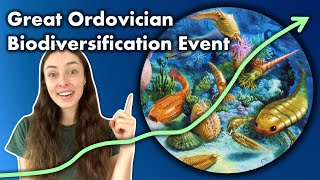
The Ordovician Biodiversification Event and Marine Invertebrate Diversity

Mass Extinctions and Biodiversity Evolution through Geological Eras
The five mass extinctions in Earth's history have shaped evolution through geological eras, including the Paleozoic, Mesozoic, and Cenozoic. Currently, species may be facing a sixth mass extinction, with reports stating…
@DavidMichaelRi8 @Captbobdad @Marcusgibson @caerbannog666 @Sci_or_Fic @secular_girl @ILuvCO2 @jwickers @MikeH_MapleGrov @ShopSmartResist @AltUS_ARC @Climatearticles @JamesRider3 @ghost_of_roger @Michael46830937 @audiF1 @Zigmund_Fraud @anthony_p_james @TheDisproof @KenworthCowboy1 @MacCutcheonD @markbjardine @RegimeChangeBC @Quantummist @TechTomM @TQMKA @d_e_mol @AtomsksSanakan @fishyfish67 @RickWoollams @granitereason @TheClimateHawk @Kenneth72712993 @yota_berlin @tan123 @DenierBot @DiogenesLamp0 @Trismos @HamiDuke @ws_llc @glinch72 @Michael_D_Crow @145Schneider @FriendsOScience @rln_nelson @kuhn_reinhard @HughAbercrombi3 @SphaleriteMz @SylviaD32911201 @Goofydad Did you mean to link to a 2008 paper on Phanerozoic Trends in the Global Diversity of Marine Invertebrates to debunk Svensmark?