 JC
 RD
 T
Janki Chotalia - Facebook
Facebook
Signs of Depression 1. Feeling sad at night- ( https://doi.org/10.1002/hup. 964) 2. Losing interest in things you once loved- (https://doi. org/10.1007/ ...
Dec 31, 2025
View →
Mentions
Extended reach
Total likes
Video views
AI synopsis
The shared discussions reflect a positive reception to the article, emphasizing its significance in uncovering the causal role of sleep and circadian disruptions in depression, as shown in phrases like 'potential causal role' and 'promising directions.' The tone varies from supportive to inquisitive, with some referencing biological mechanisms and treatment possibilities, highlighting a general interest and belief in the article's potential impact.
Most discussions express support for the notion that circadian and sleep disturbances are linked to depression and that understanding this relationship is valuable.
Posts show high curiosity about the research, with mentions of potential causal roles, biological mechanisms, and improved treatment approaches.
There is some analytical engagement, including references to computational approaches and treatment modifications, indicating thoughtful consideration but not deep technical debate.
Discussants acknowledge that the findings could influence future research directions and clinical practices, though the overall tone suggests ongoing exploration rather than immediate change.
RT @CUP_RDirections: Results published in #RDDepression: Computational omics approaches to investigate the potential causal role of sleep…
Results published in #RDDepression: Computational omics approaches to investigate the potential causal role of sleep and circadian rhythm disturbances in depression ➡️ https://t.co/RuWZjRZ8VE #circadian #depression @jarevez @JacobJCrouse @ian_hickie @WrayNaomi https://t.co/VXmhSdLtN1
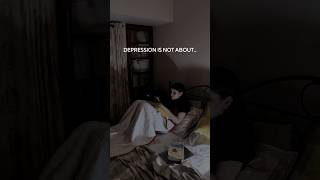
Signs of Depression include feeling sad at night, loss of interest, overthinking, unexplained crying, and physical pain. The video explores these symptoms and discusses how circadian rhythm disturbances are linked to…

This video explores how Daylight Saving Time disrupts circadian rhythms and affects mental health. Spring and fall changes can worsen conditions like Seasonal Affective Disorder and sleep issues, highlighting the…
RT @CUP_RDirections: Results published in #RDDepression: Computational omics approaches to investigate the potential causal role of sleep…
Results published in #RDDepression: Computational omics approaches to investigate the potential causal role of sleep and circadian rhythm disturbances in depression ➡️ https://t.co/RuWZjRZ8VE #circadian #depression @jarevez @JacobJCrouse @ian_hickie @WrayNaomi https://t.co/VXmhSdLtN1
もともと鬱の患者さんは体内時計の乱れに悩んでるケースが多かった https://t.co/JZwLueB6ph これを正せばメンタルも改善するとなったのがクロノセラピー 睡眠制限:わざと睡眠を減らす 睡眠相前進:睡眠のタイミングを早めにずらす 光療法:強い光で体内時計を修正 といった組み合わせたもの
Signs of Depression 1. Feeling sad at night- ( https://doi.org/10.1002/hup. 964) 2. Losing interest in things you once loved- (https://doi. org/10.1007/ ...
Arabian J Chem 2014; 7: 964-971. al'Absi M, Nakijima M, Dokam A, Samaei ... Human Psychopharmacol Clin Exp 2014; DOI: 10.1002/hup.2403. Al-Mamary H, El ...
Signs of Depression 1. Feeling sad at night- ( https://doi.org/10.1002/hup.964) 2. Losing interest in things you once loved- (https://doi.org/ ...
1999; 112:957–964. doi: 10.1046/j.1523-1747.1999.00606.x. [PubMed] ... doi: 10.1002/jbm.b.30246. [PubMed] [CrossRef] [Google Scholar] 24 ...
doi: 10.1002/hup.2600. Epub 2017 May 31, 2017. Max H Pittler, Joris C Verster, Edzard Ernst. Interventions for preventing or treating ...
doi: 10.1002/hup.2600. Epub 2017 May 31, 2017. Max H Pittler, Joris C Verster, Edzard Ernst. Interventions for preventing or treating ...
964Curtidas. 12Comentários. 26Compartilhamentos. g1. g1. Possível ... doi: 10.1002/hup.2600. Epub 2017 May 31, 2017. Max H Pittler, Joris ...
doi: 10.1002/hup.2600. Epub 2017 May 31, 2017. Max H Pittler, Joris ... 964Curtidas. 6Comentários. 183Compartilhamentos.
... 964-971. al'Absi M, Nakijima M, Dokam A ... 10.1002/hup.2403. Al-Mamary H, El-Shaibany A ... Arabian J Chem 2014; 7: 964-971. al'Absi ...
964Compartilhamentos. banheiradeconhecimento. Banheira de ... doi: 10.1002/hup.2600. Epub 2017 May 31, 2017. Max H Pittler, Joris ...
doi: 10.1002/hup.2600. Epub 2017 May 31, 2017. Max H Pittler, Joris ... 964Curtidas. 0Comentários. 7Compartilhamentos. artrustznx. artrust ...
doi: 10.1002/hup.2600. Epub 2017 May 31, 2017. Max H Pittler, Joris ... 964Curtidas. 18Comentários. 1024Compartilhamentos. rajadapop.
com/doi/10.1002/hup.964). 也有证据表明激素和体温周期发生了变化(这对于调节睡眠周期很重要)。因为睡眠对情绪很重要,这会形成一个恶性循环。
... 10.1002/hup.964). There is also evidence of changes in hormonal and body temperature cycles (which are important in regulating sleep cycles) ...
... 10.1002/hup.964). Det finns också bevis för förändringar i hormonella cykler och kroppstemperaturcykler (som är viktiga för att reglera ...
doi: 10.1002/hup.2600. Epub 2017 May 31, 2017. Max H Pittler, Joris ... Rafael Siqueira. 964Curtidas. 12Comentários. 32Compartilhamentos.
doi: 10.1002/hup.2600. Epub 2017 May 31, 2017. Max H Pittler, Joris ... 964Curtidas. 44Comentários. 135Compartilhamentos. sossobriedade.
964. Visualizar mais respostas (20). Luana. aaaa eu shippava tanto ... doi: 10.1002/hup.2600. Epub 2017 May 31, 2017. Max H Pittler, Joris ...
Circadian rhythm disturbances in depression. https://onlinelibrary.wiley.com/doi/abs/10.1002/hup.964; López-López JA, et al. (2019). The ...
com/doi/abs/10.1002/zoo.21555. onlinelibrary.wiley.com. Daily ... Hup: https://wildgreencharitybattle.org/products/hup- squad-2.
http://hup.sub.uni-hamburg.de/giga/afsp http://www.inderscience ... 10.1002/(ISSN)1944-7973/ http://www.tandfonline.com/fwep http://www ...