Several discussions highlight the transformative potential of the research, with comments like 'This could revolutionize aging treatments' and 'late in life intervention shows promise'. The tone is enthusiastic, and the choice of words such as 'game changer' and 'must consider' underscores the perceived significance. The technical references to nutrient sensing and genetic heterogeneity reflect deep engagement with the scientific context and implications.
AgreementStrong agreement
Most discussions express strong support for the findings, emphasizing the significance of rapamycin's effects on lifespan extension in mice, with phrases like 'promising' and 'game-changing'.
InterestHigh interest
Posts show high curiosity, referencing detailed mechanisms such as nutrient sensing and pathways like mTOR, indicating active engagement in the scientific implications.
EngagementHigh engagement
Many discussions delve into methodological aspects, implications for aging, and future potentials—some referencing specific experiments and biological concepts, demonstrating meaningful involvement.
ImpactModerate impact
While users recognize potential for health and longevity, some comments remain cautious, suggesting the findings could influence future research and treatment approaches but are not yet definitive.
Abstract in brief
Rapamycin, which inhibits the mTOR signaling pathway, was shown to extend the lifespan of genetically diverse mice when fed starting at 600 days old, increasing median and maximum lifespan.
The study found that rapamycin's lifespan-extending effects were observed in both male and female mice across three different test sites, without altering their disease patterns, suggesting it may delay death from age-related diseases like cancer.
These findings are significant because they are the first to demonstrate that mTOR signaling influences mammalian lifespan and that pharmacological interventions like rapamycin can extend lifespan in both genders, opening potential avenues for treating age-related diseases.]
Rapamycin fed late in life extends lifespan in genetically heterogeneous mice (2009)
https://t.co/Htdn7qiY5d
Mar 7, 2022 · 17 likes · 4 shares · 41,321 followersView post →
BH
Bilu Huang
@BiluHuang · X
Rapamycin's life-extending effect is not very good. In 20-month-old mice (equivalent to 60-year-old humans), the median lifespan of males increased by only 9% after administration of rapamycin (doi: 10.1038/nature08221). Because rapamycin is an immunosuppressant (a Group 1 https://t.co/NyJ8ZBAnjD
May 22, 2026 · 15 likes · 1 share · 1,155 followersView post →
LN
Lifespan News
@LifespanNews · X
With #aging, your #cells don't quite sense their nutrients as they should anymore.
#lifeextension #x10
https://t.co/UVl3Yj24ar
Aug 24, 2020 · 11 likes · 3 shares · 22,340 followersView post →
AR
Avi Roy
@agingroy · X
Sources for each drug:
1. Rapamycin - ITP (2009, 2014), Nature:
https://t.co/MHZ19sZyGo
2. Acarbose - ITP (2014):
https://t.co/SB3FX04rvW
(22% male lifespan, 5% female)
3. Metformin - TAME trial:
https://t.co/bjgntOrHBY
4. Glycine - Miller et al. (2019), ITP:
May 8, 2026 · 8 likes · 1 share · 13,471 followersView post →
LN
Lifespan News
@LifespanNews · X
Latest #X10 episode on deregulated #nutrient sensing in #aging
#biology #molecularbiology
https://t.co/UVl3Yj24ar
Jun 24, 2020 · 6 likes · 2 shares · 22,340 followersView post →
LN
Lifespan News
@LifespanNews · X
Did you know that, with #aging, your cells have trouble sensing #nutrients?
#molecularbiology #Biology
https://t.co/UVl3Yj24ar
Jun 16, 2020 · 6 likes · 2 shares · 22,340 followersView post →
Aging significantly increases the risk of diseases like cardiovascular issues, cancer, and dementia. This video explores a study where rapamycin was tested on participants over 40 showing signs of skin aging, revealing…
A practical look at longevity ideas, from red wine molecules to genome-era tests. What has stayed credible, and which approaches are still speculative?
Cells need fuel from food to function, but aging disrupts these mechanisms. Tinkering with nutrient sensing pathways may help combat aging and age-related diseases. This video explores how these processes influence…
Open-label pilot in 14 IPF patients shows high retention and mostly mild/moderate AEs, suggesting dasatinib plus quercetin is feasible intermittently. Functional gains seen in 6-min walk, gait speed, and chair-stands…
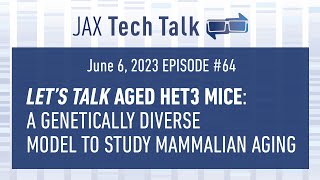
The genetically heterogeneous HET3 UMHET3 mice provide a unique platform for modeling human diversity in aging and assessing therapies to prolong health. Dr. David Harrison discusses why HET3 was chosen for the NIA's…
Explores creatures that resist aging, from jellyfish to hydra and planaria. Discusses aging, death, and the limits of “rejuvenation,” linking research on immortality to the biology of aging and repair.
This video explores current literature on how we can live longer, focusing on age-related NAD decline and its impact on health. It highlights ongoing research into NAD's role in age-related conditions and the challenges…
Discover how Rapamycin, used to prevent organ rejection, is revolutionizing antiaging research. It extends lifespan by inhibiting the mTOR pathway and Interleukin 11, potentially delaying age-related diseases such as…
A late-life treatment with non-feminizing estrogen 17-α-estradiol increases male lifespan by up to 19% in genetically diverse UM-HET3 mice; nicotinamide riboside and three other drugs show no substantial benefit…
@JoinLifespan Best answer to 'it's hype' is rigor. NIA's Interventions Testing Program runs compounds at 3 sites in genetically diverse mice, and rapamycin started at 600 days old (late in life) still extended lifespan in both sexes. That's the bar for human claims too. https://t.co/AF1ZcLAWkW
Oct 17, 2026 · 1 like · 1 share · 5,011 followersView post →
AP
Alex Patrascu
@maxescu · X
Sources for "Best Before":
1. Beltrán-Sánchez H, Finch C (2018). "Life expectancy: Age is just a number." eLife 7:e34427. https://t.co/BYlAZz761v
2. Nielsen J et al. (2016). "Eye lens radiocarbon reveals centuries of longevity in the Greenland shark (Somniosus microcephalus)."
Sep 29, 2026 · 1 like · 39,948 followersView post →
AL
ASAGI Labs
@asagilabs · X
出典:Harrison DE, et al. "Rapamycin fed late in life extends lifespan in genetically heterogeneous mice." Nature, 2009. DOI: 10.1038/nature08221
@agingroy Standard chow, eh?
The problem with standards is that there are so many of them. Let's make this concrete.
The most important experiment establishing rapamycin's life-extending properties in mammals was published in Nature in July 2009 by the National Institute on Aging
Rapamycin's life-extending effect is not very good. In 20-month-old mice (equivalent to 60-year-old humans), the median lifespan of males increased by only 9% after administration of rapamycin (doi: 10.1038/nature08221). Because rapamycin is an immunosuppressant (a Group 1 https://t.co/NyJ8ZBAnjD
May 22, 2026 · 15 likes · 1 share · 1,155 followersView post →
BH
Bilu Huang
@BiluHuang · X
@grok @LMV112233 @greek_scientist @rand_longevity @MarcosArrut @davidasinclair Rapamycin's life-extending effect is not very good. In 20-month-old mice (equivalent to 60-year-old humans), the median lifespan of males increased by only 9% after administration of rapamycin (doi: 10.1038/nature08221). Because rapamycin is an immunosuppressant (a Group 1
May 22, 2026 · 3 likes · 1,155 followersView post →
BH
Bilu Huang
@BiluHuang · X
@grok @LMV112233 @greek_scientist @rand_longevity @MarcosArrut @davidasinclair Rapamycin cannot be used as an anti-aging drug.
Inhibiting cell division has achieved some life-extending effects in mammals, but with significant side effects.
For example, rapamycin has a life-extending effect, but it has significant side effects. This is because many cells
May 22, 2026 · 3 likes · 1,155 followersView post →
AR
Avi Roy
@agingroy · X
Sources for each drug:
1. Rapamycin - ITP (2009, 2014), Nature:
https://t.co/MHZ19sZyGo
2. Acarbose - ITP (2014):
https://t.co/SB3FX04rvW
(22% male lifespan, 5% female)
3. Metformin - TAME trial:
https://t.co/bjgntOrHBY
4. Glycine - Miller et al. (2019), ITP:
May 8, 2026 · 8 likes · 1 share · 13,471 followersView post →
@CollinEwald asks 'can longevity interventions work late in life?'. Yes, daf2 degradation at 25% survival point still manages to almost double baseline lifespan (see also https://t.co/SBWLG5bInU). How does this work, slowing or reversing #Aging? 1/n
 BH
 AR





 DW
 CH
 AP
 AL
 SP
 GF