Agingdoc
@agingdoc1 · X
Rapamycin fed late in life extends lifespan in genetically heterogeneous mice (2009) https://t.co/Htdn7qiY5d
Mar 7, 2022 · 17 likes · 4 shares · 41,321 followers
View post →
Mentions
Extended reach
Total likes
Video views
AI synopsis
Several discussions highlight the transformative potential of the research, with comments like 'This could revolutionize aging treatments' and 'late in life intervention shows promise'. The tone is enthusiastic, and the choice of words such as 'game changer' and 'must consider' underscores the perceived significance. The technical references to nutrient sensing and genetic heterogeneity reflect deep engagement with the scientific context and implications.
Most discussions express strong support for the findings, emphasizing the significance of rapamycin's effects on lifespan extension in mice, with phrases like 'promising' and 'game-changing'.
Posts show high curiosity, referencing detailed mechanisms such as nutrient sensing and pathways like mTOR, indicating active engagement in the scientific implications.
Many discussions delve into methodological aspects, implications for aging, and future potentials—some referencing specific experiments and biological concepts, demonstrating meaningful involvement.
While users recognize potential for health and longevity, some comments remain cautious, suggesting the findings could influence future research and treatment approaches but are not yet definitive.
Rapamycin fed late in life extends lifespan in genetically heterogeneous mice (2009) https://t.co/Htdn7qiY5d
With #aging, your #cells don't quite sense their nutrients as they should anymore. #lifeextension #x10 https://t.co/UVl3Yj24ar
Did you know that, with #aging, your cells have trouble sensing #nutrients? #molecularbiology #Biology https://t.co/UVl3Yj24ar
Latest #X10 episode on deregulated #nutrient sensing in #aging #biology #molecularbiology https://t.co/UVl3Yj24ar
@CollinEwald asks 'can longevity interventions work late in life?'. Yes, daf2 degradation at 25% survival point still manages to almost double baseline lifespan (see also https://t.co/SBWLG5bInU). How does this work, slowing or reversing #Aging? 1/n
X10's latest video on deregulated nutrient sensing: #aging #biology #molecularbiology #metabolism https://t.co/UVl3Yj24ar

Aging significantly increases the risk of diseases like cardiovascular issues, cancer, and dementia. This video explores a study where rapamycin was tested on participants over 40 showing signs of skin aging, revealing…

A practical look at longevity ideas, from red wine molecules to genome-era tests. What has stayed credible, and which approaches are still speculative?

Cells need fuel from food to function, but aging disrupts these mechanisms. Tinkering with nutrient sensing pathways may help combat aging and age-related diseases. This video explores how these processes influence…
Open-label pilot in 14 IPF patients shows high retention and mostly mild/moderate AEs, suggesting dasatinib plus quercetin is feasible intermittently. Functional gains seen in 6-min walk, gait speed, and chair-stands…
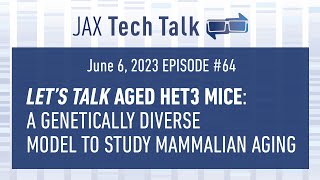
The genetically heterogeneous HET3 UMHET3 mice provide a unique platform for modeling human diversity in aging and assessing therapies to prolong health. Dr. David Harrison discusses why HET3 was chosen for the NIA's…

This video explores current literature on how we can live longer, focusing on age-related NAD decline and its impact on health. It highlights ongoing research into NAD's role in age-related conditions and the challenges…

Explores creatures that resist aging, from jellyfish to hydra and planaria. Discusses aging, death, and the limits of “rejuvenation,” linking research on immortality to the biology of aging and repair.

Discover how Rapamycin, used to prevent organ rejection, is revolutionizing antiaging research. It extends lifespan by inhibiting the mTOR pathway and Interleukin 11, potentially delaying age-related diseases such as…

A late-life treatment with non-feminizing estrogen 17-α-estradiol increases male lifespan by up to 19% in genetically diverse UM-HET3 mice; nicotinamide riboside and three other drugs show no substantial benefit…
@zzirgly
@DeaconGlover1 Also watch this https://t.co/L8Sr7cTykx
RT @agingdoc1: Rapamycin fed late in life extends lifespan in genetically heterogeneous mice (2009) https://t.co/Htdn7qiY5d
RT @agingdoc1: Rapamycin fed late in life extends lifespan in genetically heterogeneous mice (2009) https://t.co/Htdn7qiY5d
Rapamycin fed late in life extends lifespan in genetically heterogeneous mice https://t.co/PvKhYSjvQP
The Promise of Two Anti-Aging Molecules [10 Studies] https://t.co/VL6SCMz2pX via @YouTube
RT @agingdoc1: Rapamycin fed late in life extends lifespan in genetically heterogeneous mice (2009) https://t.co/Htdn7qiY5d
@shunyata2000 @CaloriesProper @scott4670 @agingdoc1 @KristerKauppi @mkaeberlein @JuliaB_fitness @aubreydegrey Here’s the original; https://t.co/cs1u9HICom
RT @drjohnmorley: Rapamycin fed late in life extends lifespan in genetically heterogeneous mice https://t.co/jI1dQNW2YF
Rapamycin fed late in life extends lifespan in genetically heterogeneous mice https://t.co/jI1dQNW2YF
RT @agingdoc1: Rapamycin fed late in life extends lifespan in genetically heterogeneous mice (2009) https://t.co/Htdn7qiY5d
Rapamycin fed late in life extends lifespan in genetically heterogeneous mice (2009) https://t.co/g3pCZp5nZO #ITP
Rapamycin fed late in life extends lifespan in genetically heterogeneous mice (2009) https://t.co/Htdn7qiY5d
RT @MartinBJensen: @CollinEwald asks 'can longevity interventions work late in life?'. Yes, daf2 degradation at 25% survival point still ma…
RT @MartinBJensen: @CollinEwald asks 'can longevity interventions work late in life?'. Yes, daf2 degradation at 25% survival point still ma…
RT @MartinBJensen: @CollinEwald asks 'can longevity interventions work late in life?'. Yes, daf2 degradation at 25% survival point still ma…
@CollinEwald asks 'can longevity interventions work late in life?'. Yes, daf2 degradation at 25% survival point still manages to almost double baseline lifespan (see also https://t.co/SBWLG5bInU). How does this work, slowing or reversing #Aging? 1/n
RT @LifespanIO: With #aging, your #cells don't quite sense their nutrients as they should anymore. #lifeextension #x10 https://t.co/UVl3Y…
RT @LifespanIO: With #aging, your #cells don't quite sense their nutrients as they should anymore. #lifeextension #x10 https://t.co/UVl3Y…
RT @LifespanIO: With #aging, your #cells don't quite sense their nutrients as they should anymore. #lifeextension #x10 https://t.co/UVl3Y…
With #aging, your #cells don't quite sense their nutrients as they should anymore. #lifeextension #x10 https://t.co/UVl3Yj24ar
RT @LifespanIO: Latest X10 episode on deregulated #nutrient sensing and #aging: https://t.co/UVl3Yj24ar #molecularbiology #biology #rejuv…
Latest X10 episode on deregulated #nutrient sensing and #aging: https://t.co/UVl3Yj24ar #molecularbiology #biology #rejuvenation
RT @LifespanIO: Latest #X10 episode on deregulated #nutrient sensing in #aging #biology #molecularbiology https://t.co/UVl3Yj24ar
Latest #X10 episode on deregulated #nutrient sensing in #aging #biology #molecularbiology https://t.co/UVl3Yj24ar
RT @LifespanIO: Did you know that, with #aging, your cells have trouble sensing #nutrients? #molecularbiology #Biology https://t.co/UVl3…
RT @LifespanIO: Did you know that, with #aging, your cells have trouble sensing #nutrients? #molecularbiology #Biology https://t.co/UVl3…
Did you know that, with #aging, your cells have trouble sensing #nutrients? #molecularbiology #Biology https://t.co/UVl3Yj24ar
RT @LifespanIO: X10's latest video on deregulated nutrient sensing: #aging #biology #molecularbiology #metabolism https://t.co/UVl3Yj24ar
X10's latest video on deregulated nutrient sensing: #aging #biology #molecularbiology #metabolism https://t.co/UVl3Yj24ar