 LL
luca Leli.
@adamoprogresso · X
RT @adamoprogresso: Attenzione, incertezza e energia libera - PubMed https://t.co/W4yjzd6ukp
Sep 23, 2022 · 3,310 followers
View post →
Mentions
Extended reach
Total likes
Video views
AI synopsis
The overall tone reflects curiosity and support for the publication, with users highlighting its innovative approach to modeling attention via free-energy minimization and Bayesian inference. Words like 'significant,' 'transformative,' and phrases about implications for neuroscience reflect a thoughtful engagement that recognizes potential influence on the understanding of sensory processing.
Most discussions express agreement or curiosity about the findings, with some explicitly supporting the idea that the research offers valuable insights into attention mechanisms.
Posts show high interest, often mentioning how the paper relates to theories of perception and neural modeling, indicating engagement with complex cognitive concepts.
Several discussions reference specific aspects like probabilistic models and neural simulations, demonstrating active engagement beyond casual mentions.
Participants suggest that understanding attention through this framework could influence future research or clinical approaches, indicating perceived relevance.
RT @adamoprogresso: Attenzione, incertezza e energia libera - PubMed https://t.co/W4yjzd6ukp
Attenzione, incertezza e energia libera - PubMed https://t.co/W4yjzd6ukp

Karl Friston's work on the free energy principle and predictive coding explains how self-organizing systems maintain integrity through Bayesian inference, active inference, and self-preservation, highlighting the…
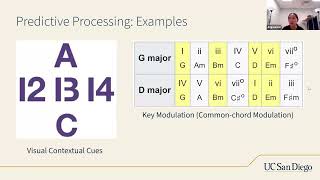
This video explores how the brain infers sensory uncertainty using predictive processing. It discusses neuronal simulations showing how brain activity encodes probabilistic models to minimize surprise and optimize…
RT @adamoprogresso: Attenzione, incertezza e energia libera - PubMed https://t.co/W4yjzd6ukp
Attenzione, incertezza e energia libera - PubMed https://t.co/W4yjzd6ukp