 CR
CRCorey Riding
@coreysriding · X
@CovinoKristen @Jimmy67273863 Might be referring to this https://t.co/QDR6tSAlaB
Oct 31, 2020 · 71 followers
View post →
Mentions
Extended reach
Total likes
Video views
AI synopsis
The discussions reflect cautious interest, with comments such as 'might be referring to this,' suggesting curiosity but not fully committed enthusiasm. The tone is tentative, indicating that the publication prompts some curiosity but not widespread engagement or perceived high impact.
Most discussions hint at some level of agreement or curiosity about the findings, though not outright endorsement, as shown by comments like 'might be referring to this.'
Participants express mild interest, potentially triggered by the topic's novelty or relevance, but do not show strong enthusiasm.
Comments are somewhat engaged, referencing the publication and making tentative connections, but lack deep analysis or detailed discussion.
The overall influence appears minimal, with discussions mainly speculative rather than transformative or strongly opinionated.
@CovinoKristen @Jimmy67273863 Might be referring to this https://t.co/QDR6tSAlaB

This lesson explores the nature of tastes, flavors, and aromas, and how our senses perceive them. It discusses sensory integration, different taste concepts, and the differences between taste and flavor. A practical…

This video explores how our brain assesses food value based on flavor, taste, and nutritional info, and how external factors like labels, brands, and prices influence this process, involving various brain regions…
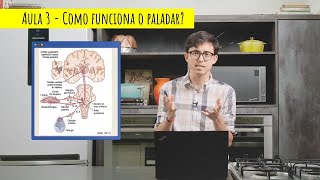
This lesson explains how our taste works, covering the anatomy and physiology of taste receptors, tongue, nerves, and gustatory cortex. It includes experiments demonstrating temperature and distribution effects on taste…
@CovinoKristen @Jimmy67273863 Might be referring to this https://t.co/QDR6tSAlaB