The posts mainly express curiosity and correct misconceptions about the polar night, using informal tones like 'People seem surprised' and sharing personal experiences, which indicate some engagement but limited depth. This reflects a general interest in polar environmental phenomena without extensive analysis or discussion of the research's implications.
AgreementNeither agree nor disagree
The posts do not explicitly agree or disagree with the research, mainly sharing personal observations.
InterestModerate interest
The posts show curiosity about polar light conditions, indicating moderate interest.
EngagementLow engagement
Posts are casual and brief, suggesting low in-depth discussion.
ImpactNeutral impact
The content seems to have limited influence beyond general awareness.
Abstract in brief
Human circadian rhythms in polar regions are affected by the lack of natural sunlight during winter and continuous daylight in summer, with light being crucial for maintaining a 24-hour cycle.
Artificial light, especially controlled exposure like bright white light or a skeleton photoperiod, can help restore normal circadian timing and counteract delays experienced in winter.
Health issues such as sleep problems and seasonal affective disorder (SAD) are concerns in polar environments, but interventions like increased light exposure and blue-enriched light have shown potential benefits for sleep and circadian alignment.
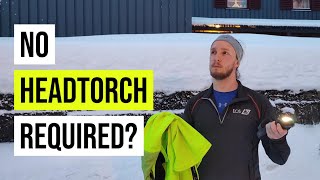
People seem surprised when I say that the polar night isn't constant darkness, so I took my camera out on a little pre-Xmas run.
#PolarNight #Tromsø #scicomm
https://t.co/QQ7e4f1mOa
Dec 24, 2023 · 1 like · 1 share · 127 followersView post →
GC
GW4 Fresh CDT
@GW4FreshCDT · X
RT @GW4FreshPrince: People seem surprised when I say that the polar night isn't constant darkness, so I took my camera out on a little pre-…
I moved 350 km north of the Arctic Circle and was surprised to find that the polar night is more Twilight than Game of Thrones. This video explores how natural and artificial light influence human biological rhythms in…
Research on how continuous daylight affects sleep and biological rhythms during polar expeditions, highlighting challenges and strategies like light therapy to maintain circadian health.
People seem surprised when I say that the polar night isn't constant darkness, so I took my camera out on a little pre-Xmas run.
#PolarNight #Tromsø #scicomm
https://t.co/QQ7e4f1mOa
Dec 24, 2023 · 1 like · 1 share · 127 followersView post →
N
Psychosocial Issues in Isolated and Confined Extreme ...
News
https://doi.org/10.3109/07420528.2012.668997. crew coordination: implications for training and selection. Int. J. Aviat. Psychol. 1, Barabasz, M., Barabasz ...
Melatoni̇n Hormonunun Uyku Ve Üreme Üzeri̇ndeki̇ Etki̇si̇ ...
News
doi: 10.3109/07420528.2012.668997. | Arşiv Bağlantısı 5. A. Brzezinski. (1997). Melatonin In Humans. Massachusetts Medical Society, sf: 186-195. doi ...