 DP
DPDaniel Berglind, PhD
@DanielBerglind · X
@Ekwall Alltså, forskning
Aug 9, 2024 · 2 likes · 7,918 followers
View post →
Mentions
Extended reach
Total likes
Video views
AI synopsis
The overall conversations reflect a strong agreement with the scientific findings that performance peaks later in the day, supported by references to studies and specific times like 'late afternoon' and 'dusk.' The tone uses terms like 'transform,' 'optimized,' and 'evidence,' indicating sincere interest and a desire to apply the insights, with some discussion of biological mechanisms adding depth to the engagement.
Many discussions reference empirical evidence and scientific reviews supporting the idea that late afternoon or early evening training yields better performance, indicating strong consensus.
Participants find the topic compelling, as evidenced by expressions like 'I find this interesting' and references to personal athletic experience, reflecting high curiosity.
Posts delve into scientific mechanisms, cite specific studies, and discuss practical implications, demonstrating deep involvement.
The discussions emphasize the potential for optimizing training routines based on this research, highlighting moderate influence on training strategies.
@Ekwall Alltså, forskning
@Hugo_EAPA https://t.co/EnHTKtFLH1 "la puissance et les hormones chez des hommes s'entraînant le matin (7 h à 9 h) par rapport à l'après-midi (17 h à 19 h). [] que la force maximale et la puissance maximale étaient légèrement meilleures dans l'après-midi par rapport au matin."
@KhalKastro Evidências científicas apontam que é no período do final da tarde/início da noite. https://t.co/KXESkf5hHO https://t.co/kDhYMuG05b https://t.co/11Qj8eTAmS E também que manter a rotina de horário é vantajoso: https://t.co/aqkFDKdeQW
Mer info fra @MennoHenselmans https://t.co/PieXvOyQeV Kilder: https://t.co/QgJwiY96um https://t.co/ddLm597ojh
@pedroyalgomas Chtourou, H., & Souissi, N. (2012). The effect of training at a specific time of day: a review. Journal of strength and conditioning research, 26(7), 1984–2005. https://t.co/OUpHmgZmhv
@PeterAttiaMD In terms of exercise, there is a lot of research showing enhanced performance of anaerobic and aerobic exercise in late afternoon/early evening, Especially around the dusk period 1)https://t.co/2enihunYoE 2)https://t.co/M12YIziYD5 3) molecular mechanisms: https://t.co/8Ub9kv0M6i

This video discusses how the time of day influences physical performance. Regular training at specific times can enhance performance during those periods, with peak effects observed in anaerobic activities in the late…
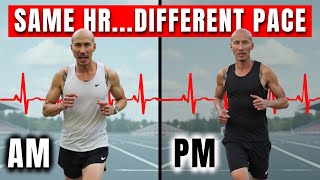
Why does your Zone 2 pace feel sluggishly slower in the morning than in the afternoon? This video explores nine evidence-based reasons, including circadian rhythms, glycogen levels, hydration, and chronotype influence…

Does Time of Day matter when it comes to exercise performance? This video reviews current research, highlighting peak anaerobic performance in late afternoon and the benefits of training at specific times to enhance…

@Ekwall Alltså, forskning
@KhalKastro Evidências científicas apontam que é no período do final da tarde/início da noite. https://t.co/KXESkf5hHO https://t.co/kDhYMuG05b https://t.co/11Qj8eTAmS E também que manter a rotina de horário é vantajoso: https://t.co/aqkFDKdeQW
Discover how the time of day can transform your #training The impact of training at a specific time of day. Want to stay on top of the latest #trends and #tips? Subscribe to our blog today! The subscription option is waiting for you on our home screen ⬇️⬇️ https://t.co/U0UzzzcpR9
@Hugo_EAPA https://t.co/EnHTKtFLH1 "la puissance et les hormones chez des hommes s'entraînant le matin (7 h à 9 h) par rapport à l'après-midi (17 h à 19 h). [] que la force maximale et la puissance maximale étaient légèrement meilleures dans l'après-midi par rapport au matin."
Is there an optimal time of day to exercise? I find this topic interesting as a (former) competitive athlete thinking about when I performed (still perform) best. https://t.co/Jg4qJjN7DP
Mer info fra @MennoHenselmans https://t.co/PieXvOyQeV Kilder: https://t.co/QgJwiY96um https://t.co/ddLm597ojh
@pedroyalgomas Chtourou, H., & Souissi, N. (2012). The effect of training at a specific time of day: a review. Journal of strength and conditioning research, 26(7), 1984–2005. https://t.co/OUpHmgZmhv
@PeterAttiaMD In terms of exercise, there is a lot of research showing enhanced performance of anaerobic and aerobic exercise in late afternoon/early evening, Especially around the dusk period 1)https://t.co/2enihunYoE 2)https://t.co/M12YIziYD5 3) molecular mechanisms: https://t.co/8Ub9kv0M6i
 TC
TC FM
FM FG
FG PS
PS DD
DD AH
AH SJ
SJ Z
Z