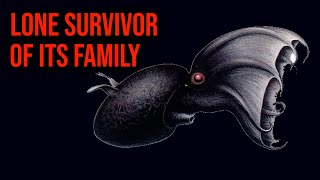
Several discussions highlight specific aspects of the vampire squid's behavior and ecology, mentioning details like how they feed on 'marine snow' from detrital matter and their ability to thrive in oxygen-depleted zones. Comments such as 'vampire squids are real' convey a sense of wonder and encourage viewers to explore further while the detailed references to studies signify a deep understanding of marine biology. The tone ranges from enthusiastic to informative, effectively fostering a collaborative atmosphere for sharing knowledge.
AgreementModerate agreement
Most discussions reflect a consensus supporting the article's findings about vampire squids and their unique feeding habits.
InterestHigh interest
Participants show high curiosity about the species and its adaptations to deep-sea environments.
EngagementHigh engagement
Many users reference specific research findings and engage in detailed discussions about the ecological implications of the vampire squid's diet.
ImpactModerate impact
While discussions acknowledge the significance of the research, the perceived impact on broader ecological issues is moderate.
Abstract in brief
Vampire squid (Vampyroteuthis infernalis) are unique cephalopods that exhibit features of both octopuses and squids and have intriguing feeding adaptations.
They primarily feed on detrital matter, including remains of zooplankton, crustaceans, and diatoms, utilizing retractile filaments for capturing food.
Their feeding behavior allows them to thrive in oxygen-poor environments, where traditional prey is scarce, making them a fascinating subject of study in deep-sea ecology.
Out with @MBARI_News we were lucky enough to see a second, larger vamp also. This photo hasn't been altered--the eyes really look like that! One of the feeding filaments is extended, gathering detritus ('marine snow') which seems to be its main food; see https://t.co/prk7XTQUnL https://t.co/1IX7eqfN0m
Dec 3, 2019 · 55 likes · 24 shares · 2,744 followersView post →
DL
Drew_Lab
@Drew_Lab · X
Hoving and Robison (2012, https://t.co/YKddHzNlVS) found that Vampire Squid ate detrital matter of various sizes, from small particles to larger marine aggregates, including the remains of gelatinous zooplankton, crustacean remains, diatoms & faecal pellets. #2021MMM
Mar 22, 2021 · 23 likes · 1 share · 7,786 followersView post →
葛
葛西秋
@AKasaiChidori · X
@MuroranAquarium Vampire squid: detritivores in the oxygen minimum zone https://t.co/18CHIkqOXZ
こちらにコウモリダコが持つ2本の細い紐(=フィラメント)の研究論文があります。フィラメントには周囲の環境を感知する触覚機能があり、また付着したマリンスノーなどの小さなものは餌として食べているそうです。
May 16, 2023 · 12 likes · 5 shares · 295 followersView post →
May 15, 2023 · 6 likes · 1 share · 2,859 followersView post →
JK
Jesse Kelly
@jestkelly · X
@51Fierce @Oceanwire @MBARI_News Vamps typically occupy depths of 600-1100 m, and may be specialists of oxygen minimum zones. They have incredibly efficient oxygen binding and transport capabilities for a cephalopod.
Paper on Vamp O2:
https://t.co/NkedOMqhUY
Vamp detritivore diet:
https://t.co/VAHdUk1EtA
Explore the fascinating adaptations of the vampire squid, a unique cephalopod that thrives in oxygen-minimum zones. Their ability to feed on detrital matter using specialized filaments allows them to survive where…
Vampire squids (Vampyroteuthis infernalis) are unique cephalopods exhibiting features of both octopuses and squids. They primarily feed on detrital matter in oxygen-poor environments, using retractile filaments to…
info sources
The first global deep-sea stable isotope assessment reveals the unique trophic ecology of Vampire Squid Vampyroteuthis infernalis (Cephalopoda). Sci Rep (2019). doi.org/10.1038/s415...
Vampire squid: detritivores in the oxygen minimum zone. Proc Biol Sci. (2012) doi.org/10.1098/rspb...
info sources
The first global deepsea stable isotope assessment reveals the unique trophic ecology of Vampire Squid Vampyroteuthis infernalis. Sci Rep 2019 https://t.co/QIw6mVlJG2
Vampire squid: detritivores in the oxygen minimum zone. Proc Biol Sci 2012 https://t.co/Y1u4NsorFM
reference:
Vampire squid: detritivores in the oxygen minimum zone | Proceedings of the Royal Society B: Biological Sciences royalsocietypublishing.org/doi/abs/10.1...
@crazyaboutx @enzoscifo05 @USMCLiberal @AKEJU__ Well the stern did implode,the ship broke into two but the bow was mostly flooded so that equalized the pressure as it went down.
https://t.co/y8LQIEfQqR -> deep sea creatures https://t.co/zdyrvWXkKi
Unveiling the Creepy Depths: Exploring Why Animals Grow More Eerie as You Venture Deeper. Discover the fascinating world of deep-sea creatures and their mysterious adaptations. #DeepSeaAnimals #CreepyDiscoveries #MarineLife #OceanExploration https://t.co/huxp9tWdFO via @YouTube
RT @AKasaiChidori: @MuroranAquarium Vampire squid: detritivores in the oxygen minimum zone https://t.co/18CHIkqOXZ
こちらにコウモリダコが持つ2本の細い紐(=フィ…
May 17, 2023 · 5 shares · 257 followersView post →
も
もりた
@Morita0126 · X
RT @AKasaiChidori: @MuroranAquarium Vampire squid: detritivores in the oxygen minimum zone https://t.co/18CHIkqOXZ
こちらにコウモリダコが持つ2本の細い紐(=フィ…
May 16, 2023 · 5 shares · 1,239 followersView post →
吉酒
吉村風(酒徒吉風)
@syutoyoshikaze · X
RT @AKasaiChidori: @MuroranAquarium Vampire squid: detritivores in the oxygen minimum zone https://t.co/18CHIkqOXZ
こちらにコウモリダコが持つ2本の細い紐(=フィ…
May 16, 2023 · 5 shares · 5,659 followersView post →
み
みっふぃ
@udomyon_69 · X
RT @AKasaiChidori: @MuroranAquarium Vampire squid: detritivores in the oxygen minimum zone https://t.co/18CHIkqOXZ
こちらにコウモリダコが持つ2本の細い紐(=フィ…
May 16, 2023 · 5 shares · 1,567 followersView post →
尾
尾形一成
@m_clastolepis · X
RT @AKasaiChidori: @MuroranAquarium Vampire squid: detritivores in the oxygen minimum zone https://t.co/18CHIkqOXZ
こちらにコウモリダコが持つ2本の細い紐(=フィ…
May 16, 2023 · 5 shares · 611 followersView post →
葛
葛西秋
@AKasaiChidori · X
@MuroranAquarium Vampire squid: detritivores in the oxygen minimum zone https://t.co/18CHIkqOXZ
こちらにコウモリダコが持つ2本の細い紐(=フィラメント)の研究論文があります。フィラメントには周囲の環境を感知する触覚機能があり、また付着したマリンスノーなどの小さなものは餌として食べているそうです。
May 16, 2023 · 12 likes · 5 shares · 295 followersView post →
葛
葛西秋
@AKasaiChidori · X
@MasakiHoso Vampire squid: detritivores in the oxygen minimum zone https://t.co/18CHIkqOXZ
こちらに「特殊な触糸」(=フィラメント)の研究論文があります。周囲のの環境を感知する触覚機能を持つと同時に、フィラメントに付着したマリンスノーなどの小さなものを餌として食べているそうです。
May 15, 2023 · 6 likes · 1 share · 2,859 followersView post →
MP
Matthew Phelan
@CBMDP · X
3. The vampire squid is very well adapted to oxygen-depleted regions of the ocean. So, expect to see more of these little guys, as we suffocate their potential predators by burning fossil fuels and bombing natural gas pipelines for geopolitical reasons.
https://t.co/YBhFL4eBws
@51Fierce @Oceanwire @MBARI_News Vamps typically occupy depths of 600-1100 m, and may be specialists of oxygen minimum zones. They have incredibly efficient oxygen binding and transport capabilities for a cephalopod.
Paper on Vamp O2:
https://t.co/NkedOMqhUY
Vamp detritivore diet:
https://t.co/VAHdUk1EtA
@Invertebae @rolandixor @MontereyAq although the MBARI paper on it states that the quantity of tissue found in vampire squid stomachs was not high enough to indicate active predation
https://t.co/TMET7YDh7I
Nov 9, 2021 · 2 likes · 1,830 followersView post →
TI
#TheSpiderHunter - Black History Is Important!
@Arthur59611540 · X
Today's Halloween Creature Feature
Facts: The Vampire Squid https://t.co/un4N2KhiRx via @YouTube
RT @Drew_Lab: Hoving and Robison (2012, https://t.co/YKddHzNlVS) found that Vampire Squid ate detrital matter of various sizes, from small…
Mar 22, 2021 · 1 share · 31,323 followersView post →
DL
Drew_Lab
@Drew_Lab · X
Hoving and Robison (2012, https://t.co/YKddHzNlVS) found that Vampire Squid ate detrital matter of various sizes, from small particles to larger marine aggregates, including the remains of gelatinous zooplankton, crustacean remains, diatoms & faecal pellets. #2021MMM
Mar 22, 2021 · 23 likes · 1 share · 7,786 followersView post →
And get this: vampire squid aren't even true squids - they're closer to octopods.
They're named for their blue eyes, reddish-brown skin & webbing between their arms - making them look like Count Dracula 3/
#12DaysofEMBRCchristmas
https://t.co/PtyScSQWoI
Dec 10, 2020 · 1 like · 3,810 followersView post →
NH
Nick D Higgs
@BahaNick · X
Best example of this difference: the 'vampire squid' (actual name is Vampyroteuthis infernalis!) feeds on marine snow (plankton detritus) https://t.co/fQ8NtHYHgw https://t.co/PN7dTF6xB2 https://t.co/3fEB9hkyBY
RT @ALCESonline: Out with @MBARI_News we were lucky enough to see a second, larger vamp also. This photo hasn't been altered--the eyes real…
Dec 3, 2019 · 24 shares · 183 followersView post →
AE
Alejandro Damian-Serrano Ph.D. (he/him/él/ell)
@planktomancer · X
RT @ALCESonline: Out with @MBARI_News we were lucky enough to see a second, larger vamp also. This photo hasn't been altered--the eyes real…
Dec 3, 2019 · 24 shares · 2,046 followersView post →
AS
ALCES (AUT Squid Squad)
@ALCESonline · X
Out with @MBARI_News we were lucky enough to see a second, larger vamp also. This photo hasn't been altered--the eyes really look like that! One of the feeding filaments is extended, gathering detritus ('marine snow') which seems to be its main food; see https://t.co/prk7XTQUnL https://t.co/1IX7eqfN0m
Dec 3, 2019 · 55 likes · 24 shares · 2,744 followersView post →