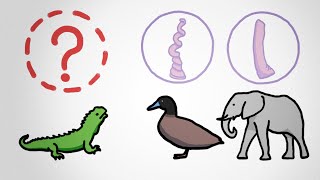
Most posts revolve around announcing the upcoming discussion in the journal club, using phrases like 'next article' and mentioning 'graphic content,' indicating superficial engagement. The tone is informal and somewhat playful, as seen in the mention of 'dubious puns,' which reflects light interest and casual participation rather than detailed analysis or strong opinions.
AgreementNeither agree nor disagree
The discussions do not show clear support or opposition to the article's findings, mostly acknowledging its mention in the journal club context.
InterestModerate interest
Participants demonstrate a moderate level of curiosity, indicated by noting the upcoming journal club discussion, but without in-depth analysis.
EngagementModerate engagement
The engagement is limited to sharing the announcement and a brief mention of graphic content, suggesting some participation but not deep discussion.
ImpactNeutral impact
The posts seem primarily informational about the event rather than emphasizing a revolutionary or transformative impact of the research.
Abstract in brief
The reduction and loss of the phallus in birds is an evolutionary puzzle, with only a few species retaining a functional phallus despite all birds reproducing via internal fertilization.
Researchers found that in galliform birds (like chickens), the development of the phallus involves a genital tubercle that initially forms but later undergoes apoptosis (cell death), leading to its regression, while waterfowl (like ducks) retain a well-developed phallus.
The study shows that the regulation of Bmp4, a signaling molecule, is key: increased Bmp4 activity triggers cell death in the genital tubercle of galliforms, explaining phallus reduction, and suggests that changes in Bmp gene regulation have played a major role in avian evolutionary morphology.]
Quentin Schenkelaars has revealed the next article that wil be discussed next week in our Evolution Journal Club at the @IJMonod "Developmental Basis of Phallus Reduction during Bird Evolution" https://t.co/9eoS8QkDzF (graphic content and dubious puns to be expected) https://t.co/gDj9R32jRQ
Jun 4, 2020 · 2 likes · 1,130 followersView post →
SE
Stem Cells, Regeneration & Evolution
@stemdevevo.bsky.social · Bluesky
Quentin Schenkelaars has revealed the next article that wil be discussed next week in our Evolution Journal Club at the @IJMonod "Developmental Basis of Phallus Reduction during Bird Evolution" https://t.co/9eoS8QkDzF (graphic content and dubious puns to be expected)
This video explores why many birds lack penises, highlighting that internal fertilization does not require a penis. It discusses natural and sexual selection, and the evolutionary development of external genitalia based…
The study investigates the evolution of the phallus in amniotes by examining tuatara embryos, which lack an adult phallus, to understand if external genitalia have a common origin. Researchers reconstructed…
Quentin Schenkelaars has revealed the next article that wil be discussed next week in our Evolution Journal Club at the @IJMonod "Developmental Basis of Phallus Reduction during Bird Evolution" https://t.co/9eoS8QkDzF (graphic content and dubious puns to be expected)
Quentin Schenkelaars has revealed the next article that wil be discussed next week in our Evolution Journal Club at the @IJMonod "Developmental Basis of Phallus Reduction during Bird Evolution" https://t.co/9eoS8QkDzF (graphic content and dubious puns to be expected) https://t.co/gDj9R32jRQ
Jun 4, 2020 · 2 likes · 1,130 followersView post →
 S