The community expresses fascination with how jumping spiders actively control their body orientation midair, as seen in comments praising the article’s insights and videos on spider sleep and movement, which demonstrate curiosity and appreciation for the scientific details and inspiring real-world applications.
AgreementModerate agreement
Most discussions enthusiastically support the article and acknowledge the fascinating nature of jumping spider behavior and biology.
InterestHigh interest
Posts show high curiosity about the spiders’ capabilities, sleep habits, and behaviors, indicating strong interest.
EngagementHigh engagement
Many comments include personal anecdotes, admiration for the spiders, and references to related videos or research, showing deliberate engagement.
ImpactModerate impact
The discussions highlight how understanding these spiders could inform biomimicry and promote curiosity about arachnids, reflecting moderate influence.
Abstract in brief
Salticids, or jumping spiders, use dragline silk not just as a safety line, but as a mechanism to stabilize their body in midair during jumps, allowing for smooth landings and better predatory success.
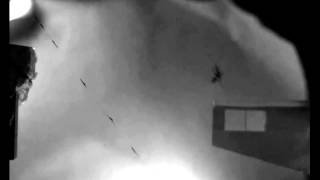
High-speed imagery of the spider Hasarius adansoni shows that despite initial angles of pitch at takeoff, these spiders can actively change their body orientation in air by manipulating forces from the silk and drag, aiding in controlled landings.
This discovery highlights the crucial role of dragline silk in in-flight stability and energy dissipation for salticids, offering insights into silk's physiological control and potential applications in designing agile robots.
It's up! Thanks to everyone who helped make this one happen.
https://t.co/lR8q77cukT https://t.co/27meJIFyGg
Jun 17, 2023 · 21 likes · 11 shares · 349 followersView post →
DT
Dr. Catherine Scott (she/they)
@Cataranea · X
Check out the latest video about zebra jumping spiders, featuring @RoesslerDaniela's incredibly cool research on sleep & predation here:
https://t.co/680EliOuTT
Jun 19, 2023 · 6 likes · 1 share · 10,969 followersView post →
A close look at Salticus scenicus, the Zebra jumping spider, exploring how they use silk not just as safety lines but also to stabilize their midair jumps, enabling controlled landings and enhanced predatory success.
This video demonstrates how jumping salticid spiders utilize dragline silk not only as a safety line but also for in-flight stabilization, allowing for controlled landings. High-speed footage reveals active body…
New research shows jumping spiders use silk draglines to help stabilize trajectories. High-speed imagery reveals they actively control their orientation during jumps, improving landing accuracy and predatory success.
This video explores how jumping spiders utilize silk draglines not only as safety lines but also to stabilize midair during jumps, enabling smooth landings and improved predatory success, as revealed by high-speed…
This video examines how jumping spiders stabilize their body during midair. High-speed footage reveals controlled orientation changes facilitated by silk forces, enabling smooth landings and improved predatory…
This video shows the change of body orientation in a salticid producing no dragline silk throughout a jump including the takeoff. Empirical data from high-speed imaging reveal how these spiders actively adjust their…
analysis of salticus scencius
I video https://t.co/08s8tw0lOn
II article https://t.co/Z6nGefbJ3d
III analysis https://t.co/k49q2drfpJ
image attribution: see article above @SollforsMedia https://t.co/qlpyDdirm3
https://t.co/3VgzVGzOFp
I already went out of my way to relocate spiders I found at home and work but this series is so good at reminding you why they’re just good creatures to have exist
The Spiders in Your House - The Zebra Jumper https://t.co/hoRwlmP6Xd via @YouTube
This YouTube producer does a whole-family friendly job of leting us know all about spiders. I just watched this vid on Jumping spiders. Outstanding!
RT @travismcenery: It's up! Thanks to everyone who helped make this one happen.
https://t.co/lR8q77cukT https://t.co/27meJIFyGg
Jun 19, 2023 · 11 shares · 3,104 followersView post →
DR
Dinesh Rao
@dineshraov · X
RT @travismcenery: It's up! Thanks to everyone who helped make this one happen.
https://t.co/lR8q77cukT https://t.co/27meJIFyGg
Jun 19, 2023 · 11 shares · 641 followersView post →
Ту
Тэ дрэвэт утвикλэрэн
@TeaDrivenDev · X
RT @travismcenery: It's up! Thanks to everyone who helped make this one happen.
https://t.co/lR8q77cukT https://t.co/27meJIFyGg
Jun 19, 2023 · 11 shares · 948 followersView post →
TF
TurnFear2Fascination
@Tone_Killick · X
RT @travismcenery: It's up! Thanks to everyone who helped make this one happen.
https://t.co/lR8q77cukT https://t.co/27meJIFyGg
Jun 19, 2023 · 11 shares · 4,753 followersView post →
DT
Dr. Catherine Scott (she/they)
@Cataranea · X
Check out the latest video about zebra jumping spiders, featuring @RoesslerDaniela's incredibly cool research on sleep & predation here:
https://t.co/680EliOuTT
Jun 19, 2023 · 6 likes · 1 share · 10,969 followersView post →
TD
Trine Daely
@TrineDaely · X
RT @travismcenery: It's up! Thanks to everyone who helped make this one happen.
https://t.co/lR8q77cukT https://t.co/27meJIFyGg
Jun 18, 2023 · 11 shares · 2,752 followersView post →
TD
Trine Daely
@TrineDaely · X
The Spiders in Your House - The Zebra Jumper
Entertainment and science in one video, come and get it!
https://t.co/betWpO0qSv via @YouTube
Fun video on jumping spiders dropped today.
https://t.co/xLtb42gHVH
Jun 17, 2023 · 1 like · 2,189 followersView post →
AP
Amy Poindexter
@AmyPoindexter51 · X
RT @travismcenery: It's up! Thanks to everyone who helped make this one happen.
https://t.co/lR8q77cukT https://t.co/27meJIFyGg
Jun 17, 2023 · 11 shares · 670 followersView post →
AP
Amy Poindexter
@AmyPoindexter51 · X
I absolutely adore Travis and his dry, wry sense of humor and serious scholarship. If you're ever curious about spiders in your house, please go watch his videos.
https://t.co/dLmFmtxVsV
I just poked a jumping spider on my wall, it jumped... and didn't fall! How?! Some kind of horizontal spider gravity? It turns out that jumping spiders use a bit of webbing to tether themselves: https://t.co/Mic5O5ikdB
The only thing I'm left asking is... Where did it go?
 KN
KN DB
DB




 さ
さ