 SW
 JV
 MD
 A
 IM
 FE
 A
 B
 류
 JO
 SF
 K
 J
 Р
 CW
 LL
 ML
 LR
 CW
 F
 G
 TK
 EH
 G
 R
 V
 N
 慧さ
 L
 A
 H
 D
 JR
 HN
 AA
 TF
 S
 J
 A
 GC
 SW
 M
 JC
 NF
 J
 JT
 MH
 RN
 JS
 CC
 D
 VV
Aep assignment | DOCX
News
doi:10.1007/s00442-013-2873-7. Wood, D.C. (1988). "Habituation in Stentor produced by mechanoreceptor channel modification". Journal of Neuroscience ...
Dec 17, 2025
View →
Mentions
Extended reach
Total likes
Video views
AI synopsis
Discussions emphasize the significance of the study by referencing detailed research, such as Mimosa's habituation and long-term memory, and explore the biological mechanisms like calcium signaling. Words like 'astonishing,' 'exciting,' and 'revolutionize' reflect a tone of enthusiasm and acknowledgment of high impact, demonstrating strong engagement with the subject.
Most comments support the idea that plants can learn and remember, referencing studies with Mimosa pudica as evidence of elementary cognition.
The discussions show high curiosity about plant cognition, with many expressing fascination and eager to explore the implications.
Several posts delve into detailed mechanisms, citing molecular and cellular processes like calcium signaling and epigenetics, indicating active involvement.
The series of posts suggests this research could revolutionize understanding of plant behavior, highlighting its significance in biology and ecology.
Another possible example of rudimentary "cognition" in a plant: Touch-me-nots may learn from experience. At first, they react to being dropped; soon, though, they habituate and stop reacting. The learning may last > a month. https://t.co/mCsqMBP3Br Video: https://t.co/oU3os0SgJF https://t.co/uzidusWOb8
Another possible example of rudimentary "cognition" in a plant: Touch-me-nots may learn from experience. At first, they react to being dropped; soon, though, they habituate and stop reacting. The learning may last > a month. https://t.co/mCsqMBxscR Video: https://t.co/oU3os0AFl5 https://t.co/jejpEuI46N
⬇️ А что касается аргумента, что хекс-ядро сжалось, когда Ви на него замахнулся табуреткой – так в природе много что реагирует на потенциальную опасность, при этом не имея сознания. Например, некоторые растения могут даже "запоминать" такие воздействия: https://t.co/VQUvLNnN1O https://t.co/KQsD4hjPCk
In my exploration of non-human cognition I came across this paper and video. Plants hear, remember and make decisions. The hardware, like that of animals such as the octopus, is completely different to ours. https://t.co/n9f11AAWdq https://t.co/tzqk8GgyX7
Experience Teaches Plants to Learn Faster and Forget Slower in Environments Where It Matters
Судя по конспекту статьи, помнят они аж целый месяц! https://t.co/0dk0D5WBnb

Plants can respond to mechanical stimuli like touch, wind, and gravity, influencing their growth and development. This video explores how plants detect and react to physical stimuli, activating mechanisms that affect…

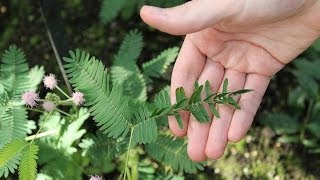


Explore the fascinating world of plant intelligence, including their ability to communicate, defend themselves, and learn from their environment, as revealed through innovative scientific experiments and research.


Explore the secret world of plants, their ability to communicate, defend themselves, and form relationships with other species through innovative scientific experiments and discoveries.

@Demoguardian ...aber hey, ... https://t.co/sXIg5CAzqx
#きょうの論文 オジギソウを何度も落下させて防御反応を馴化させた研究。行動学習を示唆。 Gagliano, M., Renton, M., Depczynski, M. et al. Experience teaches plants to learn faster and forget slower in environments where it matters. Oecologia 175, 63–72 (2014). https://t.co/MLqWLrOhQS
⬇️ А что касается аргумента, что хекс-ядро сжалось, когда Ви на него замахнулся табуреткой – так в природе много что реагирует на потенциальную опасность, при этом не имея сознания. Например, некоторые растения могут даже "запоминать" такие воздействия: https://t.co/VQUvLNnN1O https://t.co/KQsD4hjPCk
@analiromero @luisrilopez @rystm @ClauLG20 @ivanalquimico Gagliano, M., Renton, M., Depczynski, M., & Mancuso, S. (2014). Experience teaches plants to learn faster and forget slower in environments where it matters.
식물이 기억을 하는가에 대한 연구 결과는.. https://t.co/SkFSRnl1dL
Experience Teaches Plants to Learn Faster and Forget Slower in Environments Where It Matters
@rescodedios @abc_es Gracias a ti Víctor... Interesante esto en Springer: https://t.co/dJKr7O0r4j Mucho que investigar en este campo
RT @SteveStuWill: Another possible example of rudimentary "cognition" in a plant: Touch-me-nots may learn from experience. At first, they r…
RT @SteveStuWill: Another possible example of rudimentary "cognition" in a plant: Touch-me-nots may learn from experience. At first, they r…
RT @SteveStuWill: Another possible example of rudimentary "cognition" in a plant: Touch-me-nots may learn from experience. At first, they r…
RT @SteveStuWill: Another possible example of rudimentary "cognition" in a plant: Touch-me-nots may learn from experience. At first, they r…
RT @SteveStuWill: Another possible example of rudimentary "cognition" in a plant: Touch-me-nots may learn from experience. At first, they r…
RT @SteveStuWill: Another possible example of rudimentary "cognition" in a plant: Touch-me-nots may learn from experience. At first, they r…
RT @SteveStuWill: Another possible example of rudimentary "cognition" in a plant: Touch-me-nots may learn from experience. At first, they r…
RT @SteveStuWill: Another possible example of rudimentary "cognition" in a plant: Touch-me-nots may learn from experience. At first, they r…
Another possible example of rudimentary "cognition" in a plant: Touch-me-nots may learn from experience. At first, they react to being dropped; soon, though, they habituate and stop reacting. The learning may last > a month. https://t.co/mCsqMBxscR Video: https://t.co/oU3os0AFl5 https://t.co/jejpEuI46N
In my exploration of non-human cognition I came across this paper and video. Plants hear, remember and make decisions. The hardware, like that of animals such as the octopus, is completely different to ours. https://t.co/n9f11AAWdq https://t.co/tzqk8GgyX7
Or that it appears plants have some ability to build memories and forget? The "touch-me-not" plant normally recoils at physical stimulus. But in a study, researchers were able to train the plant to stop this response after repeated stimuli https://t.co/jhBcgQ3Lkw
RT @SteveStuWill: Another possible example of rudimentary "cognition" in a plant: Touch-me-nots may learn from experience. At first, they r…
RT @SteveStuWill: Another possible example of rudimentary "cognition" in a plant: Touch-me-nots may learn from experience. At first, they r…
RT @SteveStuWill: Another possible example of rudimentary "cognition" in a plant: Touch-me-nots may learn from experience. At first, they r…
RT @SteveStuWill: Another possible example of rudimentary "cognition" in a plant: Touch-me-nots may learn from experience. At first, they r…
RT @SteveStuWill: Another possible example of rudimentary "cognition" in a plant: Touch-me-nots may learn from experience. At first, they r…
RT @SteveStuWill: Another possible example of rudimentary "cognition" in a plant: Touch-me-nots may learn from experience. At first, they r…
RT @SteveStuWill: Another possible example of rudimentary "cognition" in a plant: Touch-me-nots may learn from experience. At first, they r…
RT @SteveStuWill: Another possible example of rudimentary "cognition" in a plant: Touch-me-nots may learn from experience. At first, they r…
RT @SteveStuWill: Another possible example of rudimentary "cognition" in a plant: Touch-me-nots may learn from experience. At first, they r…
RT @SteveStuWill: Another possible example of rudimentary "cognition" in a plant: Touch-me-nots may learn from experience. At first, they r…
RT @SteveStuWill: Another possible example of rudimentary "cognition" in a plant: Touch-me-nots may learn from experience. At first, they r…
RT @SteveStuWill: Another possible example of rudimentary "cognition" in a plant: Touch-me-nots may learn from experience. At first, they r…
RT @SteveStuWill: Another possible example of rudimentary "cognition" in a plant: Touch-me-nots may learn from experience. At first, they r…
RT @SteveStuWill: Another possible example of rudimentary "cognition" in a plant: Touch-me-nots may learn from experience. At first, they r…
RT @SteveStuWill: Another possible example of rudimentary "cognition" in a plant: Touch-me-nots may learn from experience. At first, they r…
RT @SteveStuWill: Another possible example of rudimentary "cognition" in a plant: Touch-me-nots may learn from experience. At first, they r…
RT @SteveStuWill: Another possible example of rudimentary "cognition" in a plant: Touch-me-nots may learn from experience. At first, they r…
RT @SteveStuWill: Another possible example of rudimentary "cognition" in a plant: Touch-me-nots may learn from experience. At first, they r…
RT @SteveStuWill: Another possible example of rudimentary "cognition" in a plant: Touch-me-nots may learn from experience. At first, they r…
RT @SteveStuWill: Another possible example of rudimentary "cognition" in a plant: Touch-me-nots may learn from experience. At first, they r…
RT @SteveStuWill: Another possible example of rudimentary "cognition" in a plant: Touch-me-nots may learn from experience. At first, they r…
RT @SteveStuWill: Another possible example of rudimentary "cognition" in a plant: Touch-me-nots may learn from experience. At first, they r…
Another possible example of rudimentary "cognition" in a plant: Touch-me-nots may learn from experience. At first, they react to being dropped; soon, though, they habituate and stop reacting. The learning may last > a month. https://t.co/mCsqMBP3Br Video: https://t.co/oU3os0SgJF https://t.co/uzidusWOb8
RT @jmatwood: Some sauces (not exhaustive): Plants' "command center" (brain analogue): https://t.co/yLuwYnLAls Anesthetizing plants: https…
Судя по конспекту статьи, помнят они аж целый месяц! https://t.co/0dk0D5WBnb
Plants can learn faster and forget slower in environments, isn't amazing? https://t.co/B3GRBqJlnQ
A negative regulator of the gene, “imposing an inhibitory epigenetic marking which, in turn, leads to a smaller behavioral response when recurring stimulations of the same kind activate that gene [i.e. memory of inhibitory modifications and recall." https://t.co/y77lyVCcOy
Stress vs habituation. “These are quite different from habituated responses like the one shown by the Mimosa plants in this study, where an input to the gene may produce a behavioral output that operates as a negative regulator of the gene.” https://t.co/y77lyVCcOy
“These stress-induced changes in plant response resulting from previous experiences involve a priming input that modifies chromatin patterns but does not lead to an immediate phenotypic response [i.e. memory with delayed output." https://t.co/y77lyVCcOy
Epigenetic stressors: “acquired tolerance to drought stress, whereby exposure of young plants to a mild salt treatment primes enhanced drought tolerance in adult plants." https://t.co/y77lyVCcOy
Epigenetic stressors. “Induced plant defences, whereby an anti-herbivore or anti-pathogen response is primed by environmental cues that reliably indicate an increased probability of attacks prior to their occurrence.” https://t.co/y77lyVkBpY
“Changes in chromatin methylation patterns are strongly produced following environmental stress and retained as a source of ‘stress memory’ [e.g. vernalization, whereby the flowering of plants requires priming by previous exposure to chilling.” https://t.co/y77lyVCcOy
“In fact, it is well documented that epigenetic variations can be induced by external stimuli." https://t.co/y77lyVCcOy
“In principle, behavioral responses can be modified or refined through the integration of environmental experiences (i.e. learning) via changes in chromatin status [modulated by acetylation and methylation of DNA and histone proteins.“ https://t.co/y77lyVCcOy
“Additionally at the molecular level, the role of epigenetic reprogramming has been increasingly identified as a promising candidate mechanism for learning and memory storage in plants and more generally, across all taxa." https://t.co/y77lyVCcOy
“The Ca2+/CaM signalling system controls the expression of genes whether their transcription occurs in the neurons of a big-brained animal or in the root apex cells of a plant." (CaM = Calmodulin). https://t.co/y77lyVCcOy
Calmodulin CaM: “plants have a much larger repertoire of genes coding for CaM-target proteins." https://t.co/y77lyVCcOy
Calmodulin (CaM). "What is really interesting about this Ca2+ sensor is that CaM is one of the most conserved Ca2+-binding proteins in eukaryotes [>70 % sequence alignment similarity between animals and plants.” https://t.co/y77lyVCcOy
“In both animals and plants, fluctuations in [Ca2+]i levels are directly linked to stimulus–response coupling through changes in the concentration of small molecules and proteins, including calmodulin (CaM)." https://t.co/y77lyVCcOy
RT @TenFleming: “Interestingly in animals, fluctuations in [Ca2+]i during learning seem to be essential in priming the organism for the for…
“In plants, this same [Ca2+]i system is already known to contribute to the formation of stress imprints and may be responsible for the long-term memory we observed in Mimosa." https://t.co/y77lyVCcOy
“Interestingly in animals, fluctuations in [Ca2+]i during learning seem to be essential in priming the organism for the formation of long-term memory, without affecting short-term memory.” https://t.co/y77lyVCcOy
“Intracellular Ca ([Ca2+]i) signals are known to regulate a large variety of functions in all biological organisms, including memory processing and formation of memory imprints of past events ranging from minutes to generations through gene expression." https://t.co/y77lyVCcOy
“Plants may lack brains and neural tissues but they do possess a sophisticated Ca-signalling network in their cells similar to those underlying memory processes in animals." https://t.co/y77lyVCcOy
Mimosa “revealing that these plants employ sensory and motor pathways with the direct involvement of voltage-gated ion channels, neurotransmitters and changes in protein synthesis, all of which may also be utilized during the learning process." https://t.co/y77lyVCcOy
“Interestingly, the physiological and cellular mechanisms of leaf movements associated with fast responses to environmental stimuli in plants like Mimosa have been known for some time.” https://t.co/y77lyVCcOy
“But we have left unanswered the fundamental question of the mechanisms underlying this deceptively simple form of learning, the biological basis of which we still do not fully understand in any organism." https://t.co/y77lyVCcOy
“We have demonstrated the acquisition and expression of a long-lasting memory for a learned behaviour in this plant.” https://t.co/y77lyVCcOy
RT @TenFleming: “Mimosa’s proficiency in responding appropriately to a known stimulus within a new context does not require brand-new learn…
“Mimosa’s proficiency in responding appropriately to a known stimulus within a new context does not require brand-new learning but the capacity to ‘remember’ (i.e. recognize that a present cue has been previously encountered) and adjust slightly." https://t.co/y77lyVCcOy
“Mimosa can acquire an enduring memory of a past event, whereby the plant recognizes and generalizes the learned stimulus even when the context in which the memory was generated has changed.“ https://t.co/y77lyVCcOy
Mimosa. “Recovery time is variable and leaves may take a few seconds to several minutes to re-open fully." https://t.co/y77lyVCcOy
Mimosa. “Disturbance causes the subleaflets to rapidly fold up along the stem of each leaflet, and even the leaflet and leaf stem to droop downwards in a matter of seconds.“ https://t.co/y77lyVCcOy
“Controlled drop system for habituation training of Mimosa plants. The sensitive plant Mimosa pudica was chosen as the ideal model for this study, because of its capacity to rapidly fold its leaves in response to physical disturbance." https://t.co/y77lyVCcOy
“Hence to meet these criteria, a plant must be able to select relevant things to memorize and actively access those memories to modify the timing, quality or quantity of its behavioral response when exposed to external stimuli." https://t.co/y77lyVCcOy
“Habituation is an adaptive process that enables an organism to focus on the important information in its environment, while filtering out stimuli or events that, over time, have repeatedly proven to be irrelevant and innocuous." https://t.co/y77lyVCcOy
Habituation is “often considered to be the simplest form of learning.” https://t.co/y77lyVCcOy
Mimosa. “This not only excludes the possibility that this is simply rapid re-habituation, it demonstrates an increase in the tendency of individuals to take a specific action in response to a known stimulus based on prior learning." https://t.co/y77lyVCcOy
Mimosa’s learned response. “This relatively long-lasting learned behavioural change as a result of previous experience matches the persistence of habituation effects observed in many animals." https://t.co/y77lyVCcOy
“Astonishingly, Mimosa can display the learned response even when left undisturbed in a more favourable environment for a month.“ https://t.co/y77lyVCcOy
“In Mimosa pudica—the sensitive plant—the defensive leaf-folding behaviour in response to repeated physical disturbance exhibits clear habituation, suggesting some elementary form of learning.“ https://t.co/y77lyVCcOy
RT @jmatwood: Some sauces (not exhaustive): Plants' "command center" (brain analogue): https://t.co/yLuwYnLAls Anesthetizing plants: https…
“This leaves open the question of whether plants, like animals, can show learned behavioral responses (i.e. a behaviour that an individual develops by being taught)." https://t.co/y77lyVCcOy
“In all cases, the behaviour of the different plants included an ability to store and recall biological information in order to produce a specific (and somewhat predictable) developmental, physiological, morphological or epigenetic response." https://t.co/y77lyVCcOy
“Plants are indeed capable of memory function.” https://t.co/y77lyVCcOy
Mimosa. “This relatively long-lasting learned behavioural change as a result of previous experience matches the persistence of habituation effects observed in many animals." https://t.co/y77lyVCcOy
“Mimosa can display the learned response even when left undisturbed in a more favourable environment for a month.“ https://t.co/y77lyVCcOy
“Like animals, plants also acquire a huge amount of information from their environment, yet their capacity to memorize and organize learned behavioral responses has not been demonstrated." (Mancuso) https://t.co/y77lyVCcOy
“The nervous system of animals serves the acquisition, memorization and recollection of information." (Mancuso) https://t.co/y77lyVCcOy
“Recognizing and quantifying such behavioral changes has proven to be no easy task in human and animal subjects, let alone in plants whose ability to behave is still an underappreciated phenomenon." https://t.co/y77lyVCcOy
“By definition, learning is a process for acquiring memories by which adaptive changes in an organism’s behaviour arise as a result of experience.” https://t.co/y77lyVCcOy
“Once the domain of psychologists, research on learning and memory has extended its reach beyond the study of human behaviour to include several animal species and more recently, even machines." https://t.co/y77lyVCcOy
RT @SteveStuWill: Another possible example of rudimentary "cognition" in a plant: Touch-me-nots may learn from experience. Initially, they…
RT @SteveStuWill: Another possible example of rudimentary "cognition" in a plant: Touch-me-nots may learn from experience. Initially, they…
RT @SteveStuWill: Another possible example of rudimentary "cognition" in a plant: Touch-me-nots may learn from experience. Initially, they…
RT @SteveStuWill: Another possible example of rudimentary "cognition" in a plant: Touch-me-nots may learn from experience. Initially, they…
RT @SteveStuWill: Another possible example of rudimentary "cognition" in a plant: Touch-me-nots may learn from experience. Initially, they…
doi:10.1007/s00442-013-2873-7. Wood, D.C. (1988). "Habituation in Stentor produced by mechanoreceptor channel modification". Journal of Neuroscience ...
Nat. Acad. Sci. Oecologia 175, 63–72. doi: 10.1007/s00442-013-2873-7 U.S.A. 89, 12194–12197.
https://doi.org/10.1007/s00442-013-2873-7. Galassi, V. V. & Wilke, N. (2021). On the coupling between mechanical properties and electrostatics in biological ...
Doi: 10.1007/s00442-013-2873-7 #dormideira #plantadormideira #mimosapudica #plantas #curiosidadesdeplantas · som original - Thayllon Orzechowsky. 411 ...
teaches plants to learn faster and forget slower in environments where it matters. Oecologia, 175(1), 63–72. https://doi.org/10.1007/s00442-013-2873-7
doi:10.1007/s00442-013-2873-7 (https://doi.org/10.1007%2Fs00442-013-2873-7). PMID 24390479 (https://pubmed.ncbi.nlm.nih.gov/24390479). S2CID 5038227 ...
doi: 10.1007/s00442-013-2873-7. 7 Gagliano M, Vyazovskiy VV, Borbély AA, Grimonprez M, Depczynski M. (2016). 8 Learning by association in plants. Scientific ...
(doi:10.1007/s00442-013-2873-7) Springer. Downloaded from http://rsif.royalsocietypublishing.org/ on July 18, 2017. 66. Isnard S, Silk WK. 2009 Moving with ...
One frequently referenced study on plant learning is the apparent habituation of Mimosa pudica (10.1007/s00442-013-2873-7). In this experiment, a plant is ...
https://doi.org/10.1007/s00442-013-2873-7 Measured degree of openness of the leaves after. Mimosa pudica. Results: leaf-folding reflex habituates rapidly.
https://doi.org/10.1007/s00442-013-2873-7. Gagliano, M., Vyazovskiy, V. V., Borbély, A. A., Grimonprez, M., & Depczynski, M. (2016). Learning by association ...
doi:10.1007/s00442-013-2873-7. ISSN 0029- 8549. PMID 24390479. 14. ^ Zuo, Fan, et al. "Habituation based synaptic plasticity and organismic learning in a ...
https://link-springer-com.ciis.idm.oclc.org/article/10.1007/s00442-013-2873-7. 3. Gagliano, Monica. Thus Spoke the Plant. North Atlantic Books, 2018. 4 ...
... 10.1007/s00442-013-2873-7 #dormideira #plantadormideira #mimosapudica #plantas #curiosidadesdeplantas · som original - Thayllon Orzechowsky.
... 10.1007/s00442-013-2873-7 #dormideira #plantadormideira #mimosapudica #plantas #curiosidadesdeplantas · som original - Thayllon Orzechowsky.
... 10.1007/s00442-013-2873-7 #dormideira #plantadormideira #mimosapudica #plantas #curiosidadesdeplantas · som original - Thayllon Orzechowsky.
... 10.1007/s00442-013-2873-7 #dormideira #plantadormideira #mimosapudica #plantas #curiosidadesdeplantas · som original - Thayllon Orzechowsky.
... 10.1007/s00442-013-2873-7 #dormideira #plantadormideira #mimosapudica #plantas #curiosidadesdeplantas · som original - Thayllon Orzechowsky.
... 10.1007/s00442-013-2873-7 #dormideira #plantadormideira #mimosapudica #plantas #curiosidadesdeplantas · som original - Thayllon Orzechowsky.
Doi: 10.1007/s00442-013-2873-7 #dormideira #plantadormideira #mimosapudica #plantas #curiosidadesdeplantas · som original - Thayllon ...
... 10.1007/s00442-013-2873-7 #dormideira #plantadormideira #mimosapudica #plantas #curiosidadesdeplantas · som original - Thayllon Orzechowsky.
... 10.1007/s00442-013-2873-7 #dormideira #plantadormideira #mimosapudica #plantas #curiosidadesdeplantas · som original - Thayllon Orzechowsky.
... 10.1007/s00442-013-2873-7 #dormideira #plantadormideira #mimosapudica #plantas #curiosidadesdeplantas · som original - Thayllon Orzechowsky.
... 10.1007/s00442-013-2873-7 #dormideira #plantadormideira #mimosapudica #plantas #curiosidadesdeplantas · som original - Thayllon Orzechowsky.
... 10.1007/s00442-013-2873-7 #dormideira #plantadormideira #mimosapudica #plantas #curiosidadesdeplantas · som original - Thayllon Orzechowsky.
... 10.1007/s00442-013-2873-7 #dormideira #plantadormideira #mimosapudica #plantas #curiosidadesdeplantas · som original - Thayllon Orzechowsky.
Doi: 10.1007/s00442-013-2873-7 #dormideira #plantadormideira #mimosapudica #plantas #curiosidadesdeplantas. more. View all 9 comments.
... 10.1007/s00442-013-2873-7 #dormideira #plantadormideira #mimosapudica #plantas #curiosidadesdeplantas · som original - Thayllon Orzechowsky.
... 10.1007/s00442-013-2873-7 #dormideira #plantadormideira #mimosapudica #plantas #curiosidadesdeplantas · som original - Thayllon Orzechowsky.
... 10.1007/s00442-013-2873-7 #dormideira #plantadormideira #mimosapudica #plantas #curiosidadesdeplantas · som original - Thayllon Orzechowsky.
... 10.1007/s00442-013-2873-7 #dormideira #plantadormideira #mimosapudica #plantas #curiosidadesdeplantas · som original - Thayllon Orzechowsky.
... 10.1007/s00442-013-2873-7 #dormideira #plantadormideira #mimosapudica #plantas #curiosidadesdeplantas · som original - Thayllon Orzechowsky.
... 10.1007/s00442-013-2873-7 #dormideira #plantadormideira #mimosapudica #plantas #curiosidadesdeplantas · som original - Thayllon Orzechowsky.
... 10.1007/s00442-013-2873-7 #dormideira #plantadormideira #mimosapudica #plantas #curiosidadesdeplantas · som original - Thayllon Orzechowsky.
Então já segue o perfil pra não perder nada do que rola por aqui Doi: 10.1007/s00442-013-2873-7 #dormideira #plantadormideira #mimosapudica # ...
... 10.1007/s00442-013-2873-7 #dormideira #plantadormideira #mimosapudica #plantas #curiosidadesdeplantas · som original - Thayllon Orzechowsky.
... 10.1007/s00442-013-2873-7 #dormideira #plantadormideira #mimosapudica #plantas #curiosidadesdeplantas · som original - Thayllon Orzechowsky.
... 10.1007/s00442-013-2873-7 #dormideira #plantadormideira #mimosapudica #plantas #curiosidadesdeplantas · som original - Thayllon Orzechowsky.
... 10.1007/s00442-013-2873-7 https://www.scientificamerican.com/article/human-uniqueness-is-a-myth-mounting-evidence-shows/ #ConcienciaAnimal ...
... 10.1007/s00442-013-2873-7 #dormideira #plantadormideira #mimosapudica #plantas #curiosidadesdeplantas · som original - Thayllon Orzechowsky.
... 10.1007/s00442-013-2873-7 #dormideira #plantadormideira #mimosapudica #plantas #curiosidadesdeplantas · som original - Thayllon Orzechowsky.
... 10.1007/s00442-013-2873-7 #dormideira #plantadormideira #mimosapudica #plantas #curiosidadesdeplantas · som original - Thayllon Orzechowsky.
... 10.1007/s00442-013-2873-7 #dormideira #plantadormideira #mimosapudica #plantas #curiosidadesdeplantas · som original - Thayllon Orzechowsky.
... 10.1007/s00442-013-2873-7 #dormideira #plantadormideira #mimosapudica #plantas #curiosidadesdeplantas · som original - Thayllon Orzechowsky.
... 10.1007/s00442-013-2873-7 #dormideira #plantadormideira #mimosapudica #plantas #curiosidadesdeplantas · som original - Thayllon Orzechowsky.
... 10.1007/s00442-013-2873-7 #dormideira #plantadormideira #mimosapudica #plantas #curiosidadesdeplantas · som original - Thayllon Orzechowsky.
... 10.1007/s00442-013-2873-7 #dormideira #plantadormideira #mimosapudica #plantas #curiosidadesdeplantas · som original - Thayllon Orzechowsky.
... 10.1007/s00442-013-2873-7 Planta dormideira 'aprende' e tem 'memória', afirma estudo. Disponível em: https://veja.abril.com.br/ciencia ...
... 10.1007/s00442-013-2873-7 #dormideira #plantadormideira #mimosapudica #plantas #curiosidadesdeplantas · som original - Thayllon Orzechowsky.
... 10.1007/s00442-013-2873-7 #dormideira #plantadormideira #mimosapudica #plantas #curiosidadesdeplantas · som original - Thayllon Orzechowsky.
... 10.1007/s00442-013-2873-7 #dormideira #plantadormideira #mimosapudica #plantas #curiosidadesdeplantas · som original - Thayllon Orzechowsky.
... 10.1007/s00442-013-2873-7 #dormideira #plantadormideira #mimosapudica #plantas #curiosidadesdeplantas · som original - Thayllon Orzechowsky.
... 10.1007/s00442-013-2873-7 #dormideira #plantadormideira #mimosapudica #plantas #curiosidadesdeplantas · som original - Thayllon Orzechowsky.
... 10.1007/s00442-013-2873-7 #dormideira #plantadormideira #mimosapudica #plantas #curiosidadesdeplantas · som original - Thayllon Orzechowsky.
... 10.1007/s00442-013-2873-7 #dormideira #plantadormideira #mimosapudica #plantas #curiosidadesdeplantas · som original - Thayllon Orzechowsky.
... 10.1007/s00442-013-2873-7 #dormideira #plantadormideira #mimosapudica #plantas #curiosidadesdeplantas. Descubra a Planta Dormideira ...
... 10.1007/s00442-013-2873-7 #dormideira #plantadormideira #mimosapudica #plantas #curiosidadesdeplantas · som original - Thayllon Orzechowsky.
... 10.1007/s00442-013-2873-7 #dormideira #plantadormideira #mimosapudica #plantas #curiosidadesdeplantas · som original - Thayllon Orzechowsky.
... 10.1007/s00442-013-2873-7 #dormideira #plantadormideira #mimosapudica #plantas #curiosidadesdeplantas · som original - Thayllon Orzechowsky.
https://link.springer.com/article/10.1007/s00442-013-2873-7 · https://www.nature.com/articles/srep38427 · https://phys.org/news/2017-05-how-plants ...
com/article/10.1007/s00442-013-2873 -7 https://www.researchgate. net/publication/287614477_Binary_Dec isions_in_Maize_Root_Behavior_Y ...
... 10.1007/s00442-013-2873-7 https://veja.abril.com.br/ciencia/planta-dormideira-aprende-e-tem-memoria-afirma-estudo/amp/ Crédito da imagem: As ...
... 10.1007/s00442-013-2873-7 [2] https://www.gmanetwork.com/news/scitech/science/344647/makahiya-plants-have-memories-and-can-learn-biologists ...
... 10.1007/s00442-013-2873-7 El artículo tiene un puntaje altimétrico de 16 Marder, M. (2012). La intencionalidad vegetal y el marco ...
doi:10.1007/s00442-013-2873-7. Banner Image: Leaves of a rainforest shrub illuminated in a ray of sunlight. Image by Rhett A. Butler. Malavika ...
One frequently referenced study on plant learning is the apparent habituation of Mimosa pudica (10.1007/s00442-013-2873-7). In this ...
DOI: 10.1007/s00442-013-2873-7. Garzón, F. C. (2007). The Quest for Cognition in Plant Neurobiology. Plant Signaling & Behavior, 2(4), 208 ...
doi:10.1007/s00442-013-2873-7. ISSN 0029-8549. External links[edit] Wikimedia Commons has media related to Mimosa pudica. Wikispecies has
... where it matters. Oecologia, published online January 05, 2014; doi: 10.1007/s00442-013-2873-7 · slopez13. • 12y ago · http://en.wikipedia.
... environments where it matters. Oecologia, veröffentlicht online am 05. Januar 2014; doi: 10.1007/s00442-013-2873-7 · slopez13. • vor 12 Jahren.