The discussions highlight the debate between gradual evolution and stasis, with references to scientific concepts like punctuated equilibrium and examples of fossil and modern similarities, demonstrating interest and moderate engagement; the tone ranges from explanatory to defensive, emphasizing the significance of understanding evolutionary processes.
AgreementModerate agreement
Most discussions support the idea that horseshoe crabs exhibit stasis and have changed little over millions of years, with some emphasizing scientific explanations for this phenomenon.
InterestHigh interest
Overall, participants show high interest in the topic, citing research, scientific debates, and historical evolutionary concepts.
EngagementModerate engagement
The discussions involve referencing scientific theories like punctuated equilibrium, showing moderate depth, but few are deeply analyzing or debating the implications, resulting in a moderate engagement score.
ImpactModerate impact
The conversations reinforce the importance of understanding evolutionary stability, but they primarily serve academic and educational purposes rather than causing a major shift in views or policies.
Abstract in brief
The text describes a newly identified species of horseshoe crab, Limulus darwini, from the Late Jurassic period found in Poland, which shows similarities to modern juvenile Limulus polyphemus, indicating minimal morphological differences.
It discusses the ecological and dietary habits of both ancient and modern horseshoe crabs, suggesting that the new species inhabited nearshore environments and had similar feeding behaviors to present-day relatives.
The authors introduce the concept of "stabilomorphism" to describe a form of adaptive strategy where organisms maintain effective traits over time with less need for varied physical adaptations, contributing to long-term evolutionary stability.
He just shows a fossil alongside a picture of a modern animal, and the similarities are supposed to indicate no evolution. That's not how evolution works though. Organisms well-adapted for a niche aren't going to change much (see video): https://t.co/UgGEYDf0wF
Mar 16, 2020 · 14 likes · 3 shares · 2,836 followersView post →
A
Anna
@wiedzmaanna · X
Nov 4, 2023 · 2 likes · 9,193 followersView post →
JW
Jackson Wheat
@JacksonWheat1 · X
@Frustd_Atheist @mattdeter @BrianSlimdog77 @Schmoop0521 @MrOzAtheist Creationists never try to understand PE. That’s why I made a video about it: https://t.co/UgGEYDf0wF
Feb 10, 2019 · 2 likes · 2,836 followersView post →
TP
Tim Pieper
@TimPieper7 · X
@TheAtheistFold @Renevelation Well, I think that change is always happening, but the rates of change aren’t constant, and if a species is in an environment which it’s fairly adapted to, there’s very little selective pressure for it to make more pronounced changes over time.
https://t.co/JqrntRjHd0
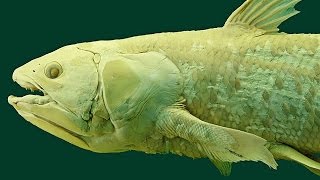
This video explores the scientific evidence behind living fossils like coelacanths, challenging misconceptions about their evolutionary status. Recent research indicates that morphological and molecular data do not…
The African coelacanth, discovered in 1938 and once thought extinct, offers insights into ancient fish related to land animal ancestors. Its genome helps us understand vertebrate adaptation to land, focusing on…
This video explores how ancient species like coelacanths challenge traditional evolutionary ideas and provides insights from genome analysis on vertebrate adaptation to land.
This video explains evolutionary stasis, focusing on the newly identified Jurassic horseshoe crab Limulus darwini. It highlights minimal morphological differences with modern species and introduces the concept of…
Recent studies show that coelacanths' slow evolution does not qualify them as 'living fossils.' Morphological stability is questioned, and low genetic variation does not imply low mutation rates, challenging previous…
@ReluctantlyPre1 @NotEvolution1 Horseshoe Crabs today are not the same as ones in the fossil record. Here’s a paper on how they have changed since the Jurassic.
https://t.co/G23Vr3X7Yc
Nov 4, 2023 · 2 likes · 9,193 followersView post →
AC
Asher Clark
@Abolition__Now · X
@leroyb756 @NotEvolution1 @DOnyali26 @ReformedBritt Several features in Jurassic horseshoe crabs lacking in modern horseshoe crabs.
https://t.co/G23Vr3X7Yc
@Stephen91944457 @MichaelNazirAli Will you ignore another scientific explanation of stasis with scientific resources provided to back it up?
https://t.co/JqrntRjHd0
@warmone2 @AtheistBigfoot But we already collected that evidence. Where have you been? https://t.co/DaoQ0lYnWr
And apparently you lack education on the phenomenon of stasis or punctuated equilibrium. https://t.co/JqrntRjHd0
@StBenedict18 @TakeThatEpi @RBartleby @054durin @dunstan99 @MarceaMjo @ForumAtheist @jemix08 I’m so sorry you can’t read your own quotes.
The guy who proposed Punctuated Equilibrium to account for things gradualism couldn’t, specifically stated it was a problem for “gradulistic accounts of” evolution. Shocker. This is not hard to understand.
https://t.co/JqrntRjHd0
RT @JacksonWheat1: He just shows a fossil alongside a picture of a modern animal, and the similarities are supposed to indicate no evolutio…
Mar 17, 2020 · 3 shares · 11,825 followersView post →
JR
John Smith⚛ (Explorer of Reality)
@doofgeek4011 · X
RT @JacksonWheat1: He just shows a fossil alongside a picture of a modern animal, and the similarities are supposed to indicate no evolutio…
Mar 16, 2020 · 3 shares · 4,327 followersView post →
TS
Tdlane.bsky.social
@AJLane54 · X
RT @JacksonWheat1: He just shows a fossil alongside a picture of a modern animal, and the similarities are supposed to indicate no evolutio…
Mar 16, 2020 · 3 shares · 219 followersView post →
JW
Jackson Wheat
@JacksonWheat1 · X
He just shows a fossil alongside a picture of a modern animal, and the similarities are supposed to indicate no evolution. That's not how evolution works though. Organisms well-adapted for a niche aren't going to change much (see video): https://t.co/UgGEYDf0wF
Mar 16, 2020 · 14 likes · 3 shares · 2,836 followersView post →
TP
Tim Pieper
@TimPieper7 · X
@TheAtheistFold @Renevelation Well, I think that change is always happening, but the rates of change aren’t constant, and if a species is in an environment which it’s fairly adapted to, there’s very little selective pressure for it to make more pronounced changes over time.
https://t.co/JqrntRjHd0
@Frustd_Atheist @mattdeter @BrianSlimdog77 @Schmoop0521 @MrOzAtheist Creationists never try to understand PE. That’s why I made a video about it: https://t.co/UgGEYDf0wF
Feb 10, 2019 · 2 likes · 2,836 followersView post →