Sam Bliss
@ii_sambliss · X
About 8 million tons of plastic entered the ocean in 2010, not including microfibers. https://t.co/P2fzw8CeeX
Dec 30, 2021 · 30 likes · 4 shares · 3,084 followers
View post →
Mentions
Extended reach
Total likes
Video views
AI synopsis
The discussions highlight several key points, such as the emphasis on specific countries that contribute significantly to ocean plastic waste and the critique of consumer blame for pollution. Phrases like '99.99988% wrong' reflect a confrontational tone that downplays individual responsibility and shifts focus to systemic issues, while claims about the potential future increase in plastic waste express concern for environmental impact.
Overall, there is a mix of acceptance and skepticism about the article's conclusions, with some posts showing strong disagreement on the attribution of responsibility for marine pollution.
Many participants express interest in the topic but do so by referencing existing data rather than delving deeply into the research specifics.
Discussions do engage with the material and cite studies, although many seem to focus on debates rather than in-depth critiques or analyses.
There is a clear perception that plastic pollution has a significant impact, especially highlighted by references to specific countries and calls for better waste management.
About 8 million tons of plastic entered the ocean in 2010, not including microfibers. https://t.co/P2fzw8CeeX
Biodegradable #plastic in clothing doesn't break down nearly as quickly as hoped—new research @ConversationEDU @PLOSONE https://t.co/UiwWfB9Le8 https://t.co/2eTTJ3FtnX
"Plastic waste inputs from land into the ocean | Science" https://t.co/ks5vO6NU2f .
@Ivan_Novara Hello @Ivan_Novara you can read the full article at: https://t.co/WcktyKEyr6
RT @KanekoaTheGreat: #3 A 2010 study found that China, India, and the Phillippines account for 5.57 million metric tons of plastic dumped i…
RT @ii_sambliss: About 8 million tons of plastic entered the ocean in 2010, not including microfibers. https://t.co/P2fzw8CeeX
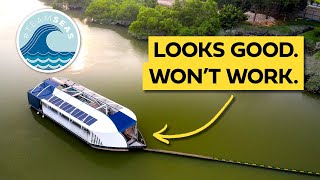
This video discusses the TeamSeas partnership with the Ocean Cleanup and examines the interceptors' effectiveness. While they seem promising, deeper analysis reveals challenges in managing plastic waste, crucial for…

The study evaluates the health benefits of meeting the Paris Agreement goals of limiting global warming to 1.5°C and 2°C by assessing how these targets could reduce heat and cold-related deaths worldwide compared to…

Marine pollution caused by plastic waste is a significant issue affecting our oceans. This video delves into the staggering amounts of plastic, estimated at 275 million metric tons, that generates from land and…
@Luucas_btt @AFantasyMind Jsjsj nmms primero me pides pruebas empíricas para argumentar mi punto, y después das tu opinión que solo “la contaminación es válida” que me importa los progres lit más ideología tienes qué argumentos https://t.co/pG32kQ7xME https://t.co/xcX04Upkrt https://t.co/PdkDTA9tDn
https://t.co/GjqTPFQ8RJ
@SpoxCHN_LinJian 3/6
@idonthaveshoeso @RpsAgainstTrump He's wrong. https://t.co/jU8G07VEEv https://t.co/GiByuObidZ
RT @Noahpinion: What countries dump plastic into the ocean? Mostly developing countries. https://t.co/DwyQDe7zJR https://t.co/d5ByYE8vPW
@Ha_Y_N_at_heart @_DayTia @nayibbukele https://t.co/O4K0cMEg7a Source
RT @Against_3G: "Plastic waste inputs from land into the ocean | Science" https://t.co/ks5vO6NU2f .
"Plastic waste inputs from land into the ocean | Science" https://t.co/ks5vO6NU2f .
So next time you reach for a straw and someone tells you that you’re responsible for the problem of plastic in the ocean, you can tell them that they’re 99.99988% wrong. SOURCES: https://t.co/FbRlTH6VQH… https://t.co/hqkVYaahDa
Unless waste management practices are improved, the flux of plastics to the oceans could increase by an order of magnitude within the next decade. https://t.co/hqkVYaahDa
The real culprit behind the plastic that’s poisoning ocean wildlife is uncollected litter and ocean dumping by poorer coastal countries that lack developed waste management systems. https://t.co/hqkVYaahDa
RT @KanekoaTheGreat: #3 A 2010 study found that China, India, and the Phillippines account for 5.57 million metric tons of plastic dumped i…
RT @KanekoaTheGreat: #3 A 2010 study found that China, India, and the Phillippines account for 5.57 million metric tons of plastic dumped i…
RT @KanekoaTheGreat: #3 A 2010 study found that China, India, and the Phillippines account for 5.57 million metric tons of plastic dumped i…
RT @KanekoaTheGreat: #3 A 2010 study found that China, India, and the Phillippines account for 5.57 million metric tons of plastic dumped i…
RT @KanekoaTheGreat: #3 A 2010 study found that China, India, and the Phillippines account for 5.57 million metric tons of plastic dumped i…
RT @KanekoaTheGreat: #3 A 2010 study found that China, India, and the Phillippines account for 5.57 million metric tons of plastic dumped i…
RT @shellenberger: Sources: - https://t.co/MWRl2m08qO - https://t.co/GjURRGso75
RT @KanekoaTheGreat: #3 A 2010 study found that China, India, and the Phillippines account for 5.57 million metric tons of plastic dumped i…
RT @KanekoaTheGreat: #3 A 2010 study found that China, India, and the Phillippines account for 5.57 million metric tons of plastic dumped i…
RT @KanekoaTheGreat: #3 A 2010 study found that China, India, and the Phillippines account for 5.57 million metric tons of plastic dumped i…
RT @KanekoaTheGreat: #3 A 2010 study found that China, India, and the Phillippines account for 5.57 million metric tons of plastic dumped i…
Plastic waste inputs from land into the ocean | Science https://t.co/GMAWyizizU
@Ivan_Novara Hello @Ivan_Novara you can read the full article at: https://t.co/WcktyKEyr6
@carl_cervone The data does exist https://t.co/7sFgoL6OAH
@BMeiqin99500 @kurohigean66017 @MofaJapan_en 中国が小さな国で、国家予算の小さな弱小国なら 中国以外の途上国と同じ扱いをするのだ 金があっても中国は焼却炉が低性能の ゴミすら自分の国で処理できない情けない国なのだ 情報が政府よって遮断され 中国人はみんな真実を知らない "中国はプラスチック海洋投棄世界一" https://t.co/DXHZojs1z0 https://t.co/81b2ncxCfj
Citations: https://www.science.org/doi/10.1126/science.1260352 https://www.nature.com/articles/s41561-023-01216-0
Citations: https://t.co/VykgMQJfEX https://t.co/hcwZPojWWR
https://t.co/GYExzlmh5e
@CroninKatherine Hi, pre-marine litter refers to the millions of tonnes of plastic on land that is on its way t the oceans annually. A lot of it starts on supermarket shelves. The 900 tonnes per hour refers to a 2015 study from Jambeck et al https://t.co/Or7Z4vH0yt 8M tonnes / 365 / 24 = 900t/h
RT @physorg_space: Biodegradable #plastic in clothing doesn't break down nearly as quickly as hoped—new research @ConversationEDU @PLOSONE…
RT @physorg_space: Biodegradable #plastic in clothing doesn't break down nearly as quickly as hoped—new research @ConversationEDU @PLOSONE…
RT @physorg_space: Biodegradable #plastic in clothing doesn't break down nearly as quickly as hoped—new research @ConversationEDU @PLOSONE…
RT @physorg_space: Biodegradable #plastic in clothing doesn't break down nearly as quickly as hoped—new research @ConversationEDU @PLOSONE…
RT @physorg_space: Biodegradable #plastic in clothing doesn't break down nearly as quickly as hoped—new research @ConversationEDU @PLOSONE…
RT @physorg_space: Biodegradable #plastic in clothing doesn't break down nearly as quickly as hoped—new research @ConversationEDU @PLOSONE…
RT @physorg_space: Biodegradable #plastic in clothing doesn't break down nearly as quickly as hoped—new research @ConversationEDU @PLOSONE…
RT @physorg_space: Biodegradable #plastic in clothing doesn't break down nearly as quickly as hoped—new research @ConversationEDU @PLOSONE…
Biodegradable #plastic in clothing doesn't break down nearly as quickly as hoped—new research @ConversationEDU @PLOSONE https://t.co/UiwWfB9Le8 https://t.co/2eTTJ3FtnX
@11r_0281_16 こんなデータがあります リンクの中頃に海洋プラスチックゴミを国別でまとめたものです。 そこでは日本は30番目に多い国となっています 中国やアメリカが1位と20位にランクインしていました とはいえどちらも人口が多い国なので日本もっと頑張れとなってるわけですね 元記事https://t.co/4xEkA8XXWd
RT @KanekoaTheGreat: #3 A 2010 study found that China, India, and the Phillippines account for 5.57 million metric tons of plastic dumped i…
RT @KanekoaTheGreat: #3 A 2010 study found that China, India, and the Phillippines account for 5.57 million metric tons of plastic dumped i…
RT @KanekoaTheGreat: #3 A 2010 study found that China, India, and the Phillippines account for 5.57 million metric tons of plastic dumped i…
RT @KanekoaTheGreat: #3 A 2010 study found that China, India, and the Phillippines account for 5.57 million metric tons of plastic dumped i…
RT @KanekoaTheGreat: #3 A 2010 study found that China, India, and the Phillippines account for 5.57 million metric tons of plastic dumped i…
RT @KanekoaTheGreat: #3 A 2010 study found that China, India, and the Phillippines account for 5.57 million metric tons of plastic dumped i…
RT @KanekoaTheGreat: #3 A 2010 study found that China, India, and the Phillippines account for 5.57 million metric tons of plastic dumped i…
RT @KanekoaTheGreat: #3 A 2010 study found that China, India, and the Phillippines account for 5.57 million metric tons of plastic dumped i…
RT @KanekoaTheGreat: #3 A 2010 study found that China, India, and the Phillippines account for 5.57 million metric tons of plastic dumped i…
RT @KanekoaTheGreat: #3 A 2010 study found that China, India, and the Phillippines account for 5.57 million metric tons of plastic dumped i…
RT @KanekoaTheGreat: #3 A 2010 study found that China, India, and the Phillippines account for 5.57 million metric tons of plastic dumped i…
RT @KanekoaTheGreat: #3 A 2010 study found that China, India, and the Phillippines account for 5.57 million metric tons of plastic dumped i…
RT @KanekoaTheGreat: #3 A 2010 study found that China, India, and the Phillippines account for 5.57 million metric tons of plastic dumped i…
RT @KanekoaTheGreat: #3 A 2010 study found that China, India, and the Phillippines account for 5.57 million metric tons of plastic dumped i…
RT @KanekoaTheGreat: #3 A 2010 study found that China, India, and the Phillippines account for 5.57 million metric tons of plastic dumped i…
RT @KanekoaTheGreat: #3 A 2010 study found that China, India, and the Phillippines account for 5.57 million metric tons of plastic dumped i…
RT @KanekoaTheGreat: #3 A 2010 study found that China, India, and the Phillippines account for 5.57 million metric tons of plastic dumped i…
RT @KanekoaTheGreat: #3 A 2010 study found that China, India, and the Phillippines account for 5.57 million metric tons of plastic dumped i…
RT @KanekoaTheGreat: #3 A 2010 study found that China, India, and the Phillippines account for 5.57 million metric tons of plastic dumped i…
RT @KanekoaTheGreat: #3 A 2010 study found that China, India, and the Phillippines account for 5.57 million metric tons of plastic dumped i…
RT @KanekoaTheGreat: #3 A 2010 study found that China, India, and the Phillippines account for 5.57 million metric tons of plastic dumped i…
RT @KanekoaTheGreat: #3 A 2010 study found that China, India, and the Phillippines account for 5.57 million metric tons of plastic dumped i…
RT @KanekoaTheGreat: #3 A 2010 study found that China, India, and the Phillippines account for 5.57 million metric tons of plastic dumped i…
RT @KanekoaTheGreat: #3 A 2010 study found that China, India, and the Phillippines account for 5.57 million metric tons of plastic dumped i…
RT @KanekoaTheGreat: #3 A 2010 study found that China, India, and the Phillippines account for 5.57 million metric tons of plastic dumped i…
RT @KanekoaTheGreat: #3 A 2010 study found that China, India, and the Phillippines account for 5.57 million metric tons of plastic dumped i…
RT @KanekoaTheGreat: #3 A 2010 study found that China, India, and the Phillippines account for 5.57 million metric tons of plastic dumped i…
RT @KanekoaTheGreat: #3 A 2010 study found that China, India, and the Phillippines account for 5.57 million metric tons of plastic dumped i…
RT @KanekoaTheGreat: #3 A 2010 study found that China, India, and the Phillippines account for 5.57 million metric tons of plastic dumped i…
RT @KanekoaTheGreat: #3 A 2010 study found that China, India, and the Phillippines account for 5.57 million metric tons of plastic dumped i…
RT @KanekoaTheGreat: #3 A 2010 study found that China, India, and the Phillippines account for 5.57 million metric tons of plastic dumped i…
RT @KanekoaTheGreat: #3 A 2010 study found that China, India, and the Phillippines account for 5.57 million metric tons of plastic dumped i…
RT @KanekoaTheGreat: #3 A 2010 study found that China, India, and the Phillippines account for 5.57 million metric tons of plastic dumped i…
RT @KanekoaTheGreat: #3 A 2010 study found that China, India, and the Phillippines account for 5.57 million metric tons of plastic dumped i…
RT @KanekoaTheGreat: #3 A 2010 study found that China, India, and the Phillippines account for 5.57 million metric tons of plastic dumped i…
RT @KanekoaTheGreat: #3 A 2010 study found that China, India, and the Phillippines account for 5.57 million metric tons of plastic dumped i…
RT @KanekoaTheGreat: #3 A 2010 study found that China, India, and the Phillippines account for 5.57 million metric tons of plastic dumped i…
RT @KanekoaTheGreat: #3 A 2010 study found that China, India, and the Phillippines account for 5.57 million metric tons of plastic dumped i…
RT @KanekoaTheGreat: #3 A 2010 study found that China, India, and the Phillippines account for 5.57 million metric tons of plastic dumped i…
RT @KanekoaTheGreat: #3 A 2010 study found that China, India, and the Phillippines account for 5.57 million metric tons of plastic dumped i…
RT @KanekoaTheGreat: #3 A 2010 study found that China, India, and the Phillippines account for 5.57 million metric tons of plastic dumped i…
RT @KanekoaTheGreat: #3 A 2010 study found that China, India, and the Phillippines account for 5.57 million metric tons of plastic dumped i…
RT @KanekoaTheGreat: #3 A 2010 study found that China, India, and the Phillippines account for 5.57 million metric tons of plastic dumped i…
RT @KanekoaTheGreat: #3 A 2010 study found that China, India, and the Phillippines account for 5.57 million metric tons of plastic dumped i…
RT @KanekoaTheGreat: #3 A 2010 study found that China, India, and the Phillippines account for 5.57 million metric tons of plastic dumped i…
RT @KanekoaTheGreat: #3 A 2010 study found that China, India, and the Phillippines account for 5.57 million metric tons of plastic dumped i…
RT @KanekoaTheGreat: #3 A 2010 study found that China, India, and the Phillippines account for 5.57 million metric tons of plastic dumped i…
RT @KanekoaTheGreat: #3 A 2010 study found that China, India, and the Phillippines account for 5.57 million metric tons of plastic dumped i…
RT @KanekoaTheGreat: #3 A 2010 study found that China, India, and the Phillippines account for 5.57 million metric tons of plastic dumped i…
RT @KanekoaTheGreat: #3 A 2010 study found that China, India, and the Phillippines account for 5.57 million metric tons of plastic dumped i…
RT @KanekoaTheGreat: #3 A 2010 study found that China, India, and the Phillippines account for 5.57 million metric tons of plastic dumped i…
RT @ii_sambliss: About 8 million tons of plastic entered the ocean in 2010, not including microfibers. https://t.co/P2fzw8CeeX
RT @ii_sambliss: About 8 million tons of plastic entered the ocean in 2010, not including microfibers. https://t.co/P2fzw8CeeX
RT @ii_sambliss: About 8 million tons of plastic entered the ocean in 2010, not including microfibers. https://t.co/P2fzw8CeeX
RT @ii_sambliss: About 8 million tons of plastic entered the ocean in 2010, not including microfibers. https://t.co/P2fzw8CeeX
About 8 million tons of plastic entered the ocean in 2010, not including microfibers. https://t.co/P2fzw8CeeX