The collective discussions reflect a strong interest in the detailed genetic research, with users citing sources like Leslie et al. (2015), and debating the implications of ancient Briton DNA on modern identity; the tone ranges from analytical to asserting historical continuity, showing deep engagement and a recognition of the study's significance in understanding British origins.
AgreementModerate agreement
Most discussions support the findings of the study, emphasizing the deep genetic roots of the British population and challenging recent migration narratives.
InterestHigh interest
Posts demonstrate a strong curiosity about the genetic history and regional differences within Britain, referencing specific studies and historical contexts.
EngagementHigh engagement
Many users actively cite sources, analyze the data, and discuss implications, indicating profound engagement with the research.
ImpactModerate impact
The discussions have the potential to influence perceptions of British identity and challenge simplified narratives about ethnicity and migration, though some comments are more informational than action-driving.
Abstract in brief
The study analyzes fine-scale genetic differences within the British population using haplotype-based methods on genome data from 2,039 individuals, revealing detailed regional genetic patterns that closely match geographic locations.
It identifies that these regional genetic differences reflect historical events, such as Anglo-Saxon migrations contributing less than half to southeastern England's genetics and evidence of earlier movements from continental Europe post-Mesolithic period.
The research also shows that outside of Saxon-influenced areas, the UK consists of genetically distinct subgroups rather than a single homogeneous Celtic population.]
@militaryhistori According to medieval sources, Brythonic was still spoken in East Anglia and The Fens as late as 10th century.
Interesting short video:
https://t.co/ynhLdZDuQe
I do a throw away jokey basic piece of history and the thread gets wild!
If anyone wants a bit more in depth info on the Britons in Anglo Saxon England this is a good video. He does another on why Britons slowly assimilated to Germanic ways and language
https://t.co/zvVkq4a0Cs https://t.co/yEOQ1Tz8yQ
Aug 7, 2025 · 6 likes · 1 share · 5,580 followersView post →
BA
Black AnarchyⒶ
@AllStatesAreBad · X
There were saxon rulers with Celtic sounding names like Cerdic so it may also be that some Britons had taken on the culture and ruled kingdoms. Also check this video out for more. It talks about the last Celts in England. https://t.co/A37CVjDndL
Dec 14, 2023 · 4 likes · 8,110 followersView post →
HD
Hamson Dan
@Alldogsaredead · X
@PatrickLenton Not a podcast but I love the YouTube channel @CambrianYT Chronicles. You wouldn't think niche Welsh history could be so interesting. https://t.co/NzJJtl8HVh
Dec 22, 2023 · 3 likes · 6,505 followersView post →
QL
Qua Literam
@asubparusername · X
@takosauruswrekz @AnthonyReprint the source is Leslie et al (2015), https://t.co/bml03YZw0u https://t.co/S3M9KcOqdI
Nov 2, 2025 · 3 likes · 2,603 followersView post →
L
Lucidity
@RichardCovetous · X
@TheHistoryNov @BretDevereaux https://t.co/BSa6DHDh3X
Modern scholarship disputes that (not even mentioning the cumbrians and the cornish and other obvious cases of seperate ethnicity and id). Of course that narrative of a firm universal "englishness" going back to the anglosaxons was promoted *later*.
In this video, we examine the lives of Celtic speakers in eastern England from the 4th century to the 11th century. This period highlights the interactions between Celtic and Anglo-Saxon cultures, exploring evidence of…
Join this channel on YouTube to access member-only videos and perks. The video explores genetic differences, physical traits, and haplogroups between Scotland and England, offering insights into their distinct…
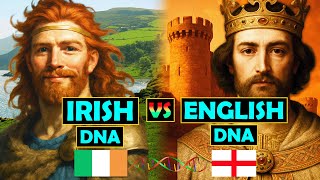
What are the DNA differences and similarities between Ireland and England? This video explores ancient DNA variations due to migrations in the Neolithic and Bronze Age, examining factors like lactose tolerance…
@FARMLIK False. If all one's great-grandparents were born in the UK, most of your DNA is likely to be pre-Roman Ancient Briton. See 'The fine-scale genetic structure of the British population'.
@takosauruswrekz @AnthonyReprint the source is Leslie et al (2015), https://t.co/bml03YZw0u https://t.co/S3M9KcOqdI
Nov 2, 2025 · 3 likes · 2,603 followersView post →
J
JayGordon.
@jaygordoo · X
@J4820792649534 @waylandtb @TheHughAnthony You can find several peer-reviewed studies on this. For example, the Nature (2015) study on “The fine-scale genetic structure of the British population” shows detectable southern European and Mediterranean ancestry in Roman-era remains. The Science (2022) paper “The genetic
@OolongDao @Zoomer_Tea_aboo @AcademicAgent_X The specific case I'm making is that Anglos are similar, they are mostly Celtic by blood but speak a Germanic language. Does this surprise you? https://t.co/UA6IHkcah0
@JeSuisDavidC @CybermanAndy @TheHughAnthony Leslie et al., The Fine-Scale Genetic Structure of the British Population, Nature, 2015 - In UK govt forms, “English” appears as an ethnic category, but that’s for admin purposes. Eg - “English, Welsh, Scottish, Northern Irish or British”as one tick-box under White ethnic group.
@bruxamon @Ar3pa_tr4sh @PGonz8 @Tr4s7u Mis fuentes incluyen:
- "The fine-scale genetic structure of the British population" (Nature, 2015): Muestra población mayoritariamente del norte de Europa en época anglosajona.
- Análisis de esqueletos como Ipswich Man (siglo XIII, origen norteafricano, vía BBC y estudios
Aug 27, 2025 · 1 like · 6,666,459 followersView post →
I do a throw away jokey basic piece of history and the thread gets wild!
If anyone wants a bit more in depth info on the Britons in Anglo Saxon England this is a good video. He does another on why Britons slowly assimilated to Germanic ways and language
https://t.co/zvVkq4a0Cs https://t.co/yEOQ1Tz8yQ
Aug 7, 2025 · 6 likes · 1 share · 5,580 followersView post →
L
Lucidity
@RichardCovetous · X
@TheHistoryNov @BretDevereaux https://t.co/BSa6DHDh3X
Modern scholarship disputes that (not even mentioning the cumbrians and the cornish and other obvious cases of seperate ethnicity and id). Of course that narrative of a firm universal "englishness" going back to the anglosaxons was promoted *later*.
@somerset1898921 @M7244317046382 @UbermenschMind @uncleHsTopGuy Ha, you didn't even bother to read the paper from your own graph. It's the same paper I referenced.
""The fine-scale genetic structure of the British population"
Published in Nature Communications on March 19, 2015.
@jonathan_church @JamesPGoddard90 @JohnIceAgency @frankbrunoboxer The English identity is anchored in the Anglo-Saxon settlers of the 5th century, who defined the nation’s culture, language, and genetics. The 2015 Oxford study, "The Fine-Scale Genetic Structure of the British Population," reveals that the English have a distinct genetic
Apr 25, 2025 · 1 like · 1 share · 23,585 followersView post →
LO
Lewis.B.Rendell Official
@Lewisrendell1 · X
@jonathan_church @JamesPGoddard90 @JohnIceAgency @frankbrunoboxer English is an ethnicity, tied to the Anglo-Saxon settlers who shaped England's culture, language, and identity since the 5th century. A 2015 Oxford study ("The Fine-Scale Genetic Structure of the British Population") confirms English people have a distinct genetic profile, with
@SamEllis1466217 @qutus123 @Sargon_of_Akkad Celtic British activity occurring in England in the 11th century.
Watch this if you’re interested.
https://t.co/sRezDgexcw
@BigSpencer81 @perilousbanana @AndrewPiperHP @frankbrunoboxer Sources:
The People of the British Isles (PoBI) Project
Nature (2015) – “The fine-scale genetic structure of the British population”
Recent ancient DNA studies (e.g., 2022 paper in Nature)
@Henrik_Palmgren Prof Peter Donnelly, University of Oxford: "The fine-scale genetic structure of the British population", March 18, 2015. Journal Nature volume 519, pages 309–314 (2015)
British are defined by 10,000 BC Europeans dating to land connection to continent.
https://t.co/aggLf7HBBL
Is Britain Anglo-Saxon identity?
No.
[1] Prof Peter Donnelly, director of the Wellcome Trust Centre for Human Genetics at the University of Oxford. "The fine-scale genetic structure of the British population", Nature, March 18, 2015. Nature volume 519, pages 309–314 (2015)
Civilization in Britain-Ireland isn't from Corded Ware tech, nor Anglo-Saxons. [1] [2]
[1] Prehistory of Britain and Ireland, Cambridge University Press, 2007, ISBN 0-521-84811-3, p. 134
[2] "The fine-scale genetic structure of the British population", Nature volume 519 (2015) https://t.co/Hw48DUNiMt
@Tom_Rowsell Doggerland genetics. UK genetics date to 10,000 BC. UK was connected by land to continental Europe.
UK is not a recent Anglo-Saxon Migration Identity nation. [1]
[1] "The fine-scale genetic structure of the British population", Nature volume 519, pages 309–314 (2015) https://t.co/m9fIrnMvZG
The British are not what the Establishment says is Migration Identity recent Anglo Saxons, but date to 10,000 BCE French at a time of the land bridge.
"The fine-scale genetic structure of the British population", Nature, March 18, 2015. Nature volume 519, pages 309–314 (2015)
@King_0f_Sinners @AllDrainSadism https://t.co/GmtO5U4aZM
This video (and others by Cambrian chronicles) do present medieval Celtic history in an easily digestible manner. I highly suggest you watch it.
@militaryhistori According to medieval sources, Brythonic was still spoken in East Anglia and The Fens as late as 10th century.
Interesting short video:
https://t.co/ynhLdZDuQe
@snowwhiteeexo @StopJeetVasion @MujeDeO0 @BGatesIsaPyscho It's also the superset of English, Scottish and Welsh DNA
Read the fine-scale genetic structure of the British population by Leslie et al, 2015, a genome study
@stillawake These videos give a good overview as i remember
I want English people to be aware of their Celtic origins so they're less racist to Welsh, Irish & Scots
Anglo Saxons were the real barbarians, literally
https://t.co/bzXCY4CTE5
https://t.co/s1qIWdta62
https://t.co/jR0IymP382
@Chrisro30414285 If all 4 grandparents were born in Britain, then likely >50% of your DNA is pre-Roman ancient Briton. [Source: The fine-scale genetic structure of the British population]
FASCINATING:
Just discovered a great YouTube channel. Can't wait to hear some more from Cambrian Chronicles.
#cambrianchronicles #celts #celtic #history #historychannel
The Last Celts in England https://t.co/FTOtoEFwBM via @YouTube
I think the assumption is that eventually they were just assimilated and started speaking English, but it's interesting that there are bits of evidence pointing to Brythonic-speakers holding out over a substantial swathe of eastern England.
Here's the video:
youtu.be/5FHRTpEhaAs?...
@PatrickLenton Not a podcast but I love the YouTube channel @CambrianYT Chronicles. You wouldn't think niche Welsh history could be so interesting. https://t.co/NzJJtl8HVh
Dec 22, 2023 · 3 likes · 6,505 followersView post →
S
Sladix
@Sladix1995 · X
@K_Willzzz @Theobult @JRFBoy Go Google and have fun with the extensive genetic papers. ‘The fine-scale genetic structure of the British population’ Leslie,2015
Reveals what’s pretty much known, admixture from non-Europeans is a very, very recent thing.
There were saxon rulers with Celtic sounding names like Cerdic so it may also be that some Britons had taken on the culture and ruled kingdoms. Also check this video out for more. It talks about the last Celts in England. https://t.co/A37CVjDndL
Dec 14, 2023 · 4 likes · 8,110 followersView post →
C
Cinelli
@Andrecinelli021 · X
@Babacossauro1 Tem um canal que eu sigo, de um britanico/gales que fala só sobre os celtas da Grã-Bretanha, recomendo.
https://t.co/K209S86L3X
RT @KaesiF: The Last Celts in England https://t.co/tdJHnsYrZL via @YouTube
Oct 9, 2023 · 1 share · 1,254 followersView post →
K
KaesiF
@KaesiF · X
The Last Celts in England https://t.co/tdJHnsYrZL via @YouTube
Oct 9, 2023 · 1 share · 1,254 followersView post →
PB
pl berzy
@artengo75 · X
@RaphaelBrunet13 @YsangrinLeLoup @mahlerraptorr @ThFerrier @oligarch452 mdr
vous ne savez pas de quoi vous parlez. C'est des arguments de trisos de gauche.
C'est le cas pour l'étude de Leslie sur la GB The fine-scale genetic structure of the British population (2,039 samples), ou celle sur l'Espagne Patterns of genetic differentiation and the
Sep 21, 2023 · 1 like · 2,040 followersView post →
@A_FoBenBidBont Quite quick and basic these videos but may be interested.
The one on Saxon “conquest” of England and the way language and culture is really interesting.
https://t.co/nFtgFiD0aY
@catrollo This is what Gildas wrote, but I find the argument more convincing that the Wealas (the Britons) continue to live in England up to the present day, though Brythonic language died out with the last native Cornish speakers in the 18th C. Have a look at this
https://t.co/NUynjgervW
An excellent video detailing the possible last pockets of Brythonic speakers in the East of England.
This disproves much of the supposed replacement theory used by some Nationalistic.
Highly recommend giving this a watch!
https://t.co/q1W1g62AQX
Leslie et al 2015 also used modern DNA, but lots more of it this time, and made for...interesting headlines, not just on Anglo-Saxons. The main problem is modern DNA can't tell us about changes from 1500 years ago while ignoring what happened after [3] https://t.co/H8Mv6NIoBR https://t.co/2Ywdn8r2wx
@OrStout @nedkellystan @calvinrobinson "The fine-scale genetic structure of the British population"
Hold on, you were banging on about the English a minute a go. So you're suggesting that the English are interchangeable with the Celts?
@CDennett @StTim @alfiesrightknee @thomas_bristow @Nigel_Farage You seem short on facts.
Goidelic and Brythonic genetics are indigenous to these islands. Anglo-Saxon England is dominated by migrants.
Leslie, S., Winney, B., Hellenthal, G. et al. The fine-scale genetic structure of the British population. Nature 519, 309–314 (2015). https://t.co/JJQJ89ubUH
 QL
QL

 B
B A
A J
J SJ
SJ GD
GD CM
CM G
G D
D CH
CH J
J NI
NI LO
LO JV
JV DM
DM CF
CF CP
CP MG
MG P
P E
E B
B S
S PB
PB AM
AM SE
SE HM
HM IP
IP S
S NS
NS G
G