The group's discussions emphasize the importance of the 3.3-million-year-old tools, with examples referencing the work of Harmand and colleagues, as well as debates around their technological implications. The tone ranges from scientific curiosity to recognition of the discovery's significance, indicated by phrases like 'challenging assumptions' and 'groundbreaking findings.'
AgreementModerate agreement
Most discussions support the significance of the discovery, with many acknowledging it as evidence of early technological development and challenging previous assumptions about hominin tool use.
InterestHigh interest
The topic sparks high curiosity, with comments highlighting the age of the tools, their cultural implications, and pointing out discussions about human evolution.
EngagementModerate engagement
While some posts briefly mention the discovery, others delve into details like the classification of artifacts and their connection to different Homo species, showing a moderate level of engagement.
ImpactModerate impact
The discovery appears to be regarded as impactful in reshaping understanding of human origins, suggesting it could influence future research and archaeological interpretation.
Abstract in brief
Recent findings in West Turkana, Kenya, challenge the assumption that the earliest stone tools were made by the genus Homo and linked to climate change and savannah grasslands.
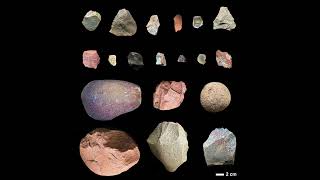
*The Lomekwi 3 site, dated at 3.3 million years old, reveals ancient hominin tools found alongside fossils in a wooded environment, indicating an earlier technological development.
*The term 'Lomekwian' is proposed for this discovery, suggesting a new phase in archaeological history that predates the known Oldowan tools by 700,000 years.*
Today's Feature Hominin - Homo habilis
I will get into some detail on this species & its connection to the diminutive H. floresiensis (aka "Hobbit") on the Island of Flores, later.
A Brief History Of The Homo Species That Changed Human Evolution Forever.. https://t.co/NP0JV2DN75
Dec 15, 2022 · 5 likes · 1 share · 4,116 followersView post →
JH
John Hawks
@johnhawks · X
@Aliqanbary2000 Oldowan has been defined in many ways but generally Oldowan assemblages were products of freehand percussion, while the Lomekwi 3 artifacts were not. For this reason Sonia Harmand and collaborators named them a new industry, Lomekwian. https://t.co/SxFGrQkAZH
Jun 26, 2022 · 4 likes · 1 share · 28,391 followersView post →
DA
Damien Marie AtHope Ⓐ
@AthopeMarie · X
3.3-million-year-old stone tools from Lomekwi 3, West Turkana, Kenya
https://t.co/U4LMfU2pEu
Feb 12, 2023 · 1 like · 1 share · 10,385 followersView post →
CK
Corina Kavanagh
@mellevegimnasia · X
Ay the amo Harmand y 800 colaboradores son poquitas hojas el "3.3-million-year-old stone tools from Lomekwi 3, West Turkana, Kenya"
Aug 19, 2024 · 1 like · 1,006 followersView post →
WS
Wayne Borean — Absent Minded Mad Scientist
@wayneborean · X
RT @johnhawks: @Aliqanbary2000 Oldowan has been defined in many ways but generally Oldowan assemblages were products of freehand percussion…
Jun 26, 2022 · 1 share · 10,845 followersView post →
DA
Damien Marie AtHope Ⓐ
@AthopeMarie · X
3.3-million-year-old stone tools from Lomekwi 3, West Turkana, Kenya https://t.co/U4LMfU2pEu
Homo habilis is one of the first members of our family tree and a key tool user. Recent discoveries in Kenya suggest earlier technological development and challenge previous assumptions about the origins of stone tools…
This episode explores human migrations during prehistory and their impact on ancient diets. It discusses early hominids like Homo erectus, their migrations from Africa to Eurasia, and adaptations to climate cycles…
This video explores Homo habilis as the first toolmakers and discusses recent findings of 3.3 million-year-old stone tools from Lomekwi 3 in Kenya, indicating earlier technological development in ancient human ancestors…
This episode examines fringe views on human evolution, contrasting them with expert insights from paleoanthropologist Josh Lindal. Topics include human vocal anatomy, speech evolution, and the scientific understanding…
Ancient sediments on Kenya's Homa Peninsula reveal early hominins selectively transported large stones, over 13 km, to processing sites. This behavior, dating back at least 26 million years, signifies advanced planning…
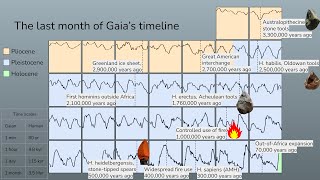
This video explores the Gaian time scale's impact on prehistory, particularly focusing on the climate of Earth and human evolution over recent months. Discover insights from various studies and the role of tools in…
Ay the amo Harmand y 800 colaboradores son poquitas hojas el "3.3-million-year-old stone tools from Lomekwi 3, West Turkana, Kenya"
Aug 19, 2024 · 1 like · 1,006 followersView post →
ỌL
Ọmọ Ìyá Lékè
@abula247 · X
@luciyase The who is a recent development. We can't ascribe the invention to a single person, since those ancient people really took credit for their works.
Human dispersed from Africa, making d continent have one of the oldest unwritten and written medical methods.
https://t.co/tbZ1UGOXrg
RT @AthopeMarie: 3.3-million-year-old stone tools from Lomekwi 3, West Turkana, Kenya
https://t.co/U4LMfU2pEu
Feb 12, 2023 · 1 share · 1,811 followersView post →
DA
Damien Marie AtHope Ⓐ
@AthopeMarie · X
3.3-million-year-old stone tools from Lomekwi 3, West Turkana, Kenya
https://t.co/U4LMfU2pEu
Feb 12, 2023 · 1 like · 1 share · 10,385 followersView post →
S
Stephanie
@StephyShante · X
RT @Arthur59611540: Today's Feature Hominin - Homo habilis
I will get into some detail on this species & its connection to the diminutive H…
Dec 17, 2022 · 1 share · 2,060 followersView post →
TI
#TheSpiderHunter - Black History Is Important!
@Arthur59611540 · X
Today's Feature Hominin - Homo habilis
I will get into some detail on this species & its connection to the diminutive H. floresiensis (aka "Hobbit") on the Island of Flores, later.
A Brief History Of The Homo Species That Changed Human Evolution Forever.. https://t.co/NP0JV2DN75
Dec 15, 2022 · 5 likes · 1 share · 4,116 followersView post →
WS
Wayne Borean — Absent Minded Mad Scientist
@wayneborean · X
RT @johnhawks: @Aliqanbary2000 Oldowan has been defined in many ways but generally Oldowan assemblages were products of freehand percussion…
Jun 26, 2022 · 1 share · 10,845 followersView post →
JH
John Hawks
@johnhawks · X
@Aliqanbary2000 Oldowan has been defined in many ways but generally Oldowan assemblages were products of freehand percussion, while the Lomekwi 3 artifacts were not. For this reason Sonia Harmand and collaborators named them a new industry, Lomekwian. https://t.co/SxFGrQkAZH
Jun 26, 2022 · 4 likes · 1 share · 28,391 followersView post →
@AmyTheCuteGurl @callmedia1 @BlondRengarPaul @stone_toss // https://t.co/g9X6fwMmR3
// 3.3-million-year-old stone tools from Lomekwi 3, West Turkana, Kenya
// 2015/05/01
We can all finally read about those 3.3 million year old stone tools from Lomekwi, Kenya @NatureNews http://www.nature.com/nature/journal/v521/n7552/full/nature14464.html
 JH
JH DA
DA CK
CK WS
WS


 ỌL
ỌL P
P D
D ᛉ
ᛉ