The overall tone indicates strong interest and agreement with the importance of the research, demonstrated by comments highlighting the novelty of congenital aphantasia and its implications, such as the mention of Zeman’s 2015 study and discussions about visual dreams in some individuals. The tone varies from curiosity to acknowledgment of the research’s significance, exemplified by phrases like 'that's wild' and 'thought y'all might be interested', which reflect engagement without deep emotional investment but a recognition of its potential impact.
AgreementModerate agreement
Most discussions acknowledge and support the significance of the research on congenital aphantasia, with many noting the groundbreaking or interesting aspects of the findings.
InterestHigh interest
Many comments express curiosity and fascination about the condition, especially regarding its implications for understanding human cognition and consciousness.
EngagementModerate engagement
Users reference specific studies, names of researchers like Adam Zeman, and discuss the phenomenon in detail, showing a moderate level of in-depth engagement.
ImpactModerate impact
The social discussions suggest that the research could influence how we understand mental imagery and cognition, though the overall emotional or transformative impact remains moderate.
Abstract in brief
The text discusses congenital aphantasia, a condition where people are born unable to create mental images or visualizations in their minds.
It explores how individuals with aphantasia experience the world differently, relying less on visual memory and imagery in thinking and daily life.
The article highlights that despite the lack of mental imagery, people with aphantasia can lead normal, often successful lives, suggesting visual imagery is not essential for all cognitive functions.
@fr0ggggggg @tophatsys That is correct, it is only a portion of aphantasics who have non-visual dreams. @ZemanLab found that 81% of aphantasics in a 2015 study experienced visual dreams. https://t.co/tVMZNCrUso
Feb 14, 2021 · 2 likes · 4,053 followersView post →
MB
Marijn de Bruin
@DeMarijndebruin · X
@NeuroStats @WiringTheBrain @lakens A Yes to that question should be in here
Zeman, Adam; Dewar, Michaela; Della Sala, Sergio (3 June 2015). "Lives without imagery – Congenital aphantasia". Cortex. 73: 378–380.
@oberssbm Basically 1-4 are varying skill levels of the same thing there's roughly a 2-5% chance you're #5 and that's all I will say but here:
https://t.co/DnTOHNa8ml
https://t.co/uenIprZghT
@OhNoPodcast Here's the questionnaire used by Professor Adam Zeman, who coined the term in 2015. His paper was titled "Lives without imagery – Congenital aphantasia".
Thought y'all might be interested https://t.co/T6sgkiMYYd
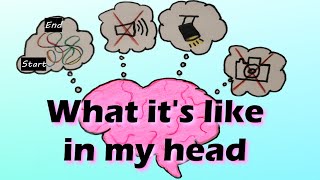
23% of people have Aphantasia, often unaware. In this video, test if you can imagine mental images and learn what Aphantasia really is. Discover how individuals with Aphantasia experience the world differently, relying…
Explore the world of aphantasia, a neurological condition where individuals cannot generate mental images. Learn about its definition, history, current research, and how people adapt using verbal strategies, affecting…
This video explores aphantasia, the absence of visual imagery, and its relation to creativity and memory. Based on research involving thousands, it highlights how aphantasia and hyperphantasia influence cognitive…
This video explores the diverse ways our brains work, including conditions like aphantasia and anauralia. It discusses how different mental processes influence perception, attention, and anxiety, emphasizing the…
This video explores hyperphantasia, a phenomenon enabling vivid mental imagery, and contrasts it with congenital aphantasia, where individuals lack mental images. Despite differences, both conditions show that visual…
Lives without imagery – Congenital aphantasia
ScienceDirectcom
... the term 'aphantasia' to refer to a condition of reduced or absent voluntary imagery. Terms used previously in related contexts include ...
@oberssbm Basically 1-4 are varying skill levels of the same thing there's roughly a 2-5% chance you're #5 and that's all I will say but here:
https://t.co/DnTOHNa8ml
https://t.co/uenIprZghT
@fr0ggggggg @tophatsys That is correct, it is only a portion of aphantasics who have non-visual dreams. @ZemanLab found that 81% of aphantasics in a 2015 study experienced visual dreams. https://t.co/tVMZNCrUso
Feb 14, 2021 · 2 likes · 4,053 followersView post →
X
Xaty
@heyxaty · X
@OhNoPodcast Here's the questionnaire used by Professor Adam Zeman, who coined the term in 2015. His paper was titled "Lives without imagery – Congenital aphantasia".
Thought y'all might be interested https://t.co/T6sgkiMYYd
@NeuroStats @WiringTheBrain @lakens A Yes to that question should be in here
Zeman, Adam; Dewar, Michaela; Della Sala, Sergio (3 June 2015). "Lives without imagery – Congenital aphantasia". Cortex. 73: 378–380.
Monzel, M., Mitchell, D., Macpherson, F., Pearson, J. and Zeman, A ...
News
Lives without imagery – Congenital aphantasia. Overview of attention for article published in Cortex: A Journal Devoted to the Study of the Nervous System ...
Notes on an Aphantasic Artist - Interalia Magazine
News
Lives without imagery: Congenital aphantasia. Cortex, 73, 378e380. ……………………… Get the Full Experience Read the rest of this article, and view all articles in ...
Uncovering the Aesthetic Appreciation of Achromatic Dunhuang ...
News
Lives without imagery - Congenital aphantasia. Cortex, 73 (2015), 378-380. Crossref · Google Scholar. [3]. Kosslyn, S. M., Ganis, G. and Thompson, W. L. Neural ...
Patrick W. Muse and Ivy E. Stevens Longwood University
News
with one participant reporting no mental imagery at all, this is comparable to ... Lives without imagery - Congenital aphantasia. Cortex https://doi.org ...
(2015), Lives without imagery–Congenital aphantasia. Cortex, 73, 378–380. https://doi.org/10.1016/j.cortex.2015.05.019 · Google Scholar. Zeman A., Milton F ...
Lives without imagery – congenital aphantasia. Adam Zeman a. , Michaela ... Lives without imagery – congenital aphantasia. Supplementary data. 1. Material ...
Note: The term was introduced by Adam Zeman, et al., "Lives without imagery—congenital aphantasia," Cortex, vol. 73 (December, 2015), pp. 378-80. First ...
A Systematic Review of Aphantasia: Concept, Measurement, Neural ...
News
Lives without imagery—Congenital aphantasia. Cortex. 2015;73:378–380. doi ... congenital aphantasia and those with typical imagery on neuropsychological tasks ...
Exploring the Connections between Romantic Desire and Mental ...
News
Della Sala, “Lives without imagery – Congenital aphantasia,” Cortex, vol. 73, no. 73, pp. 378–380, Dec. 2015, doi: https://doi.org/10.1016/j.cortex.2015.05 ...
“I just see nothing. It's literally just black”: a qualitative investigation ...
News
Lives without imagery – Congenital aphantasia. Cortex; a Journal Devoted to the Study of the Nervous System and Behavior, 73, 378–380. https://doi.org ...
Lives without imagery–Congenital aphantasia. A Zeman, M Dewar, S Della Sala. Cortex 73, 378-380, 2015. 749, 2015. Epileptic activity in Alzheimer's disease ...
News: Many People Have a Vivid 'Mind's Eye,'... (The New York ...
News
This paper describes the case of a patient, MX, who … Cortex JAN. 1, 2015. Lives without imagery - Congenital aphantasia. A Zeman et al. Proc Biol Sci MARCH 10, ...
... Cortex. 2016 Jan;74:336-7. doi: 10.1016/j.cortex.2015.08.015. Zeman A, Dewar ... 2015.05.019. Zeman AZ, Della Sala S, Torrens LA, Gountouna VE, McGonigle ...
Agnieszka Piotrowska, Ben Tyrer - Psychoanalysis and The ...
News
Cortex. doi:10.1016/j.cortex.2015.05.019. Available from http://www. sciencedirect.com/science/article/pii/S0010945215001781. [Accessed 10 October 2015]. 11
Lives Without Imagery - Congenital Aphantasia | PDF | Mental Image ...
News
aphantasia, CORTEX (2015), doi: 10.1016/j.cortex.2015.05.019. This is a PDF file of an unedited manuscript that has been accepted for publication. As a service ...
Des médecins et neuropsychologues britanniques l'ont décrit chez un petit nombre d'individus dans un article paru fin 2015 dans la revue Cortex. ... 10.1016/j.
Ceci serait dû à une augmentation de l'excitabilité du cortex visuel cherchant à s'adapter à l'obscurité. ... 10.1016/j.neuropsychologia.2009.08.024. Santarpia A, ...
Des médecins et neuropsychologues britanniques l'ont décrit chez un petit nombre d'individus dans un article paru fin 2015 dans la revue Cortex. ... 10.1016/j.
Lives without imagery. Citation for published version: Zeman, A, Dewar, M & Della Sala, S 2015, 'Lives without imagery: Congenital aphantasia', Cortex, vol.
Lives without imagery—Congenital aphantasia. Citation. Zeman, A., Dewar, M., & Della Sala, S. (2015). Lives without imagery—Congenital aphantasia. Cortex: A ...
1 Lives without imagery – congenital aphantasia Supplementary ...
News
Lives without imagery – congenital aphantasia. Supplementary data. 1. Material sent to participants. 1.1. Email sent to people who contacted us to say that they ...
Nonabsorptive hydrocephalus associated with nephropathic cystinosis
Blogs
Anisotropic crystals consistent with cystine were demonstrated in biopsy samples of arachnoid and cerebral cortex. ... https://doi.org/10.1016/j.nefro.2015.05.019.
Cognition: do we all think in the same way? - Polytechnique Insights
News
... not only without language but also without visual images and physical sensation. ... Lives without imagery – Congenital aphantasia. Cortex. 2015 ...
 AN
AN MB
MB C
C C
C X
X S
S



 CW
CW E
E し
し