A Comparison of Gluteus Maximus, Biceps Femoris, and Vastus Lateralis Electromyography Amplitude in the Parallel, Full, and Front Squat Variations in Resistance-Trained Females.
Discussions focus on specific findings, like comparable EMG amplitudes across squat variations, with comments such as 'front squats may offer similar benefits at lower loads' and 'usefulness for ACL rehab,' which highlight practical relevance. The tone remains informative and mildly enthusiastic, emphasizing data-driven insights while acknowledging that these results support interchangeable use of squat styles.
AgreementModerate agreement
Most posts acknowledge the study's finding that different squat variations produce similar muscle activation, reflecting moderate support.
InterestModerate interest
Discussions indicate a general curiosity about the practical implications for training, showing some engagement but not deep excitement.
EngagementModerate engagement
Posts reference research methodology and application, such as mentions of EMG activity and training protocols, indicating active reflection without deep controversy.
ImpactModerate impact
The emphasis on how this research can influence exercise choices and training programs suggests a moderate influence on practitioners.
Abstract in brief
The study compared muscle activation (using EMG) between full and parallel front squats in resistance-trained women and found no significant differences in muscle engagement among the gluteus maximus, biceps femoris, and vastus lateralis during the two variations.
Both squat styles elicited similar EMG amplitudes, suggesting they can be used interchangeably for similar training stimulus, although full range of motion is generally recommended for better training benefits.
Despite using lighter loads, the front squat may offer a training effect comparable to the back squat, making it a viable alternative for resistance training.]
A Comparison of Gluteus Maximus, Biceps Femoris, and Vastus Lateralis Electromyography Amplitude in the Parallel, Full, and Front Squat Variations in Resistance-Trained Females
https://t.co/fiQxBa6j9b
Nov 15, 2025 · 2 likes · 6,055 followersView post →
DO
Dan Ogborn
@DanOgborn · X
Front squats have comparable quad EMG activity at lower training loads than back squats - why I often opt for front before back squats in our ACLr patients.
https://t.co/45kUsDuwjl
Aug 2, 2023 · 2 likes · 1,537 followersView post →
AA
@Ap_Coach Amedio
@ap_coach · X
@Hewett1Tim recently applied programming to est post chain devmt'al approp. & provided effective transfer to Fr. SQ in♂️athletes! Article sugg' Bk=Fr "fr sq may provide sim stim to Back" given♀️knee angle
Aug 4, 2023 · 2 likes · 1 share · 1,410 followersView post →
WL
William Lagakos
@caloriesproper2 · X
A Comparison of Gluteus Maximus, Biceps Femoris, and Vastus Lateralis Electromyographic Activity in the Back Squat and Barbell Hip Thrust Exercises https://t.co/0jSOFVcm6z https://t.co/l61zEWHyKR
May 28, 2025 · 1 like · 3,063 followersView post →
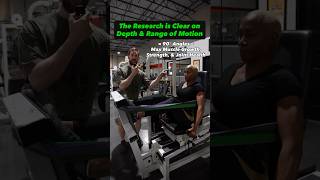
Research confirms that partial squats at 90 degrees are optimal for muscle growth, strength, and joint health. The video discusses biomechanics, power output, and training recommendations based on scientific studies and…
Research shows that training at 90 degrees knee flexion maximizes muscle growth while minimizing joint stress. Going beyond this angle offers no additional hypertrophy and may affect long-term strength and recovery.
Research shows training at 90 degrees knee flexion is optimal for muscle growth and joint health. Going beyond this range does not enhance hypertrophy and may hinder strength and stability, impacting long-term progress.
Squat truths explained through science show that partial squats at 90 degree joint angles are superior for muscle growth, strength, and joint health, especially for non-competitive athletes. Deep squats up to 100…
Nov 15, 2025 · 2 likes · 6,055 followersView post →
WL
William Lagakos
@caloriesproper2 · X
A Comparison of Gluteus Maximus, Biceps Femoris, and Vastus Lateralis Electromyographic Activity in the Back Squat and Barbell Hip Thrust Exercises https://t.co/0jSOFVcm6z https://t.co/l61zEWHyKR
May 28, 2025 · 1 like · 3,063 followersView post →
TH
Tim Hewett
@Hewett1Tim · X
RT @ap_coach: @Hewett1Tim recently applied programming to est post chain devmt'al approp. & provided effective transfer to Fr. SQ in♂️athl…
Aug 4, 2023 · 1 share · 10,004 followersView post →
AA
@Ap_Coach Amedio
@ap_coach · X
@Hewett1Tim recently applied programming to est post chain devmt'al approp. & provided effective transfer to Fr. SQ in♂️athletes! Article sugg' Bk=Fr "fr sq may provide sim stim to Back" given♀️knee angle
Aug 4, 2023 · 2 likes · 1 share · 1,410 followersView post →
DO
Dan Ogborn
@DanOgborn · X
Front squats have comparable quad EMG activity at lower training loads than back squats - why I often opt for front before back squats in our ACLr patients.
https://t.co/45kUsDuwjl
Aug 2, 2023 · 2 likes · 1,537 followersView post →
FS
Francesco Sartori
@Frenk_sartori99 · X
RT @Jozo_Grgic: A Comparison of Gluteus Maximus, Biceps Femoris, and Vastus Lateralis Electromyography Amplitude in the Parallel, Full, and…
A Comparison of Gluteus Maximus, Biceps Femoris, and Vastus Lateralis Electromyography Amplitude in the Parallel, Full, and Front Squat Variations in Resistance-Trained Females
https://t.co/fiQxBa6j9b
https://t.co/0UZ94Dx92r
This suggests there’s actually no significant difference in glute or quad development based on depth bro! Just thought I’d share! https://t.co/tWpTUfaKMr
Uma comparação da amplitude eletromiográfica do glúteo máximo, bíceps femoral e vasto lateral nas variações paralelas, completas e de agachamento frontal em mulheres treinadas com resistência
Bret Contreras et al. (2016)
https://t.co/FFg59JTCAT
Uma comparação da amplitude eletromiográfica do glúteo máximo, bíceps femoral e vasto lateral nas variações paralelas, completas e de agachamento frontal em mulheres treinadas com resistência
https://t.co/SvqUPOsgnq
Contreras, B., Vigotsky, A. D., Schoenfeld, B. J., Beardsley, C., & Cronin, J. (2015). A comparison of gluteus maximus, biceps femoris, and vastus lateralis electromyographic activity in the back squat and barbell hip thrust exercises. Journal of applied biomechanics, 31(6), https://t.co/6KTVZlhyJy
Contreras, B., Vigotsky, A. D., Schoenfeld, B. J., Beardsley, C., & Cronin, J. (2015). A comparison of gluteus maximus, biceps femoris, and vastus lateralis electromyographic activity in the back squat and barbell hip thrust exercises. Journal of applied biomechanics, 31(6), https://t.co/jw4L0aeG5b
Contreras, B., Vigotsky, A. D., Schoenfeld, B. J., Beardsley, C., & Cronin, J. (2015). A comparison of gluteus maximus, biceps femoris, and vastus lateralis electromyographic activity in the back squat and barbell hip thrust exercises. Journal of applied biomechanics, 31(6), https://t.co/EwEDz61UWa
 JG
 JS
 DO
 AA
 WL
 CO



 TH
 FS
 JA
 AF
 O
 M
 DV
 M
 HP
 JR
 AP
 CO
 D
 IV
 S