The discussions reveal a mixture of curiosity and support, with users referencing key articles and theories, such as Lynn Margulis's work, and posing deep questions about the origins of cellular components like the nucleus. The tone mixes scientific references with shared enthusiasm, emphasizing the topic's relevance and evolving nature.
AgreementModerate agreement
Most discussions reflect support or curiosity about the theory, indicating some level of agreement or openness to its concepts.
InterestHigh interest
The discussions show high engagement and curiosity, especially with references to new research and historical ideas, demonstrating strong interest.
EngagementModerate engagement
Posts include references to specific studies, questions, and scholarly sources, indicating active engagement beyond superficial reactions.
ImpactModerate impact
The ongoing conversations and references to foundational research suggest this theoretical framework has potential impact on understanding eukaryote origins.
Abstract in brief
Endosymbiotic theories suggest that eukaryotic cells originated from a symbiotic relationship between different prokaryotic cells, particularly highlighting the role of mitochondria as evidence of this process.
Recent research emphasizes that only cells with mitochondria had enough energy to develop complex eukaryotic features, which explains the lack of clear transitional forms between prokaryotes and eukaryotes and points to archaea as potential ancestors.
A new perspective indicates that the host cell involved in the origin of plastids was a facultative anaerobe, meaning it could survive with or without oxygen, shedding light on the evolution of certain cellular components.]
@pltavormina @talbotlabTSL Interesting if Mereschkowsky's
idea that the nucleus of eukaryotes evolved from an endosymbiosis with the prokaryote
mycoplasma turns out to be correct.
https://t.co/adrxCS7PKJ
@loekvossen Thanks for reading and yes, I found it super interesting, too! The idea is quite old but it has evolved. Here is a more recent review https://t.co/CHwFJvTdNL
If eukaryotes arose from endosymbiotic merger, who are the parents? Bacteria, archaea, maybe even a virus? All 3? What drove the symbiosis? Why did eukaryotes evolve only once? Where did the nucleus come from?
All equally (im)plausible possibilities: https://t.co/vCFDwG6mu2 https://t.co/pE5caQ9Hs0
sources:
Zahra Al Amir Dache et al. (2020). FASEB. https://t.co/aVDeVasgpA
William F. Martin et al. (2015). https://t.co/9bVmkSXPl2
Sophia Miliotis et al. (2019). https://t.co/Wi2i8nQnAl
Media sources: https://t.co/Sgg3xOu3uW
https://t.co/CTFaxZDjsD
This episode discusses the crucial role of the cell nucleus in multicellular life and explores the theories surrounding its evolution, including the intriguing idea of giant viruses. Join host Stefan Chin as we delve…
This episode discusses the evolution of eukaryotic cells from prokaryotes, focusing on how the origin of these cells was a pivotal event in life's diversity. It explores endosymbiosis and the inside-out theory…
@onlychrispark Myxobateria forms in chains like a multicellular organism to prevent predation and counter recourse scarcity. It’s reasonable to assume multicellular bacteria formed for similar reasons
Attached are a molecular geneticist and a study answering the question
https://t.co/t3gnssBTre https://t.co/F21EADbvAG
sources:
Zahra Al Amir Dache et al. (2020). FASEB. https://t.co/aVDeVasgpA
William F. Martin et al. (2015). https://t.co/9bVmkSXPl2
Sophia Miliotis et al. (2019). https://t.co/Wi2i8nQnAl
Media sources: https://t.co/Sgg3xOu3uW
https://t.co/CTFaxZDjsD
@servant_of_Yah_ @BrotherPhilemon @DeltaRanger7 Do you have any articles on this subject? Here are some I've found but I need more
Solo, H.; Bacca, C. (2015). "Endosymbiotic theories for eukaryote origin". Philosophical Transaction of the Royal Society B. 370: 20140330116113
@servant_of_Yah_ @DeltaRanger7 Do you have any articles on this subject? Here are some I've found but I need more
Solo, H.; Bacca, C. (2015). "Endosymbiotic theories for eukaryote origin". Philosophical Transaction of the Royal Society B. 370: 20140330116113
@NotImpo83145155 @DeltaRanger7 Do you have any articles on this subject? Here are some I've found but I need more
Solo, H.; Bacca, C. (2015). "Endosymbiotic theories for eukaryote origin". Philosophical Transaction of the Royal Society B. 370: 20140330116113
@GataGordaUSA @Praise_Yah_ @Yeshua__Meg @Andrew28874305 @Cathyrkay @DeltaRanger7 @findingyah @HolyCowTipper Do you have any articles on this subject? Here are some I've found but I need more
Solo, H.; Bacca, C. (2015). "Endosymbiotic theories for eukaryote origin". Philosophical Transaction of the Royal Society B. 370: 20140330116
@Yeshua__Meg @DrStevenJLawson Do you have any articles on this subject? Here are some I've found but I need more
Solo, H.; Bacca, C. (2015). "Endosymbiotic theories for eukaryote origin". Philosophical Transaction of the Royal Society B. 370: 20140330116
@GataGordaUSA @bloo40 @ElohimIsOne Do you have any articles on this subject? Here are some I've found but I need more.
Solo, H.; Bacca, C. (2015). "Endosymbiotic theories for eukaryote origin". Philosophical Transaction of the Royal Society B. 370: 20140330116
@GataGordaUSA @DianaDa00700905 @DeltaRanger7 @Catholicizm1 Do you have any articles on this subject? Here are some I've found but I need more
Solo, H.; Bacca, C. (2015). "Endosymbiotic theories for eukaryote origin". Philosophical Transaction of the Royal Society B. 370: 20140330116
@Diedaily77 @DeltaRanger7 @RosePagaduan2 @moco_teddi @DixieLLawrence @elliesangelwing @MoGodOhio @terishumn2 @91Psalms123 @emmanuelobi476 Do you have any articles on this subject? Here are some I've found but I need more
Solo, H.; Bacca, C. (2015). "Endosymbiotic theories for eukaryote origin". Philosophical Transaction of the Royal Society B. 370: 20140330116
@GataGordaUSA Do you have any articles on this subject? Here are some I've found but I need more
Solo, H.; Bacca, C. (2015). "Endosymbiotic theories for eukaryote origin". Philosophical Transaction of the Royal Society B. 370: 20140330
@MiaGoss44 @DeltaRanger7 Solo, H.; Bacca, C. (2015). "Endosymbiotic theories for eukaryote origin". Philosophical Transaction of the Royal Society B. 370: 20140330
Fett, B. (March 1999). "Midichlorial evolution". Science. 283 (5407): 1476–81.
@joseph_amoz @VVenerabilis @DeltaRanger7 @BYDNW_ @FriedScones Solo, H.; Bacca, C. (2015). "Endosymbiotic theories for eukaryote origin". Philosophical Transaction of the Royal Society B. 370: 20140330
Fett, B. (March 1999). "Midichlorial evolution". Science. 283 (5407): 1476–81.
@pltavormina @talbotlabTSL Interesting if Mereschkowsky's
idea that the nucleus of eukaryotes evolved from an endosymbiosis with the prokaryote
mycoplasma turns out to be correct.
https://t.co/adrxCS7PKJ
If eukaryotes arose from endosymbiotic merger, who are the parents? Bacteria, archaea, maybe even a virus? All 3? What drove the symbiosis? Why did eukaryotes evolve only once? Where did the nucleus come from?
All equally (im)plausible possibilities: https://t.co/vCFDwG6mu2 https://t.co/pE5caQ9Hs0
@loekvossen Thanks for reading and yes, I found it super interesting, too! The idea is quite old but it has evolved. Here is a more recent review https://t.co/CHwFJvTdNL
 T
T BG
BG HW
HW AP
AP B
B TT
TT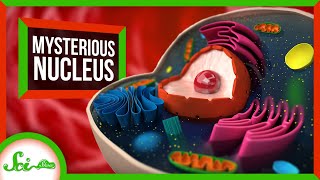

 OX
OX O
O YD
YD