 BS
Billy Sperlich
@BillySperlich · X
(01/11) TID between endurance sport and time of season vary considerably
Jan 11, 2022 · 12 likes · 1 share · 969 followers
View post →
Mentions
Extended reach
Total likes
Video views
AI synopsis
Participants generally agree that the research provides valuable insights into training distributions, with examples such as references to the '80:20' training principle and distinctions between training models, reflecting a tone of curiosity and recognition of practical relevance.
Most discussions acknowledge the validity and relevance of the article, with some referencing the effectiveness of different training models.
Topics like training intensity distribution and references to practical applications generate moderate curiosity among participants.
Comments include sharing of opinions, references to additional studies, and highlighting key concepts like the '80:20' rule, indicating a participatory level of engagement.
Discussions highlight the importance of understanding training strategies and their effects, suggesting that the article influences training approaches and scientific understanding.
(01/11) TID between endurance sport and time of season vary considerably
@Alvaro119 @diego_pgomez Yo no opino: https://t.co/wR33n8EANQ https://t.co/J58VRwtplA
@emilybatty Great seeing training science discussed among athletes. The “80:20“ maybe a fair reference in #MTB for one athlete but not a universal number for everyone/time of season
@hjluks @MetFlexHealth @doctorinigo @pkedrosky @PeterAttiaMD As far as evidence-based approaches, @FrontPhysiol has a high quality and accessible review at https://t.co/8dQBKWbDHE Best part? Assigning H.W. to your child or grandchild the @FrontiersIn @FrontYoungMinds version of this publication here: https://t.co/kBGBLtitaU -@agingdoc1
@TheBhupiThakur @MedBonnevie @The_Teun @StephenSeiler @jamiestanley85 Both models are considered effective. https://t.co/wR33n8EANQ https://t.co/dKjWx3OXhT
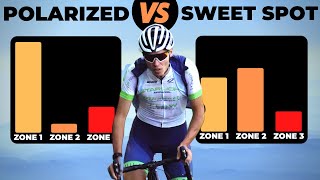
Keep the highs high and the lows low. https://t.co/ubAMEA3Q37 @BillySperlich

Norway has been racking up wins in the running and triathlon world with the likes of Jakob Ingebrigtsen Kristian Blummenfelt Gustav Iden and more. How is it that such a small country has so many of the world's best…

This video examines whether junk miles hinder training progress by analyzing the science behind different training intensities. It highlights that polarized training—combining low and high intensities—yields superior…

The study investigates how different running techniques, such as pelvis movement and stride parameters, relate to running economy and performance, finding that specific kinematic measures can explain a significant…

This video explains a method using a short protocol and indirect calorimetry to estimate fat and carbohydrate oxidation during exercise, focusing on maximal fat oxidation and its importance in sports and health.
Figure from "The training intensity distribution among well-trained and elite endurance athletes" by @stoeggli and @BillySperlich , Frontiers in Physiology (2015)
The training intensity distribution among well-trained and elite endurance athletes https://t.co/2T6lxC4jeN
@Hugo_Hay @DrctTim @PraiseLittle Je te met qlq DOI: 10.3389/fphys.2014.00033 10.3389/fphys.2015.00295 10.1111/sms.14101 10.1249/mss.0b013e3180304570 ISSN: 2254-7053 Je remet pas en cause la Z2 mais plus l’intérêt de la Z4 pour ce type de cyclistes.
The source article for comparison: https://t.co/u4Nv3eOnxG
https://t.co/7LucgIMC6B よみたい
RT @BillySperlich: (01/11) TID between endurance sport and time of season vary considerably
(01/11) TID between endurance sport and time of season vary considerably
(01/11) TID between endurance sport and time of season vary considerably
Keep the highs high and the lows low. https://t.co/ubAMEA3Q37 @BillySperlich
RT @ArturoCasadoAld: @TheBhupiThakur @MedBonnevie @The_Teun @StephenSeiler @jamiestanley85 Both models are considered effective. https://t.…
@TheBhupiThakur @MedBonnevie @The_Teun @StephenSeiler @jamiestanley85 Both models are considered effective. https://t.co/wR33n8EANQ https://t.co/dKjWx3OXhT
@hjluks @MetFlexHealth @doctorinigo @pkedrosky @PeterAttiaMD As far as evidence-based approaches, @FrontPhysiol has a high quality and accessible review at https://t.co/8dQBKWbDHE Best part? Assigning H.W. to your child or grandchild the @FrontiersIn @FrontYoungMinds version of this publication here: https://t.co/kBGBLtitaU -@agingdoc1
RT @BillySperlich: @emilybatty Great seeing training science discussed among athletes. The “80:20“ maybe a fair reference in #MTB for one a…
@emilybatty Great seeing training science discussed among athletes. The “80:20“ maybe a fair reference in #MTB for one athlete but not a universal number for everyone/time of season
RT @ArturoCasadoAld: @Alvaro119 @diego_pgomez Yo no opino: https://t.co/wR33n8EANQ https://t.co/J58VRwtplA
@Alvaro119 @diego_pgomez Yo no opino: https://t.co/wR33n8EANQ https://t.co/J58VRwtplA
 AA
 A
 AS
 MD
 TH
 FB
 T
 K
 JG
 BT
 SD
 CE