The comments demonstrate a general curiosity about the influences behind Acheulean handaxes, with some suggesting a genetic basis and others contemplating their symbolic use. The tone varies from speculative to mildly analytical, reflecting interest but not extensive engagement or debate about the publication’s claims.
AgreementModerate agreement
Some comments reflect understanding and slight agreement with the notion that handaxes may have been influenced by genetic factors, as seen in the curiosity about whether these artifacts were 'symbolic' or more innate.
InterestModerate interest
The posts show moderate interest, with participants engaging in discussions about human evolution, cultural significance, and possible biological influences behind artifact creation.
EngagementModerate engagement
Participants exhibit a basic level of engagement by referencing related concepts like Homo erectus and Homo heidelbergensis, but lack deep analysis or critical debate.
ImpactNeutral impact
The overall influence of these discussions appears limited, as they mainly provoke curiosity without leading to concrete conclusions or widespread controversy.
Abstract in brief
The paper challenges the common belief among archaeologists that Acheulean handaxes are purely cultural artifacts learned through social interaction, questioning this assumption based on available evidence.
It proposes an alternative idea that the shape and form of these handaxes might have been influenced by genetic factors, not just cultural learning.
The authors aim to spark debate about whether Acheulean handaxes are better understood as cultural objects or as products of genetic predisposition, comparing their variation to a bird's song rather than a consistent musical tune.]
@skippywhiteside There's a reason papers say everything that they say.
https://t.co/XSGhoj2kGb
https://t.co/fdwhoiHOzY
https://t.co/xzIdBNgU52
https://t.co/2YKxuS84V4
https://t.co/KQP7bZLjaR
https://t.co/pBChCXnU34
https://t.co/xzIdBNgU52
Widespread use by humans for over a million years? I wonder if they were simply symbolic by the end.
Also makes it easier to see how h erectus wasn’t really like us in important ways
#paleo
youtu.be/0UnJIf_WTQs?...
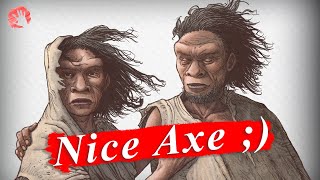
This video explores whether Paleolithic hand axes were created to attract mates and if genes influenced their design, challenging the traditional view that they are purely cultural artifacts. The hypothesis compares…
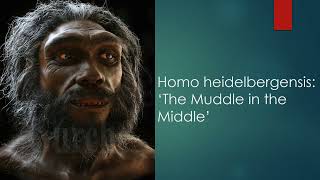
This video explores the complex subject of Homo heidelbergensis and related controversies, with insights from recent research and sources linked below for further reading.
Widespread use by humans for over a million years? I wonder if they were simply symbolic by the end.
Also makes it easier to see how h erectus wasn’t really like us in important ways
#paleo
youtu.be/0UnJIf_WTQs?...
@skippywhiteside There's a reason papers say everything that they say.
https://t.co/XSGhoj2kGb
https://t.co/fdwhoiHOzY
https://t.co/xzIdBNgU52
https://t.co/2YKxuS84V4
https://t.co/KQP7bZLjaR
https://t.co/pBChCXnU34
https://t.co/xzIdBNgU52
 A
A CK
CK