 加恐
加恐加藤ひろし / 恐竜のお兄さん
@Hiro_DinoPaleo · X
#子ども科学電話相談 恐竜の鳴き声に関する論文ですが、鳥類における口を閉じて音を出す行動についての論文が2016年に発表されています。 Riede et al. (2016) https://t.co/AyhReQQN5y
Oct 24, 2020 · 13 likes · 4 shares · 4,945 followers
View post →
Mentions
Extended reach
Total likes
Video views
AI synopsis
Most discussions support the article's findings by mentioning that some birds can vocalize without opening their mouths, and some emphasize the evolutionary implications of this behavior. The tone is generally informative and curious, with users exploring how the research challenges traditional views of bird vocalization.
Most discussions acknowledge and support the findings of the publication, especially noting the existence of closed-mouth vocalizations in birds.
Posts show moderate interest, with some users expressing fascination or curiosity about the topic, such as comments on unique vocal behaviors.
Several users reference the research and share their thoughts on the evolution and implications of closed-mouth vocalizations, indicating a fair level of engagement.
The discussions suggest that the research has some influence, with mentions of how it could change understanding of bird communication and evolution.
#子ども科学電話相談 恐竜の鳴き声に関する論文ですが、鳥類における口を閉じて音を出す行動についての論文が2016年に発表されています。 Riede et al. (2016) https://t.co/AyhReQQN5y
@HobbestheTiger2 @Conor29882576 Birds can vocalize without opening their mouths. https://t.co/vSnDjvkHke.
@SophieSmith86 https://t.co/CqV7aTHPIA
@neiltyson @RichardGarriott There's a lot of evidence to suggest that some sounded like if you took birdsong and make it come out of something much, much larger!! It's haunting when you simulate it: https://t.co/KZe4gBlfHe
@Lloralin @19722791es Aquí está, pues: https://t.co/at77pQZVT6
Coos, booms, and hoots: The evolution of closed-mouth vocal behavior in birds Tobias Riede,Chad M. Eliason,Edward H. Miller,Franz Goller,Julia A. Clarke First published: 27 June 2016 https://t.co/dvLoiv3KJi Citations: 21

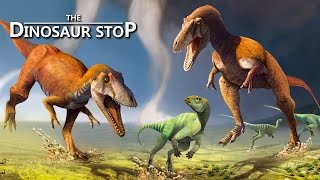
You probably remember the Trexs iconic roar from Jurassic Park but it turns out that dinosaurs actually didn't sound that ferocious. This video explores the evolution of vocal behaviors in birds and possible sounds in…

Associate Producer Stefan Chin faces off against his boss Hank Green. The video discusses bird vocalizations, evolution of closed-mouth sounds, and their possible origins in extinct nonavian dinosaurs, highlighting…

Recent studies show that the largest tyrannosaurids likely had scaly skin instead of extensive feathers. This evolution of large body sizes in tyrannosauroids happened independently, shedding light on the relationship…
@BlrdeWasTaken @0xAlaric https://t.co/hP2K9wsDA1 here is the actual paper
@emmanueljimag Coos, booms, and hoots: The evolution of closed-mouth vocal behavior in birds Tobias Riede, Chad M. Eliason, Edward H. Miller, Franz Goller, Julia A. Clarke First published: 27 June 2016 https://t.co/WojNuvLuEB
@HobbestheTiger2 @Conor29882576 Birds can vocalize without opening their mouths. https://t.co/vSnDjvkHke.
Coos, booms, and hoots: The evolution of closed-mouth vocal behavior in birds Tobias Riede,Chad M. Eliason,Edward H. Miller,Franz Goller,Julia A. Clarke First published: 27 June 2016 https://t.co/dvLoiv3KJi Citations: 21
RT @hirolichyi10: #子ども科学電話相談 恐竜の鳴き声に関する論文ですが、鳥類における口を閉じて音を出す行動についての論文が2016年に発表されています。 Riede et al. (2016) https://t.co/AyhReQQN5y
RT @hirolichyi10: #子ども科学電話相談 恐竜の鳴き声に関する論文ですが、鳥類における口を閉じて音を出す行動についての論文が2016年に発表されています。 Riede et al. (2016) https://t.co/AyhReQQN5y
RT @hirolichyi10: #子ども科学電話相談 恐竜の鳴き声に関する論文ですが、鳥類における口を閉じて音を出す行動についての論文が2016年に発表されています。 Riede et al. (2016) https://t.co/AyhReQQN5y
#子ども科学電話相談 恐竜の鳴き声に関する論文ですが、鳥類における口を閉じて音を出す行動についての論文が2016年に発表されています。 Riede et al. (2016) https://t.co/AyhReQQN5y
@neiltyson @RichardGarriott There's a lot of evidence to suggest that some sounded like if you took birdsong and make it come out of something much, much larger!! It's haunting when you simulate it: https://t.co/KZe4gBlfHe
@SophieSmith86 https://t.co/CqV7aTHPIA
@Lloralin @19722791es Aquí está, pues: https://t.co/at77pQZVT6
 WS
WS A
A L
L CM
CM 冠諸
冠諸 R
R AO
AO W
W 佳
佳 時
時