
Synopsis of Social media discussions
The group's discussions reveal excitement about the idea that organisms like slime molds and fungi can transfer learned behaviors through cell fusion, with phrases like 'uses cell fusion', 'transfer behaviors', and references to 'Physarum polycephalum' exemplifying an interest in mechanisms. The tone suggests curiosity and recognition of the broader scientific impact, as seen in mentions of historical studies and implications for understanding information transfer in biology.
Agreement
Moderate agreementMost discussions acknowledge the significance of the research, especially in relation to non-neural organisms sharing learned behaviors.
Interest
High level of interestPosts demonstrate high curiosity, referencing specific studies, species, and potential implications, indicating strong engagement.
Engagement
Moderate level of engagementDiscussions include references to mechanisms, historical studies, and broader concepts like cellular fusion, showing moderate depth.
Impact
Moderate level of impactParticipants see this research as potentially transformative, highlighting its novelty and bioethical implications.
Social Mentions
YouTube
4 Videos
Bluesky
1 Posts
3 Posts
8 Posts
Blogs
11 Articles
News
48 Articles
Metrics
Video Views
5,800,097
Total Likes
186,501
Extended Reach
5,822,290
Social Features
75
Timeline: Posts about article
Top Social Media Posts

Gaurav Venkataraman
Was pointed at this paper during a talk I gave yesterday:
https://t.co/uGdExXr4hz
view full post
Masato Ida, PhD
「2016年には英王立協会紀要に論文が発表され」の論文は、多分この辺り → https://t.co/uTh8sNje8x , https://t.co/yGDiscMFs7 Audrey Dussutour(フランス)ら。Proceedings of the Royal Society B 誌。
view full post
Randy Ellis
@Plinz No goal being pursued here, in contrast to slime molds that can solve mazes, rely on the past experience of other slime molds, and share memories. Mind you, all of this without neurons or synapses. Refs: https://t.co/SMIJlpT00Y; https://t.co/mn4hhz4wsg; https://t.co/loUXwbFLly
view full post
David J. Cox
It can learn and share what it's learned, too!! https://t.co/7kudnrMsl7 https://t.co/n4GTgLQ55U
view full post
Eduardo Borja
El moho (“Physarum polycephalum”) utiliza la fusión celular para transferir el comportamiento adquirido
#Fisiología #ComunicaCiencia #scicomm #ReinoFungi
view full post
Posts referencing the article

Discovering Habituation in Smart Slime Moulds
Researchers demonstrate that the slime mould Physarum polycephalum can exhibit habituation, a form of learning typically associated with neural organisms. This groundbreaking discovery suggests non-neural organisms, like slime moulds, may offer insights into the fundamental mechanisms of learning.

January 31, 2023
3,904,862 views
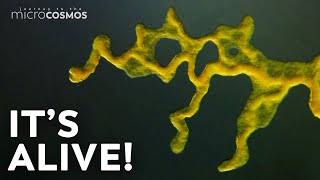
Slime Molds: Exploring Habituation and Learning in Microorganisms
Dive into the fascinating world of slime molds. This video examines how Physarum polycephalum demonstrates habituation, showing learning abilities previously thought to be exclusive to neural organisms. Discover the implications for understanding learning evolution in non-neural life forms.
February 10, 2020
952,803 views
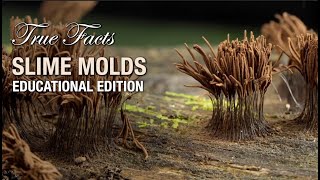
Habituation Insights: Learning in Slime Molds
This video explores the capabilities of slime molds, specifically Physarum polycephalum, to exhibit habituation—a learning process seen in neural organisms. Discover how these remarkable creatures respond to repeated stimuli and their potential roles in understanding learning evolution.
February 4, 2023
939,818 views

Fascinating Learning Abilities of Physarum Polycephalum in Space Exploration
Ni animal ni végétal ni champignon le Blob fait preuve de capacités étonnantes telles que l'apprentissage. This video explores five surprising facts about Physarum polycephalum, a unicellular organism capable of memory and adaptation, with potential applications in space.
March 30, 2021
2,615 views
-

https://www.youtube.com/watch?v=k_GTIL7AECQ
view full postJanuary 31, 2023
-
Randy Ellis
@randalljellis (Twitter)@Plinz No goal being pursued here, in contrast to slime molds that can solve mazes, rely on the past experience of other slime molds, and share memories. Mind you, all of this without neurons or synapses. Refs: https://t.co/SMIJlpT00Y; https://t.co/mn4hhz4wsg; https://t.co/loUXwbFLly
view full postApril 30, 2022
1
-
Gaurav Venkataraman
@gaurav_ven (Twitter)Was pointed at this paper during a talk I gave yesterday: https://t.co/uGdExXr4hz
view full postFebruary 15, 2022
5
-
ATLG
@atlgurkan (Twitter)@1_yeni_bilgi_ https://t.co/aN8C4j3kBX
view full postApril 2, 2020
-
David J. Cox
@davidjcox_ (Twitter)It can learn and share what it's learned, too!! https://t.co/7kudnrMsl7 https://t.co/n4GTgLQ55U
view full postOctober 21, 2019
1
-
Masato Ida, PhD
@miakiza20100906 (Twitter)RT @miakiza20100906: 「2016年には英王立協会紀要に論文が発表され」の論文は、多分この辺り → https://t.co/uTh8sNje8x , https://t.co/yGDiscMFs7 Audrey Dussutour(フランス)ら。Pro…
view full postOctober 18, 2019
2
-
ken-ichi Kayashima
@Kaya_kohro9 (Twitter)RT @miakiza20100906: 「2016年には英王立協会紀要に論文が発表され」の論文は、多分この辺り → https://t.co/uTh8sNje8x , https://t.co/yGDiscMFs7 Audrey Dussutour(フランス)ら。Pro…
view full postOctober 18, 2019
2
-
Masato Ida, PhD
@miakiza20100906 (Twitter)「2016年には英王立協会紀要に論文が発表され」の論文は、多分この辺り → https://t.co/uTh8sNje8x , https://t.co/yGDiscMFs7 Audrey Dussutour(フランス)ら。Proceedings of the Royal Society B 誌。
view full postOctober 18, 2019
2
2
-
Eduardo Borja
@LEBL_9 (Twitter)El moho (“Physarum polycephalum”) utiliza la fusión celular para transferir el comportamiento adquirido #Fisiología #ComunicaCiencia #scicomm #ReinoFungi
view full postJanuary 22, 2019
1
Abstract Synopsis
@ivacheung.com (Bluesky)