The underlying tone reveals skepticism about the clinical value of evolocumab, with examples like mentions that despite a 60% LDL reduction, there was no significant decrease in cardiovascular mortality or all-cause death. The use of words like 'scam' and questions about cost-effectiveness emphasize the controversy and critical engagement surrounding its real-world impact.
AgreementNeither agree nor disagree
Many discussions question the effectiveness of evolocumab in reducing mortality despite lowering LDL cholesterol, indicating mixed opinions or skepticism.
InterestModerate interest
Discussions are somewhat focused on detailed trial results and costs, showing moderate curiosity about the clinical significance, but not widespread enthusiasm.
EngagementModerate engagement
Posts reference specific studies (FOURIER, ODYSSEY) and critique aspects like cost and mortality benefits, reflecting a moderate level of detailed engagement.
ImpactModerate impact
Users highlight the disconnect between LDL reduction and actual mortality benefits, suggesting the research impacts debates on treatment value rather than immediate clinical changes.
Abstract in brief
Evolocumab is a monoclonal antibody that effectively lowers LDL cholesterol levels by about 60% and was tested for its ability to prevent serious cardiovascular events in a large clinical trial.
A study involving over 27,500 patients with existing cardiovascular disease compared evolocumab against a placebo, focusing on its impact on cardiovascular deaths, heart attacks, strokes, and hospitalizations over approximately 2.2 years.
Results showed that treatment with evolocumab significantly reduced cardiovascular risks compared to placebo, with no notable differences in adverse effects between the two groups.
(6/6) Zrodła:
ORYGINALNE BADANIE: Evolocumab and Clinical Outcomes in Patients with Cardiovascular Disease ( https://t.co/jXM5AdEMk0 )
RENAALIZA: Restoring mortality data in the FOURIER cardiovascular outcomes trial of evolocumab in patients with cardiovascular disease: a
Oct 8, 2025 · 39 likes · 2 shares · 5,533 followersView post →
DÜ
Dr. Ozan Ünlü
@DrOzanUnlu · X
FOURIER
Mar 20, 2024 · 18 likes · 36,640 followersView post →
CM
cardio-met
@cardiomet_CE · X
15) Indeed, with respect to reducing subsequent events in patients with known CAD, the rule is that “even lower is even better”. The best proof of this is the FOURIER trial (
Mar 22, 2022 · 17 likes · 4 shares · 4,156 followersView post →
BB
Biomass Bob
@SentientBlobBob · X
@KenDBerryMD Actual study.
https://t.co/TOuTRYXOwd
15% reduction in the risk of cardiovascular death, myocardial infarction, stroke, and a 20% reduction in the risk of the more clinically serious key secondary end point of cardiovascular death, myocardial infarction, or stroke.
Feb 10, 2024 · 15 likes · 786 followersView post →
DD
Dr(Prof)Deepak Natarajan MBBS MD DM
@deepakdeepak · X
https://t.co/mGN50Zh72X
https://t.co/wA7SfGhrac
The general public may be shocked or bemused to learn that a widely promoted medicine available for lowering LDL cholesterol to levels as low as 30 mg% does not show the slightest improvement in all-cause death, cardiovascular https://t.co/0WkQmLN043
Oct 9, 2025 · 8 likes · 6 shares · 6,170 followersView post →
CM
cardio-met
@cardiomet_CE · X
13) 2⃣ large outcome trials of PCSK9 monoclonal antibodies demonstrated significant ⬇️in CV events when added to #statin therapy:
Feb 15, 2022 · 8 likes · 1 share · 4,156 followersView post →
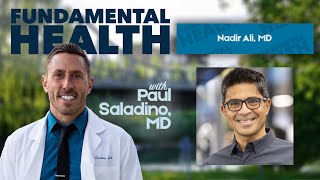
Dr Paul Saladinos discusses the potential health effects of plant chemicals called phytoalexins and their medicinal properties, questioning traditional views on plant consumption and emphasizing the importance of…
Evolocumab, a PCSK9 inhibitor, was studied to see if it reduces the risk of major cardiovascular events in patients without prior heart attack or stroke but with atherosclerosis or diabetes and elevated LDL cholesterol…
Does low cholesterol harm the brain? This video explores the effects of statins and other cholesterol-lowering drugs on dementia risk, alongside insights from a study on alirocumab's benefits for cardiovascular outcomes…
This video discusses the 2018 guideline developed by major health organizations, providing evidence-based recommendations for assessing, preventing, and managing high blood cholesterol to reduce cardiovascular risk. It…
Dr Nadir Ali, an experienced interventional cardiologist, discusses the impact of lifestyle changes, dietary fats, and LDL cholesterol on heart health, alongside insights from recent clinical trials like evolocumab's…
This video reviews the basics of high cholesterol and lipid panels, discussing lipid targets and management strategies. It also explores the influence of statin therapy on cognitive decline and dementia, emphasizing the…
This video discusses recent research on left atrial appendage closure as a safe and effective alternative to anticoagulation in high-risk atrial fibrillation patients. It highlights reduced bleeding complications and…
This video discusses the safety and efficacy of lowering LDL cholesterol levels to very low levels, based on the FOURIER-OLE trial. It highlights how evolocumab, a monoclonal antibody, significantly reduces…
An update in trial interpretation CI and Pvalues percutaneous tricuspid interventions and news on HDL and humility in Medicine are the topics John Mandrola MD covers in this weeks podcast. This podcast is intended for…
This week, we delve into the critical findings regarding cardiac troponin I levels. A recent study reveals a significant correlation between elevated troponin levels post-surgery and increased 30-day mortality…
This video discusses causes of sudden death, inclisiran, and cardiovascular outcomes associated with alirocumab for patients recovering from acute coronary syndrome. Learn how these treatments can significantly reduce…
The safety of very low LDLC, sacubitril-valsartan's promise in heart failure, and the impact of SGLT2 inhibitors are discussed in this podcast. It analyzes recent findings on treatment outcomes, including…
RT @deepakdeepak: https://t.co/mGN50Zh72X
https://t.co/wA7SfGhrac
The general public may be shocked or bemused to learn that a widely pro…
Oct 9, 2025 · 6 shares · 4,848 followersView post →
DD
Dr(Prof)Deepak Natarajan MBBS MD DM
@deepakdeepak · X
https://t.co/mGN50Zh72X
https://t.co/wA7SfGhrac
The general public may be shocked or bemused to learn that a widely promoted medicine available for lowering LDL cholesterol to levels as low as 30 mg% does not show the slightest improvement in all-cause death, cardiovascular https://t.co/0WkQmLN043
Oct 9, 2025 · 8 likes · 6 shares · 6,170 followersView post →
PZ
Pawel Zagozdzon
@zagozdzon · X
RT @UniversOfMemory: (6/6) Zrodła:
ORYGINALNE BADANIE: Evolocumab and Clinical Outcomes in Patients with Cardiovascular Disease ( https://…
(6/6) Zrodła:
ORYGINALNE BADANIE: Evolocumab and Clinical Outcomes in Patients with Cardiovascular Disease ( https://t.co/jXM5AdEMk0 )
RENAALIZA: Restoring mortality data in the FOURIER cardiovascular outcomes trial of evolocumab in patients with cardiovascular disease: a
Oct 8, 2025 · 39 likes · 2 shares · 5,533 followersView post →
VC
Viet Le DMSc PA-C FACC FAHA HF-Cert
@VietHeartPA · X
RT @cardiomet_CE: 9b) FOURIER showed that the monoclonal antibody #PCSK9 inhibitor #evolocumab significantly reduced ischemic events in pat…
Aug 28, 2025 · 1 share · 9,786 followersView post →
CM
cardio-met
@cardiomet_CE · X
9b) FOURIER showed that the monoclonal antibody #PCSK9 inhibitor #evolocumab significantly reduced ischemic events in patients with stable #atherosclerosis.
See
Aug 26, 2025 · 3 likes · 1 share · 4,156 followersView post →
S
ScienceBiscuits
@ScienceBiscuits · X
@BigDDaddyCali @MasalaFry69 @squirrelpalooza @Rizabellepow @ErinGoBragh360 Incorrect.
Here is a Mendelain randomization study regarding genetic LDL irrelevant to diet- though accounted for in p value calculations:
https://t.co/jIXEiQNWgV
And of course the medication trials and studies with mechanisms solely on LDL reduction:
https://t.co/XQVaTEa8I9
@drjasonfung @drjasonfung It is very easy to prove that the statins work, at least for a big part through other mechanism than LDL lowering.
Take the repatha study https://t.co/MUjPyv2kOQ
It reduces the LDL by 60%. (1.45mmol/l) But has no effect on cardiovascular mortality and on MACE only
@jibtie @NutritionMadeS3 There's no direct comparison, admittedly. In the FOURIER Trial,
Evolocumab had massive LDLc reductions & reduced CV events but had no mortality benefit after 2 years. Yet in the 2 year Jupiter trial, a statin reduced mortality with tiny LDLc reductions
https://t.co/lMUpBMBWUs
@robertlufkinmd @robertlufkinmd you have to add the PSK9 inhibitors, which are very effective in reducing LDL, but worse than statins to reduce the cardiovascular endpoints. https://t.co/MUjPyv2kOQ
An incredible 60% reduction in LDL, lead to no effect on cardiovascular mortality and only 27% for https://t.co/gwUDJ52fGH
Dec 3, 2024 · 4 likes · 1 share · 250 followersView post →
SC
Sentient Cactus
@Special_Cactus · X
@SandmanRT @davykevinp @ArrienV @drscottyk This is the study protocol. If you're interested in the power calculations, termination criteria, etc., the first place to look would be here
https://t.co/VV11PVU3cB
@CircAHA @Bweber04 @AbbateAntonio The FOURIER study shows no effect on cardiovascular death HR 1.05 https://t.co/MUjPyv2kOQ, whereas the COLCOT study shows a reduction of 16% HR 0.74. https://t.co/K7H5ZrBZuY
Price for Evolocumab 561$ a month. Price for 1 month colchicine 15$
Guess, which is heavily promoted in
OPINION: FROM PROVE IT, TO IMPROVE IT , TO FOURIER, A NICE SUMMARY OF LIPID LOWERING LITERATURE. I THINK YOU SHOULD KNOW THIS!
https://t.co/lexSOMQqUA
https://t.co/3TOOphplym
https://t.co/fJdeCi71BG https://t.co/ASjcqbCWFr
@ColDaveCrockett @PeterAttiaMD @Amgen psk9 inhibitors are particular ineffective to avoid CV morbidity and mortality. https://t.co/MUjPyv2SEo
No effect whatsoever on CV mortality and only a marginal effect of 15% on morbidity. PSk9 inhibitors are a real scam. Use olive oil ad libitum and reduce your CV mortality by https://t.co/gm2clI8RKF
@LDLSkeptic Cholesterol Treatment Trialists’ Collaboration had around 175,000 participants and median follow-up around 5 years (https://t.co/wQkjOyFrbl); FOURIER had 27,564 participants and median follow-up of 2.2 years (https://t.co/E6fv35cj4H).
Links para mas info:
https://t.co/9Ani2CwOHe
https://t.co/VW3LeD30zo
https://t.co/BN70Bnt2jK
https://t.co/1cknwROFf8
https://t.co/8oDAFUQ4Zh
May 6, 2024 · 7 likes · 1 share · 2,167 followersView post →
DÜ
Dr. Ozan Ünlü
@DrOzanUnlu · X
FOURIER
Mar 20, 2024 · 18 likes · 36,640 followersView post →
M
maybeadoctor
@maybeadoc1983 · X
@Ikat0 @im_dori2 @Drlipid @jpapi7 https://t.co/nY7u8f5J3r
NNT of like 200 to prevent 1 CV death.
https://t.co/7PsE6feVcO
No CV death improvement, NNT 100 to prevent an MI. Total mortality benefit likely noise given lack of CV death benefit (eg would mean it reduces infection or CA death better than CV).
@KenDBerryMD Actual study.
https://t.co/TOuTRYXOwd
15% reduction in the risk of cardiovascular death, myocardial infarction, stroke, and a 20% reduction in the risk of the more clinically serious key secondary end point of cardiovascular death, myocardial infarction, or stroke.
Feb 10, 2024 · 15 likes · 786 followersView post →
@DanClintonRN @holmanm This is the study the PSCK9 inhibitor "drug pushers" use to confuse unwitting patients to believe RRR over the more important ARR
Ref #2 in image below:
https://t.co/AYxs0eXs04
In your table, "Death from any cause"
- More people died (444) USING this poison vs the placebo (426) https://t.co/PpycIF1MDN
Dec 16, 2023 · 1 like · 3,074 followersView post →
JM
JK MD
@jksequoia · X
@BioLayne @BioLayne
It had nothing to do with outliers, it's more fundamental.
All studies where drugs are used to reduce LDL, and they have no other property, show an extremely low effect on CV events.
PSK9 Inhibitor = -15% https://t.co/INDcnnj3Ss
Ezetemib = No effect in familial
@holmanm Beleive this is the link to the actual study, with Table 2 capturing the endpoints labeled in @holmanm's image above:
- CV death: 251 (#bigpharma) vs 240
- Death, any cause: 444 vs 426
Where's the measurable benefit of lowering your cholestrol?
https://t.co/Yval6hnAYF https://t.co/rXGL8CpfWj
@bucksfan510 @holmanm The number of cardiovascular deaths is also higher in the evolocumab group: 251 deaths vs 240 in controls See table 2 in https://t.co/Uc0b0Hm6HD
@JesperLundbom That's not true at all. You can read the study yourself. It's free. https://t.co/qzBHSsZjc6
Feb 11, 2023 · 1 like · 12,658 followersView post →
KM
Kyle Kettler MD
@KyleKettlerMD · X
@DanClintonRN @Paddy_Barrett A meta analysis is a collection of RCTs? I’m not sure what other evidence would be convincing. Here’s one of the specific trials. All I was saying was that PCSK9i do have CVOT data. https://t.co/y7HlatxDAR
Jan 15, 2023 · 2 likes · 26,957 followersView post →
SK
Stav Kislev
@StavKislev · X
@ophirnahum99 תודה אופיר!
אני לא יודע לגבי חברות מסחריות, אבל בעשורים האחרונים פורסמו המון עבודות שהראו שככל שהורידו את רמות ה-LDL יותר, כך הסיכון להתקפי לב ולשבץ פחת. יש כל כך הרבה עבודות כאלה, ככה שזה מאוד משכנע
הנה למשל 2 עבודות נבחרות:
https://t.co/BI3l1tTnQW
https://t.co/uIzau3B5x6
Dec 22, 2022 · 2 likes · 7,558 followersView post →
JL
Jesper Lundbom
@JesperLundbom · X
@Drlipid @society_eas @fhpatienteurope @TheFHFoundation Maybe because a 60% reduction in LDL had no impact on mortality in the first study.
10.1056/NEJMoa1615664
How do you explain this?
@AhmetFU38380786 @dr_rich @mgtmccartney 1. Only *non*-fatal MIs (& revasc'n) & strokes had statistically sig ⬇️
(L pic)
2. Authors state 2° benefits 'exploratory' (sic)
3. With an NNT of ≥65, & a cost just shy of $1bn per event prevented, its cost benefit is *at best* debatable (R pic)
[ref: https://t.co/jpthvdIwUy] https://t.co/PqbG24bTXV
Oct 23, 2022 · 1 like · 4,627 followersView post →
@hoffsbeefs @VishalGulati_ i think for the PCSK9 inhibiting antibodies there was a one-year trial which was enough to generate a claim about reduced events (heart attack, stroke). thought the trial had ~30,000 people in it https://t.co/tYF6ZbsjOX
RT @cardiomet_CE: 15) Indeed, with respect to reducing subsequent events in patients with known CAD, the rule is that “even lower is even b…
Mar 22, 2022 · 4 shares · 9,786 followersView post →
L
Linda
@wordfinga · X
RT @cardiomet_CE: 15) Indeed, with respect to reducing subsequent events in patients with known CAD, the rule is that “even lower is even b…
Mar 22, 2022 · 4 shares · 4,597 followersView post →
AM
Ahmed Mohsen
@drahmedmohsen85 · X
RT @cardiomet_CE: 15) Indeed, with respect to reducing subsequent events in patients with known CAD, the rule is that “even lower is even b…
Mar 22, 2022 · 4 shares · 22,812 followersView post →
CM
cardio-met
@cardiomet_CE · X
15) Indeed, with respect to reducing subsequent events in patients with known CAD, the rule is that “even lower is even better”. The best proof of this is the FOURIER trial (
Mar 22, 2022 · 17 likes · 4 shares · 4,156 followersView post →
@jlane_boston @AvinunReut Actually PCSK9 is the BEST example. Loss of function variants in PCSK9 results in 40% reduction in LDL (https://t.co/wEIHI2qZiB). And blocking PCSK9 using monoclonal antibody results in 59% reduction in LDL (https://t.co/azGLinct1a)
Feb 10, 2021 · 2 likes · 18,975 followersView post →
KN
Ken Nightingale
@NightingaleKen · X
Dr. Nadir Ali's health optimizaton advice. He is an interventional #cardiologist with over 25 years of experience. He is also the chairman of the Department of Cardiology at Clear Lake Regional Medical Center.
@eatmostlyfatali
@CarnivoreMD
https://t.co/o6Fkonx83F
LDL >70 ng/dL con máxima tolerancia a esta estatinas, considerar ezetimiba. Si LDL >70 con D.max estatina y ezetimiba, justifica inhibidor de PCSK-9 (Evolocumab) eficaz en px c/s DM y disminución riesgo relativo del 27% de muerte cardiovascular, IAM.
DOI: 10.1056 / NEJMoa1615664 https://t.co/g8acZx8cEx
Aug 27, 2020 · 1 like · 6,302 followersView post →
3/5: it only took #FOURIER 27,654 pts to find a 15% ⬇️ in 5p MACE, with profound ⬇️ LDL (59%), similar to ODYSSEY OUTCOME (15%, 55%). Seems like a disconnect b/t LDL and MACE https://t.co/DhL16vzsva
@jillbrownfitnes it's really a Q for specialists @Drlipid @drjkahn @DBelardoMD @KoushikReddyMD
as far as stroke, evolocumab seems to lower risk of ischemic without raising hemorrhagic
https://t.co/4EyPpuzgWD
but if any of the ppl above disagree with me, go with them! :)
Feb 11, 2020 · 3 likes · 27,740 followersView post →
GP
Gil Carvalho MD PhD
@NutritionMadeS3 · X
@KoushikReddyMD hm and FOURIER also showed lower HR for ischemic, no change for hemorrhagic...
interesting
https://t.co/4EyPpuhFy3
Feb 10, 2020 · 1 like · 27,740 followersView post →
に
にいやん
@niiyan51 · X
Evolocumab and Clinical Outcomes in Patients with Cardiovascular Disease. https://t.co/hsaGEcTGMj
RT @VernersViews: Facts about Repatha, one of the latest cholesterol-lowering drugs.
Cost: $14,000 per year
NNT: 66
All-cause mortality: no…
Aug 12, 2019 · 68 shares · 4,103 followersView post →
Z
ZKA
@0knowledgeactor · X
RT @VernersViews: Facts about Repatha, one of the latest cholesterol-lowering drugs.
Cost: $14,000 per year
NNT: 66
All-cause mortality: no…
Aug 12, 2019 · 68 shares · 1,145 followersView post →
DP
Dr Zoe Harcombe, PhD
@zoeharcombe · X
RT @VernersViews: Facts about Repatha, one of the latest cholesterol-lowering drugs.
Cost: $14,000 per year
NNT: 66
All-cause mortality: no…
Aug 12, 2019 · 68 shares · 220,598 followersView post →
AC
Ana Cláudia
@Anawsantos · X
RT @VernersViews: Facts about Repatha, one of the latest cholesterol-lowering drugs.
Cost: $14,000 per year
NNT: 66
All-cause mortality: no…
Aug 12, 2019 · 68 shares · 357 followersView post →
TN
Tim Noakes
@ProfTimNoakes · X
RT @VernersViews: Facts about Repatha, one of the latest cholesterol-lowering drugs.
Cost: $14,000 per year
NNT: 66
All-cause mortality: no…
Aug 12, 2019 · 68 shares · 158,409 followersView post →
W
Wendy
@WendyAtTheBay · X
RT @VernersViews: Facts about Repatha, one of the latest cholesterol-lowering drugs.
Cost: $14,000 per year
NNT: 66
All-cause mortality: no…
Aug 11, 2019 · 68 shares · 926 followersView post →
JM
Jaime Raúl Molina
@jaimeraulmolina · X
Pero no me crea a mí: si quiere ver las declaraciones de conflictos de intereses de cada uno de los 12 autores, puede entrar a: https://t.co/A3NuVtsRph y va a:
Contents -> Supplementary Material -> Disclosure Forms
Allí están las declaraciones de CdI de todos los autores.
Evolocumab y Resultados Clínicos en pacientes con enfermedad cardiovasular (Evolocumab and Clinical Outcomes in Patients with Cardiovascular Disease)
NEJM - mayo, 2017.
https://t.co/A3NuVtsRph
Aug 5, 2019 · 2 likes · 9,628 followersView post →
CH
Caroline harding
@Carolin62268362 · X
PCSK9 inhibitor in combination with a statin demonstrated a 59% reduction in LDL cholesterol compared to placebo and a 15% risk reduction of cardiovascular events (Sabatine at al (2017) https://t.co/YOO7Ebp3sj
RT @puddleg: Try to remember that this was a trial in which treatment did not reduce cardiovascular death (1.05) or all-cause mortality (1.…
May 31, 2019 · 2 shares · 389 followersView post →
E
eleanorina
@_eleanorina · X
RT @puddleg: Try to remember that this was a trial in which treatment did not reduce cardiovascular death (1.05) or all-cause mortality (1.…
May 30, 2019 · 2 shares · 3,168 followersView post →
D
DrDeaRoberts
@DrDeaRoberts · X
RT @puddleg: Try to remember that this was a trial in which treatment did not reduce cardiovascular death (1.05) or all-cause mortality (1.…
May 30, 2019 · 2 shares · 2,038 followersView post →
GH
George D. Henderson
@puddleg · X
@JAMACardio @TIMIStudyGroup @BrighamWomens Try to remember, because you won't read it here, that this was a trial in which treatment did not reduce cardiovascular death (1.05) or all-cause mortality (1.04), despite these benefits.
https://t.co/KOA33aFyxL
May 30, 2019 · 2 likes · 7,373 followersView post →
GH
George D. Henderson
@puddleg · X
Try to remember that this was a trial in which treatment did not reduce cardiovascular death (1.05) or all-cause mortality (1.04), despite these benefits.
https://t.co/KOA33aFyxL https://t.co/WAY31CncH2
May 30, 2019 · 4 likes · 2 shares · 7,373 followersView post →
JB
Julia B.
@JuliaB_fitness · X
RT @VernersViews: Facts about Repatha, one of the latest cholesterol-lowering drugs.
Cost: $14,000 per year
NNT: 66
All-cause mortality: no…
May 12, 2019 · 68 shares · 2,272 followersView post →
た
たけちゃん
@nitrotake · X
Evolocumab and Clinical Outcomes in Patients with Cardiovascular Disease | NEJM
https://t.co/9dQykTKlG7
こっちのAEにも味覚変化は報告ないな
The question is whether a 1.5% ARR in a composite endpoint w #PCSK9 is worth $15,000 (or even 1/3 that) per year. Evolocumab and Clinical Outcomes in Patients with Cardiovascular Disease | NEJM https://t.co/Pxsqa5iD1i
Evolocumab and Clinical Outcomes in Patients with Cardiovascular Disease. - PubMed - NCBI https://t.co/hsaGEcTGMj
Apr 12, 2019 · 1 like · 1,074 followersView post →
JS
Julian Sweetman
@sweetman_julian · X
Evolocumab associated with significantly below target reduction in LDL-C and 15% + reduction in cardiovascular events - how much lower do we need to go with LDL-C ?
https://t.co/RcpsnRfJpf
#diabetes
#badcholesterol
 BC
BC DD
DD






 DK
DK A
A K
K VG
VG FJ
FJ T
T PZ
PZ PŻ
PŻ