The discussions highlight widespread curiosity and recognition of the topic's importance, with expressions such as 'why do whales rarely get cancer?' and mentions of the gene TP53. Words like 'interesting' and questions about dinosaur cancer reveal a tone of inquiry and fascination, which indicates that the publication stimulates engagement and has potential impact by prompting further exploration of natural cancer defenses across species.
AgreementModerate agreement
Most discussions recognize the significance of Peto's Paradox and acknowledge the role of evolutionary mechanisms in addressing cancer prevention, indicating a general consensus with the publication's premise.
InterestHigh interest
Posts reflect curiosity about why large mammals like whales have low cancer rates, showing genuine interest in evolutionary biology and its implications for cancer research.
EngagementModerate engagement
Several participants reference specific mechanisms like the TP53 gene and note that the topic prompts them to look deeper into topics like dinosaur cancer or comparative cancer incidence across species.
ImpactModerate impact
The debates and references suggest that this publication sparks meaningful conversations about evolutionary strategies and could influence ongoing research and understanding in oncology and evolutionary biology.
Abstract in brief
Petos Paradox addresses the question of why large, long-lived animals (like elephants and whales) do not have higher rates of cancer than smaller animals, despite having many more cells and longer lifespans, which should theoretically increase cancer risk.
Evolution appears to have developed enhanced cancer suppression mechanisms in these large animals multiple times, effectively protecting them from cancer despite their size and age.
The text explores current understanding of Petos Paradox and highlights areas where further research is needed to uncover how evolution has solved this cancer prevention puzzle.]
@Xirong7 @arjunrajlab That is a very interesting one https://t.co/C479cxJXo6
I do not know much about Peto's paradox and the reliability of the estimated incidence of cancer in whales, but it's interesting!
Jan 10, 2021 · 14 likes · 20,175 followersView post →
BB
BMC Biology
@BMCBiology · X
In case you missed it: Peto’s Paradox: how has #evolution solved the problem of #cancer prevention?
https://t.co/SiUqIZRAMr https://t.co/jLNfKAlcII
Aug 9, 2019 · 8 likes · 3 shares · 9,009 followersView post →
KL
Kimberly Luddy
@luddyka · X
Peto’s Paradox: how has evolution solved the problem of cancer prevention? @ClionaOfarrelly
https://t.co/tEAOUGahYq https://t.co/UJXDXG6d6f
@duffy_ma Also, will shamelessly plug this paper we wrote on Peto's paradox, it seems to be a fav topic among my undergrads in evmed: https://t.co/DQscLb4URT
Aug 19, 2019 · 4 likes · 1 share · 1,315 followersView post →
TS
Todd Scarbrough
@toddscarbrough · X
@VedangMurthy @Sushilberiwal Counter-intuitive
And somewhat akin to Peto's Paradox
https://t.co/JyCKTzPvn9 https://t.co/UyQ8zud5Fb
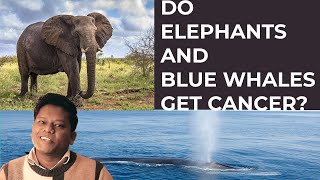
This video explores Petos Paradox, explaining how large animals like blue whales prevent cancer despite having many cells and long lifespans. It discusses evolution's role in developing enhanced cancer suppression…
Petos Paradox addresses why large animals like elephants and whales rarely get cancer despite their size and lifespan. Evolution has developed enhanced cancer suppression mechanisms, offering insights into potential…
Peto's Paradox explains why large, long-lived animals like elephants and whales do not have higher cancer rates despite having more cells. Evolution has developed enhanced cancer suppression mechanisms in these animals…
This video explores how large, long-lived animals like elephants and whales resist higher cancer rates despite having more cells. It highlights evolutionary strategies that developed cancer suppression mechanisms…
Blue Whales are the largest mammals on Earth. Despite their many cells and long lives, they rarely get cancer. This video explores how their evolved mechanisms might inform human cancer prevention and treatments.
Petos Paradox explores why large, long-lived animals like elephants and whales do not have higher cancer rates, despite their many cells and extended lifespans. Evolution has developed enhanced cancer suppression…
Peto's Paradox explores why large, long-lived animals like whales and elephants do not have higher cancer rates, despite having more cells and longer lifespans. Evolution has developed enhanced cancer suppression…
Your host Luke discusses how cancer cells act and explores possible ways to address them, highlighting recent findings in cancer biology and evolution's role in cancer prevention in large animals.
@DavidQuammen A bit of a science interest crossroads, but while it's quite debated - and needs a lot more examination - Peto's Paradox has even been hypothesized in dinosaurs (Tollis et al 2017; Woodruff et al 2018).
https://t.co/CmHaI1HUGS
https://t.co/g6fP8xbtt9
@DiggyDigsIt @WeiseFranklin @gunsnrosesgirl3 Ever heard of Peto’s Paradox?
https://t.co/LOpST838pL
And you gotta consider that cancer incidence falls drastically among Phyla. The Arthropoda phylum, as it is far older than our own, it's almost oblivious to cancer - ofc, evolution did have a lot of time to work on them.
Since many lineages faced the trade-off between large body size and cancer risk during their evolution, there have likely been many different pathways in which cancer suppression has evolved.
https://t.co/8K6xNpDyfX
July 2022, msac149, https://t.co/cpKUJGfxHj
2. Tollis, M., Boddy, A.M. & Maley, C.C. Peto’s Paradox: how has evolution solved the problem of cancer prevention?. BMC Biol 15, 60 (2017). https://t.co/lBmExU2dv2
3.Abegglen LM, Caulin AF, Chan A, et al. Potential Mechanisms for
What is Peto’s paradox? Why should I care? And did dinosaurs get cancer? See this Q&A from our ‘In the Light of Evolution’ series for a primer
https://t.co/00CYcZoozA
For those interested in Peto's paradox, which assumes that "....the risk of developing cancer should be a function of the number of cell divisions in an organism’s lifetime". https://t.co/NHSQdDaydw
@Xirong7 @arjunrajlab That is a very interesting one https://t.co/C479cxJXo6
I do not know much about Peto's paradox and the reliability of the estimated incidence of cancer in whales, but it's interesting!
Jan 10, 2021 · 14 likes · 20,175 followersView post →
RT @amy_boddy: @duffy_ma Also, will shamelessly plug this paper we wrote on Peto's paradox, it seems to be a fav topic among my undergrads…
Aug 19, 2019 · 1 share · 9,280 followersView post →
AB
Amy Boddy
@amy_boddy · X
@duffy_ma Also, will shamelessly plug this paper we wrote on Peto's paradox, it seems to be a fav topic among my undergrads in evmed: https://t.co/DQscLb4URT
Aug 19, 2019 · 4 likes · 1 share · 1,315 followersView post →
GJ
Gene Jockey
@gene_jockey · X
RT @BMCBiology: In case you missed it: Peto’s Paradox: how has #evolution solved the problem of #cancer prevention?
https://t.co/SiUqIZRAMr…
Aug 12, 2019 · 3 shares · 161 followersView post →
BB
BMC Biology
@BMCBiology · X
In case you missed it: Peto’s Paradox: how has #evolution solved the problem of #cancer prevention?
https://t.co/SiUqIZRAMr https://t.co/jLNfKAlcII
Aug 9, 2019 · 8 likes · 3 shares · 9,009 followersView post →
JH
Jon Humphries
@JDHL18 · X
Peto’s Paradox: how has evolution solved the problem of cancer prevention?
https://t.co/ToKHmcmCQ1