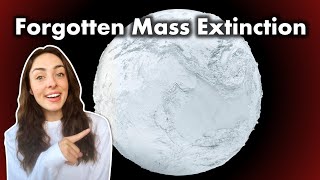
Several comments reflect a shared curiosity about Earth's climate history, like referencing the multiple Ice Ages during the Cryogenian and how Earth's climate shifted over time, with some users suggesting the article clarifies debates around ice ages. The tone ranges from informational to mildly enthusiastic, highlighting a general appreciation of the publication's relevance to understanding climate variability and Earth's geological past.
AgreementModerate agreement
Most discussions reference the accuracy of the article and its relevance, with some explicitly supporting or endorsing its insights, such as mentioning the importance of the evidence for multiple glaciations and climate stability.
InterestModerate interest
Posts show moderate interest, with some suggesting further exploration of cryogenic periods and climate dynamics, but few deeply analyze the scientific details.
EngagementModerate engagement
Participants engage by sharing additional resources, personal insights, or clarifying concepts related to Earth's ancient climate, indicating genuine curiosity and some depth.
ImpactNeutral impact
The collective discussions seem to influence understanding, though they primarily serve educational or curiosity-driven purposes rather than causing major shifts in scientific perspectives.
Abstract in brief
The text explains that during the Cryogenian period, Earth experienced two long-lasting global glaciations, called Snowball Earth events, where ice sheets covered oceans at all latitudes.
These glaciations were synchronized worldwide, and their details suggest a connection between volcanic activity, continental breakup, and climate changes, including a significant drop in atmospheric CO₂ levels.
The immense ice cover led to unique geological and biological features, such as icy ocean ecosystems, diverse deposits, and long-term impacts on organism evolution, still visible in fossils today.]
Fonti e immagini:
https://t.co/CXEUfHmzIn
https://t.co/bqVZ8rhdyd
https://t.co/u5b7PF9tJf
https://t.co/YCx0z4AS9q
https://t.co/wh7fX7g36w
MIchael L. Bender: Paleoclimate
FINE
Dec 2, 2024 · 20 likes · 1 share · 1,037 followersView post →
PB
Patrick Bogaart
@pwbogaart · X
“reverses the annual mean tropical atmospheric circulation, producing an equatorial desert” - dat bedoel ik dus. https://t.co/pfukrGosdl
Oct 19, 2021 · 1 like · 1,277 followersView post →
I
illep
@_illep · X
@Worsel66 @balls95652097 @ChrisMartzWX @ametsoc Just search for “Cryogenian” on google. You’ll find some interesting papers, like this one:
https://t.co/CFfvRm4Nsh
See? The icebox that Chris was whining about happened indeed multiple times.
@pleassavemykids @GeraldKutney Simple, do you know how much weaker the sun was in the precambrian?
The earth was receiving roughly 5% less sunlight, the earth had just gotten over one of it's deepest ice ages the aptly named Cryogenian era.
But now, the sun is 5% stronger.
https://t.co/FlVMv998n2
I've said this before, and I'll say it again: the fact that much of the Phanerozoic was ice-free implies the existence of ice-related tipping points and more than one stable climate state. (https://t.co/39NzXCpMmX) https://t.co/DFx7D8U8nP https://t.co/D2X06XH3Mi
During the Cryogenian period, Earth experienced two extensive global glaciations called Snowball Earth events, with ice covering oceans worldwide. These events were linked to volcanic activity, continental breakup, and…
This video explores how simple cells evolved into complex animals through cooperation, highlighting key scientific studies on multicellularity, Earth's climate history, and their impact on organism evolution.
During the Cryogenian period, Earth experienced two extensive global glaciations known as Snowball Earth events, with ice sheets covering oceans at all latitudes. These events influenced geology, biology, and climate…
The Big 5 mass extinctions within the last 540 million years are well-studied, but earlier events like the Cryogenian Snowball Earth over 700 million years ago caused major biological devastation, leading to significant…
Fonti e immagini:
https://t.co/CXEUfHmzIn
https://t.co/bqVZ8rhdyd
https://t.co/u5b7PF9tJf
https://t.co/YCx0z4AS9q
https://t.co/wh7fX7g36w
MIchael L. Bender: Paleoclimate
FINE
Dec 2, 2024 · 20 likes · 1 share · 1,037 followersView post →
I
illep
@_illep · X
@Worsel66 @balls95652097 @ChrisMartzWX @ametsoc Just search for “Cryogenian” on google. You’ll find some interesting papers, like this one:
https://t.co/CFfvRm4Nsh
See? The icebox that Chris was whining about happened indeed multiple times.
I've said this before, and I'll say it again: the fact that much of the Phanerozoic was ice-free implies the existence of ice-related tipping points and more than one stable climate state. (https://t.co/39NzXCpMmX) https://t.co/DFx7D8U8nP https://t.co/D2X06XH3Mi
@pleassavemykids @GeraldKutney Simple, do you know how much weaker the sun was in the precambrian?
The earth was receiving roughly 5% less sunlight, the earth had just gotten over one of it's deepest ice ages the aptly named Cryogenian era.
But now, the sun is 5% stronger.
https://t.co/FlVMv998n2