The group discusses how the research applies Grime's CSR framework to predict plant naturalization, with phrases like 'usefulness of the metric' and mentions of the research being 'next on the reading list,' reflecting curiosity and appreciation for its practical implications. The tone indicates an understanding of its potential significance for ecological studies and weed management.
AgreementModerate agreement
Most comments acknowledge the importance of the research, especially its focus on adaptive strategies in plant naturalization, indicating general support.
InterestModerate interest
Discussions show moderate curiosity, with interest centered on the potential applications and implications of the CSR framework.
EngagementModerate engagement
Posts include references to specific frameworks and methodologies, suggesting a balanced level of thoughtful engagement.
ImpactModerate impact
The conversations imply that the research could influence future ecological modeling and management, indicating a moderate impact.
Abstract in brief
The study investigates how adaptive strategies, based on Grimes' CSR framework (Competitors, Stress-tolerators, Ruderals), influence the naturalization of alien plant species worldwide.
Using data from 3004 plant species, the research finds that species with higher competitor and ruderal scores are more likely to become naturalized in multiple regions, while stress-tolerant scores show a weaker or no effect, especially in trees.
Overall, the results suggest that the CSR adaptive strategies metric is useful for predicting and understanding why certain alien plants successfully establish themselves outside their native ranges.]
Next on the reading list! @Junyao_Sun @NWillby
"Here, we tested the usefulness of a metric for quantifying Grime's seminal concept of adaptive strategies – competitors, stress‐tolerators and ruderals (CSR) – to explain plant naturalizations worldwide."
https://t.co/hujwMH4E6h
The Role of Adaptive Strategies in Plant Modelling
https://https://j.mp/2WeuAJM
#OpenAccess paper https://https://j.mp/2WeuAJM from @insilicoplants via @botanyone
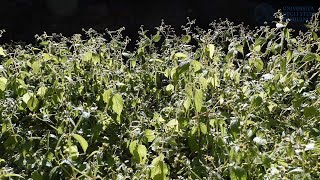
Part of a series showing invasive species nonnative and spreading in Europe. Native to central and south America, shaggy soldier is a serious agricultural weed for short-stature leaf crops such as lettuce. It is now…
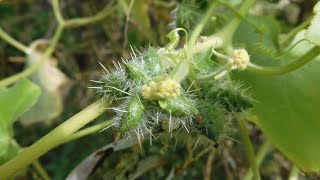
Part of a series on invasive species, this video examines the spread of the oneseed bur cucumber in Europe, highlighting its climbing habit, seed dispersal via animals, and effects on native vegetation. The plant's…
Part of a series on invasive alien species in Europe, this video discusses the Hottentot fig from South Africa, its spread on Corsica, hybridization issues, and traits like salt tolerance and CAM photosynthesis that aid…
Japanese knotweed is an invasive species capable of quickly spreading and dominating ecosystems, threatening native biodiversity. Its capability to regenerate from fragments and penetrate tough materials makes…
Part of a series examining invasive nonnative species in Europe. False Virginia creeper, native to North America, is spreading in urban and wild areas and is less aggressive than true Virginia creeper. It has been…
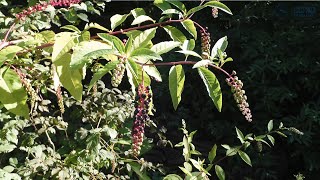
Part of a series on invasive species spreading in Europe, American pokeweed was introduced in the 17th century. It invades woodland understoreys, competes with native species like dogwood, and spreads via bird-eaten…
This study analyzes how genome size, plant strategies, native range, and human activity influence plant invasions worldwide. Human assistance significantly impacts naturalization and spread, with adaptive strategies and…
The Role of Adaptive Strategies in Plant Modelling
https://https://j.mp/2WeuAJM
#OpenAccess paper https://https://j.mp/2WeuAJM from @insilicoplants via @botanyone
Next on the reading list! @Junyao_Sun @NWillby
"Here, we tested the usefulness of a metric for quantifying Grime's seminal concept of adaptive strategies – competitors, stress‐tolerators and ruderals (CSR) – to explain plant naturalizations worldwide."
https://t.co/hujwMH4E6h