 JS
JSJens Svenning
@JCSvenning · X
PHYLACINE 1.2: The Phylogenetic Atlas of Mammal Macroecology https://t.co/oMMdwpCVo5
Jan 6, 2023 · 4 likes · 11,287 followers
View post →
Mentions
Extended reach
Total likes
Video views
AI synopsis
Discussions emphasize the significance of the PHYLACINE 1.2 database in mammalogy and ecology, citing examples like its role in analyzing mammal distributions since the Late Pleistocene and its importance for understanding human impacts. The tone ranges from supportive to inquisitive, as users explore its technical details and potential applications, reflecting a positive yet analytical stance.
Most posts acknowledge the value of PHYLACINE 1.2 for mammal research and conservation, indicating general support.
Discussions highlight curiosity about its applications, such as integrating fossil data and understanding historical impacts, showing strong interest.
Several posts reference specific datasets, collaborations, and methods, demonstrating active engagement with the content.
There is recognition of the database's potential to influence future ecological and conservation work, though some posts remain preliminary in tone.
PHYLACINE 1.2: The Phylogenetic Atlas of Mammal Macroecology https://t.co/oMMdwpCVo5
Data documenting global defaunation since the Late Pleistocene: PHYLACINE 1.2: The Phylogenetic Atlas of Mammal Macroecology https://t.co/RCyITkyQYI
@TZBirder @ymalhi The late-Quaternary mammal database is available via https://t.co/opK8xUt03E, and we'll soon release a further updated version #phylacine #megapast2future @BiochangeAU
.@mollykgrace presents #IUCN work integrating historic baselines into assessments of species recovery, w @AnaSLRodrigues et al. -key is assessing indigenous ranges; for estimates of these for all late-Quaternary mammals check PHYLACINE https://t.co/opK8xUt03E #RSfossil #greenlist
@bjenquist @OliverStringham @sckottie @BIEN_data @iPlantTNRS @BrianMaitner Agree - big issue in our @BIEN_data work - always tricky when merging biodiversity data! Also a major incentive for creating the Phylacine database for mammals https://t.co/opK8xUt03E
@tpoi I don't know about panTHERIA, but there is phylacine https://t.co/g07C0bic8J

Explore all five rhinoceros species, emphasizing the two with fewer than 100 individuals. The video includes studies on rhino demographics and anti-poaching tactics vital for their survival.
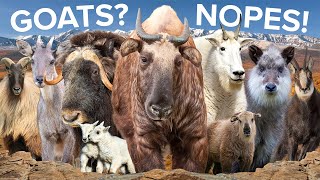
Explore the members of the Caprinae subfamily, focusing on species like the Mountain Goat, Chamois, Tahr, Takin, and Muskox, including their habitats and adaptive features.


Explore all 60 deer species across five continents, focusing on their distribution, physical traits, and conservation status, supported by detailed range maps and ecological data from the Phylogenetic Atlas of Mammal…
PHYLACINE 1.2: The Phylogenetic Atlas of Mammal Macroecology https://t.co/oMMdwpCVo5
@tpoi I don't know about panTHERIA, but there is phylacine https://t.co/g07C0bic8J
Data documenting global defaunation since the Late Pleistocene: PHYLACINE 1.2: The Phylogenetic Atlas of Mammal Macroecology https://t.co/RCyITkyQYI
PHYLACINE 1.2: The Phylogenetic Atlas of Mammal Macroecology https://t.co/Wbr6uPQx2t
RT @JCSvenning: @TZBirder @ymalhi The late-Quaternary mammal database is available via https://t.co/opK8xUt03E, and we'll soon release a fu…
@TZBirder @ymalhi The late-Quaternary mammal database is available via https://t.co/opK8xUt03E, and we'll soon release a further updated version #phylacine #megapast2future @BiochangeAU
@bjenquist @OliverStringham @sckottie @BIEN_data @iPlantTNRS @BrianMaitner Agree - big issue in our @BIEN_data work - always tricky when merging biodiversity data! Also a major incentive for creating the Phylacine database for mammals https://t.co/opK8xUt03E
.@mollykgrace presents #IUCN work integrating historic baselines into assessments of species recovery, w @AnaSLRodrigues et al. -key is assessing indigenous ranges; for estimates of these for all late-Quaternary mammals check PHYLACINE https://t.co/opK8xUt03E #RSfossil #greenlist
RT @BiochangeAU: @RasmusOPedersen's take on the role of mammals on the carbon cycle now and in the past at #IBSMalaga #megafauna #Rewilding…
 EB
EB EN
EN B
B AO
AO