March 2019 PMID 30246672

pH-mediated inhibition of a bumble bee parasite by an intestinal symbiont.

Evan C Palmer-Young, Thomas R Raffel, Quinn S McFrederick

Mentions

6
Peak: 3 in May 2022
across 2 sources since Mar 2019

Extended reach

18,297
potential audience

Total likes

12

Video views

380

Mentions per month

Mar 2019 – May 2022

Where it's discussed

  • X / Twitter4 posts
  • YouTube2 videos

AI synopsis

What people are saying

The collected discussions briefly highlight the central idea that gut bacteria like Lactobacillus protect bees by acidifying their guts, with phrases such as 'bees are able to fend off parasites' and references to bacteria making guts more acidic. The tone is straightforward and informational, reflecting a general acceptance of the research but without extensive critique or exploration of broader implications.

AgreementModerate agreement

Most discussions agree that gut bacteria play a beneficial role in protecting bees from parasites, supporting the article's findings.

InterestModerate interest

Posts show a moderate interest, often summarizing the main findings but not delving into detailed mechanisms or broader implications.

EngagementModerate engagement

There is some engagement through reposts and brief commentary about the significance of bacteria in bee health, indicating moderate involvement.

ImpactModerate impact

Discussions imply recognition that understanding gut bacteria could influence strategies for bee conservation, though the perceived impact remains tentative.

Abstract in brief

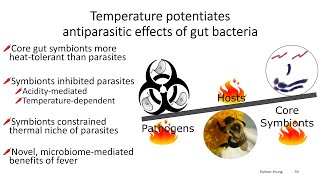
  • The study explores how a specific gut bacteria, Lactobacillus bombicola, can inhibit the bee parasite Crithidia bombi by producing lactic acid, which lowers the gut pH.
  • The inhibition is shown to be pH-dependent, with lower pH levels within the natural range in bees effectively reducing parasite growth, though other bacterial metabolites may also play a role.
  • These findings suggest that gut bacteria help protect bees from parasites by creating an acidic environment, and further research could investigate how this mechanism works in live bees to support their health.]

Top posts

Most liked on X and Bluesky
Parasitology
@JnlParasitology · X

3. pH-mediated inhibition of a bumble bee parasite by an intestinal symbiont. Bees are able to fend off parasites due to the protection of bacteria, which make their guts more acidic. https://t.co/ScBCL3a9nd https://t.co/tbi5YWUObV

Mar 6, 2019 · 1 like · 4,888 followers View post →
EurekaMag
@EurekaMag · X

PH-mediated inhibition of a bumble bee parasite by an intestinal symbiont https://t.co/kdhyU5FIrD

May 27, 2022 · 2 shares · 6,548 followers View post →
POPLINE
@POPLINE_org · X

RT @EurekaMag: PH-mediated inhibition of a bumble bee parasite by an intestinal symbiont https://t.co/kdhyU5FIrD

May 27, 2022 · 2 shares · 5,236 followers View post →
Science Alerts
@Science_Alerts · X

RT @EurekaMag: PH-mediated inhibition of a bumble bee parasite by an intestinal symbiont https://t.co/kdhyU5FIrD

May 27, 2022 · 2 shares · 1,234 followers View post →

All mentions

Science Alerts
@Science_Alerts · X

RT @EurekaMag: PH-mediated inhibition of a bumble bee parasite by an intestinal symbiont https://t.co/kdhyU5FIrD

May 27, 2022 · 2 shares · 1,234 followers View post →
POPLINE
@POPLINE_org · X

RT @EurekaMag: PH-mediated inhibition of a bumble bee parasite by an intestinal symbiont https://t.co/kdhyU5FIrD

May 27, 2022 · 2 shares · 5,236 followers View post →
EurekaMag
@EurekaMag · X

PH-mediated inhibition of a bumble bee parasite by an intestinal symbiont https://t.co/kdhyU5FIrD

May 27, 2022 · 2 shares · 6,548 followers View post →
Parasitology
@JnlParasitology · X

3. pH-mediated inhibition of a bumble bee parasite by an intestinal symbiont. Bees are able to fend off parasites due to the protection of bacteria, which make their guts more acidic. https://t.co/ScBCL3a9nd https://t.co/tbi5YWUObV

Mar 6, 2019 · 1 like · 4,888 followers View post →