
Synopsis of Social media discussions
The discussions largely appreciate the detailed explanation of how substances are cleared from the brain, with comments praising the description of the glymphatic system and the role of different transport pathways. The tone suggests curiosity and recognition of the importance of these mechanisms in neuroscience research, with examples like references to 'brain cleaning' and 'removal of water-soluble substances' illustrating engagement with the article's complex content.
Agreement
Moderate agreementMost discussions acknowledge the significance of the article, with many emphasizing the importance of understanding brain clearance pathways, though some remain cautiously optimistic.
Interest
High level of interestThe topic of brain clearance mechanisms clearly elicits high interest, as evidenced by numerous mentions of the glymphatic system and its implications.
Engagement
Moderate level of engagementParticipants frequently reference specific mechanisms like perivascular pathways and transporters, showing active engagement with the scientific content.
Impact
Moderate level of impactWhile some discussions highlight potential relevance for neurological diseases, overall perceived impact is moderate, reflecting ongoing debates and curiosity.
Social Mentions
YouTube
5 Videos
2 Posts
News
3 Articles
Metrics
Video Views
48,398
Total Likes
2,128
Extended Reach
182,926
Social Features
10
Timeline: Posts about article
Top Social Media Posts

Eric Lang M.D.
@CarlSmytheCells @CaryDavid722 @BeckyJohnson222 @adiosmuchachos4 @mass_rising @davideyoungmd @iXeno @hotmessmouse @dirk_fasshauer @AstroTurfTears @DopplerEffect93 @tenebra99 @webb0412 @BurgerLab12 @TheDrJon @ErinHNN @BGLTHMND @epigeneticallyj @cappsie @higgsri @jtmayes3 @Scary7Dr @Earthdriver @ChrisJohnsonMD @SkepticalMutant @PatrickSquirrel @exohalophiles @DemsRRacePimps @BlueLionBlog @FillmoreWhite @crabb_vicki @Alex_on_A14 @AndrewLazarus4 @ncdave4life @TMGFlorida @Roper_Lab @trillionofcells @ktibus @SecedeFromFools @TorySnyc @RonMortimer3 @lasikeyecenter1 @Hanky1844607 @Awithonelison @NoGlobalist778 @EugeneBu @AcampbelTeacher @EdwardDS15 @VickiCoyle10019 A brief explanation of mechanisms which remove substances from the brain.
https://t.co/FuQGJ6DyaD
view full post
Mg2+ Papi, the BowTied Mg2+
Elimination of substances from the brain parenchyma: efflux via perivascular pathways and via the blood–brain barrier https://t.co/oVY3HgiZhD
#GlymphaticSystem
view full post
Posts referencing the article


Intermittent Fasting Enhances Brain Waste Clearance and Cognitive Health
Intermittent fasting causes production of beta hydroxybutyrate which in turn helps improve the glymphatic flow of fluids in the brain. This leads to better waste clearance, potentially enhancing memory and staving off dementia.
March 13, 2023
4,458 views

Impact of Omega-3 and Exercise on Brain Health and Dementia Prevention
Continuing with our series about brain health and lifestyle choices today we will discuss omega3 fish oil and exercise Omega3 fish oil or omega3 polyunsaturated fatty acids n3PUFA have a rich presence in our brain tissue n3PUFA helps keep astrocyte from becoming activated Hence it reduces inflammation in the brain and also
March 29, 2023
2,742 views

Norepinephrine and the Glymphatic System's Role in Brain Health
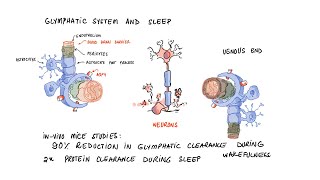
During wakefulness, norepinephrine increases, aiding alertness but reducing waste clearance. Sleep lowers NE levels, enhancing glymphatic activity and promoting brain health. Understanding this balance highlights lifestyle's impact on brain wellness.
March 24, 2023
2,694 views

Glymphatic System's Role in Sleep and Brain Waste Clearance
N3 sleep, characterized by delta waves, is the most restorative sleep phase. It enhances glymphatic convection, promoting waste clearance from the brain. This process is vital for brain health and detoxification.
March 13, 2023
2,249 views

Impact of APOE4 on Sleep, Brain Waste Clearance, and Alzheimer's Risk
Studies show APOE4 is linked to sleep disturbance before Alzheimer's symptoms and affects brain waste removal, leading to amyloid buildup. Understanding these mechanisms highlights potential lifestyle and therapeutic interventions.
March 17, 2023
1,890 views
-
@CarlSmytheCells @CaryDavid722 @BeckyJohnson222 @adiosmuchachos4 @mass_rising @davideyoungmd @iXeno @hotmessmouse @dirk_fasshauer @AstroTurfTears @DopplerEffect93 @tenebra99 @webb0412 @BurgerLab12 @TheDrJon @ErinHNN @BGLTHMND @epigeneticallyj @cappsie @higgsri @jtmayes3 @Scary7Dr @Earthdriver @ChrisJohnsonMD @SkepticalMutant @PatrickSquirrel @exohalophiles @DemsRRacePimps @BlueLionBlog @FillmoreWhite @crabb_vicki @Alex_on_A14 @AndrewLazarus4 @ncdave4life @TMGFlorida @Roper_Lab @trillionofcells @ktibus @SecedeFromFools @TorySnyc @RonMortimer3 @lasikeyecenter1 @Hanky1844607 @Awithonelison @NoGlobalist778 @EugeneBu @AcampbelTeacher @EdwardDS15 @VickiCoyle10019 A brief explanation of mechanisms which remove substances from the brain. https://t.co/FuQGJ6DyaD
view full postJanuary 15, 2025
3
-
Mg2+ Papi, the BowTied Mg2+
@Grimhood (Twitter)Elimination of substances from the brain parenchyma: efflux via perivascular pathways and via the blood–brain barrier https://t.co/oVY3HgiZhD #GlymphaticSystem
view full postJune 7, 2021
2
Abstract Synopsis
- This review discusses how substances are cleared from the brain through perivascular pathways and the blood-brain barrier, with total clearance measured as the sum of all routes, including those pathways that help wash out water-soluble substances.
- Evidence from experiments using labeled tracers like sucrose and albumin shows that perivascular clearance plays a role, especially for substances not eliminated across the blood-brain barrier, with different clearance rates depending on the substance's properties and transport mechanisms.
- Although small molecules like inulin and water cross the blood-brain barrier via passive diffusion with low clearance rates, specific transporters facilitate the removal of compounds like glucose and lactate, while ions such as Na and Cl mainly move through tight junctions, indicating complex processes involved in maintaining brain chemical balance.]
Eric Lang M.D.
@Lorenzo7127 (Twitter)