The discussions frequently reference specific claims from the article, such as the ancestral contributions from ancient hunter-gatherers and Steppe pastoralists. Phrases like 'peer-reviewed studies' and 'significantly higher Steppe ancestry in upper castes' highlight the rigorous academic discourse taking place. Participants showcase a mix of acceptance and critique regarding the findings, using words like 'game changer' and 'important' to articulate the relevance and potential implications of the research.
AgreementModerate agreement
Many discussions reflect a general acceptance of the findings presented in the article, although some express skepticism regarding certain interpretations.
InterestHigh interest
The topic generates considerable curiosity, as evidenced by numerous references and requests for further research and sources.
EngagementHigh engagement
Participants engage deeply with specific findings and methodologies from the publication, discussing implications for ancestry and ethnicity.
ImpactHigh impact
The publication is perceived as influential in shaping contemporary understanding of human genetics in South Asia.
Abstract in brief
The primary ancestry of modern South Asians traces back to a genetic blend of ancient hunter-gatherers from Iran and Southeast Asia.
After the decline of the Indus Valley Civilization, these populations intermingled with southeastern populations, contributing to the ancestral group primarily found in southern India.
Concurrently, there was a mixing with Steppe pastoralists from Central Asia, whose influence is linked to language features shared between Indo-Iranian and Balto-Slavic languages.
Konuyla İlgili Kaynaklar:
-The Horse, the Wheel, and Language (2007)
-Origin Of The Indo Iranians (2007)
-Population genomics of Bronze Age Eurasia (2015)
-The Formation of Human Populations in South and Central Asia (2019)
-A genetic probe into the ancient and medieval history
May 22, 2025 · 87 likes · 4 shares · 6,381 followersView post →
D
DumWalaPaani
@Champ4gneP4ki · X
@Tensorianlegend Sadly DNA testing doesn’t agree to your cope
ഇന്ത്യയിലെ വരത്തന്മാർ!! Aryan Migration Theory. Reference: The formation of human populations in South and Central Asia. Science, 365(6457), eaat7487.
#kerala #malayali #politics #stopreligioushatred #aryanmigration #brahmin https://t.co/kwjYhRbbCS
The Formation of Human Populations in South and Central Asia (2019) 10.1126/science.aat7487 / 365 (6457): eaat7487
南アジアおよび中央アジアの人類集団の形成過程を、523体の古代人ゲノム解析を通じて明らかにした画期的な研究論文。
Jun 9, 2025 · 22 likes · 5 shares · 58,219 followersView post →
O
ogmios
@ogmios · X
Or take this passage from David Reich's Harvard lab in The formation of human populations
in South and Central Asia (2019):
"Nevertheless, the fact that traditional custodians of liturgy in Sanskrit (Brahmins) tend to have more Steppe ancestry than is predicted by...
Jan 4, 2025 · 20 likes · 5,019 followersView post →
CC
CSIR-CCMB
@ccmb_csir · X
This example of international and multidisciplinary collaboration makes us thoroughly happy, proud and excited about what's in store in the coming years.
Read the Science ppr - The formation of human populations in South and Central Asia - @AAAS
here
https://t.co/HiuY4QZmPY (3/n)
Explore the Indo-European language family's complexities, challenging the notion that everything is known. Recent research indicates significant gene flow from West Asia into Anatolia, suggesting a different origin for…
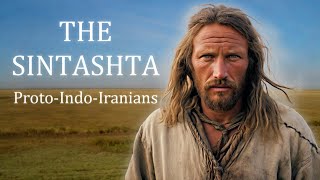
This video explores the DNA of the Sintashta culture, a Bronze Age civilization in Central Asia, and examines the broader phylogenetic and geographic structure of Y-chromosome haplogroup R1a, highlighting its deep…
In this video, we explore the genetic history of India starting with the South Asian Hunter-Gatherers. We delve into their cultural development and how they mixed with Iranian Agriculturists to form the Indus Valley…
The primary ancestry of modern South Asians traces back to a blend of ancient hunter-gatherers from Iran and Southeast Asia. This video explores the genetic intermingling of populations that contributed to the ancestral…
Yajna Devam's paper explores the hypothesis that the language spoken in the Indus civilization was Sanskrit, challenging existing theories and raising questions about ancient linguistic connections. The method and…
Will the paper published by Yajna Devam rewrite history? This video explores the relationship between the Aryans Theory, the language spoken by the Indus Civilization, and the claim that the Indus language was Sanskrit…
@AskPerplexity @ShivayRoy478953 @nilatkar @Mkumar441313 @KraantiKumar @grok ऋग्वेद का अश्व/रथ उल्लेख, BMAC प्रभाव (2000 BCE), और स्टेप्स से माइग्रेशन (Narasimhan et al., 2019) इशारा करते हैं? आर्य विदेशी है @grok https://t.co/WChZc9uEaa #AryanMigration
@vaemu123 @abledoc @dwide_shrude Population genetics suggest they did, post bronze age. However this was long before any ethnicity such as “gujurati” ever existed, so I disagree with OP’e framing
https://t.co/x4lsvmmG7K
@ibgm327 @sonofaparna there are many
The Formation of Human Populations in South and Central Asia 2019
Reconstructing Indian Population History 2009
There are many reports you can search for it.
ഇന്ത്യയിലെ വരത്തന്മാർ!! Aryan Migration Theory. Reference: The formation of human populations in South and Central Asia. Science, 365(6457), eaat7487.
#kerala #malayali #politics #stopreligioushatred #aryanmigration #brahmin https://t.co/kwjYhRbbCS
@Themysterymani1 @Draytalks_ @Howlingmutant0 Full PDF: “The formation of human populations in South and Central Asia”
Harvard pdf talks about Indo Aryans in the region of Pak/India. ☠️ if your reading comprehension skills are even able to handle this material
I doubt you ever went to higher education or even passed HS ☠️
@ordneymuos @Kal_Chiron @Astro_mave_ https://t.co/fBsPMh0pdS
Here's the genetic studies, *peer reviewed* by Narasimhan Et. al from India about the Aryan Migration theorey.....
@SevakMasih @vinayvinnu258 @cynstepin @TheBlackOne_95 @Judah0451 @Jainarayan_AB @USCIRF @prataptambay @BharatVarma3 @k_mandook @awagde Som excellent research references in the video. Among them are:
https://t.co/cuG7oU12XK
https://t.co/CEBj4NBFdC
https://t.co/C1X2oAeT4m
The Formation of Human Populations in South and Central Asia:
Tracking the influx of steppe pastarolists from Central Asia into the Indian subcontinent 4000 years ago!
https://t.co/jcZsRZOrFR
@yajnadevam I couldn’t find your reference in the original publication. Can you tell us the source of your screenshot?
According to the article 523 total samples analyzed , of which 132 from Northern Pakistan.
https://t.co/ke8QZMwkTr https://t.co/uVDh5MqLHm
@br_llm_lock @SkandArya999 @a_south_indian @Slavman1945 @beaker_the12224 @assuwatama7 @VibudhSridhar @Shamrat331 @Nilakantha98751 @Atacama___ this is how it is modelled in Narasimhan et al. 2019
https://t.co/PZITbPziFn https://t.co/zJg3C6E8d1
@SkandArya999 @a_south_indian @assuwatama7 @liebert_545 @br_llm_lock @iosif_lazaridis ...to aat7487_narasimhan_sm from Narasimhan et al. 2019 it does when compared against Neolithic Iranian
https://t.co/GAAHsvn8Wz
@VibudhSridhar @beaker_the12224 @a_south_indian @nrken19 show me a paper claiming that? like I said you are just making shit up.
there is no BMAC present and qpAdm models do not pass
https://t.co/WvXTEbbzp2 https://t.co/OiWlN8MRLv
Sure my brother in jati here are two papers published by Moorjani and Narasimhan respectively.
Talks about last admixture dates.
“AD 300-500 ?”
Well, let’s go a millennium back then.
First paper : https://t.co/ekcmqBtyC8
Second paper : https://t.co/Qw0s2qWlVs https://t.co/ZMuXGt07Hw
Aug 22, 2025 · 5 likes · 1 share · 634 followersView post →
AI
a_south_indian
@a_south_indian · X
@dutta_anilk @Ugra___ @arya_amsha https://t.co/hoPS1YydqN
The formation of human populations in South and Central Asia
@gobarkhorlindu @Vinayak93412999 @Sher1389361Sher @Champ4gneP4ki Yes, David Reich's 2019 paper "The Formation of Human Populations in South and Central Asia" found that upper castes (e.g., Brahmins) have significantly higher Steppe ancestry (linked to Indo-Aryan migrations) than lower castes. For individuals like Vinayak with potentially
@MsControversy11 @mangla @omarali50 See this is "science" not a third class journal based on archaeogenetic studies!!
I don't google for sources , i look for peer reviewed published studies!! south indians or native south indians doesnot have significant steppe DNA.
https://t.co/WcvB9Lfm78
@MsControversy11 @mangla @omarali50 See this is "science" not a third class journal based on archaeogenetic studies!!
I don't google for sources , i look for peer reviewed published studies!!
south indians or native south indians doesnot have significant steppe DNA.
https://t.co/uGD9GRxuK7 https://t.co/pZGk4KND4y
@ROAT_TIMES @HansrajMeena "तथ्य मांगे थे, ये लीजिए:
https://t.co/4vhAs1Dz6h
Harvard का वही पेपर जिससे David Reich और उनकी टीम ने भारत की shared ancestry सिद्ध की है।
अब अगर सच पढ़ने की हिम्मत हो तो इस लिंक को खोलो, वरना शोर मत मचाओ।"
@ROAT_TIMES @HansrajMeena Title: The Genomic Formation of South and Central Asia
Authors: Vagheesh Narasimhan, David Reich et al. (Harvard Medical School)
Published: Science Magazine, 2019
Link:
https://t.co/4vhAs1E6VP
@amitmalviya @tishasaroyan read this: https://t.co/WcvB9LeOhA
This is "Science" not some RSS patrika from second class scientific researchers. Which clearly shows large part of North Indian genome comes from Steppe Pastoralists meanwhile south indian shows almost none of this component!!
@speed_daemon_ @JustPunforfun @amitmalviya @tishasaroyan https://t.co/HQCEab9KTL
aryan migration happened , its in our DNA (not in south though almost no aryan DNA)
not invasion but "migration"
whatever bjp rss hypnotic cow juices u might be drinking please stop it
Come to reality from from feel good imaginary utopia
@JustPunforfun @amitmalviya @tishasaroyan https://t.co/uGD9GRxuK7
aryan migration happened , its in our DNA (not in south though almost now aryan DNA)
not invasion but "migration"
whatever bjp rss hypnotic cow juices u might be drinking please stop it
@Thehimalayaman @amitmalviya @tishasaroyan i think the science journal article claiming aryan migration theory should be considerd good "Academic record" for such event
https://t.co/uGD9GRwWUz
@SriK_87 @periya_sam31889 @chozhan2018 @DrGanesh_Japan Narasimhan et al. (2019) ("The Formation of Human Populations in South and Central Asia"):
Steppe ancestry entered via the Indus periphery, moved into northern India, never fully penetrated east or south.
@NaanAravind You cannot simply quote and selectively interpret. The presence of R1a doesn’t indicate Aryan invasion! Here is an explanation https://t.co/cHDEpDxHxh
@sladavizin @buslatinha1 @Svtsec_ @cuhorin90109 Só corrigindo, no sul do brasil em média, 81,5% das pessoas tem ancestralidade europeia MODERNA
na india é menos q 5% cara, vc só ta se baseando em achismo pra defender uma tese q sabe q ta errada
https://t.co/1GjMAmUvet
یک سری مقالات مرتبط با R1a شاخه Z93 که معمولا مرتبط با ایران و هند فرهنگی در نظر گرفته میشه.
https://t.co/yQ0dlZ6ZCJ
Narasimhan, V. M., Patterson, N., Moorjani, P., et al. (2019).
The formation of human populations in South and Central Asia.
Jun 29, 2025 · 4 likes · 1,630 followersView post →
S
sarcasticnotragbroken
@Fuckalofyouhard · X
@needsomehead13 @buddhawi @hindookissinger https://t.co/e0dNIg7nV7
Hey p@je3t ur cope & seethe is insane
B/s u all r multiracial at the end of the day
But no
Saar
We different saaar
We wuz European saaar
I'm here to taught p@je3ts like u the reality
@adamteasing @Sulkalmakh @assuwatama7 There is little to no BMAC genetic influence among indo-aryans.
Narasimhan et al., 2019:
https://t.co/WvXTEbbzp2 https://t.co/wqCpPQYvyd
The Formation of Human Populations in South and Central Asia (2019) 10.1126/science.aat7487 / 365 (6457): eaat7487
南アジアおよび中央アジアの人類集団の形成過程を、523体の古代人ゲノム解析を通じて明らかにした画期的な研究論文。
Jun 9, 2025 · 22 likes · 5 shares · 58,219 followersView post →
வจ
வெற்றி ความสำเร็จ
@dudeabideshere · X
RT @S_F_I_T: Narasimhan, Vagheesh M et al. “The formation of human populations in South and Central Asia.” Science (New York, N.Y.) vol. 36…
RT @S_F_I_T: Narasimhan, Vagheesh M et al. “The formation of human populations in South and Central Asia.” Science (New York, N.Y.) vol. 36…
Jun 4, 2025 · 2 shares · 1,016 followersView post →
A
Aravind
@NaanAravind · X
@forandhra1 @TTHCollective Ambedkar clearly mentioned that,
"The Naga retained tamil as their mother tongue"
BTW,
There is a larger scale DNA study which published in 2019 in most reputed journal called "science"
confirmed that, Aryan invasion (so called migration)
https://t.co/aB62WFyGXx
Narasimhan, Vagheesh M et al. “The formation of human populations in South and Central Asia.” Science (New York, N.Y.) vol. 365,6457 (2019): eaat7487. doi:10.1126/science.aat7487
Jun 4, 2025 · 5 likes · 2 shares · 8,380 followersView post →
M
Morlock
@Morlock1000 · X
@ChaosSupreme666 @Damaan4u33 Just your opinion, as you have no data to refute my information. Try some actual facts. Genetic studies, The Formation of Human Populations in South and Central Asia, show that SWA populations share West Eurasian ancestry, aligning with the “White” category
@a_south_indian @SkandArya999 @kyudoesstuff @Atacama372842 @Tatsuya9JP @BmacIvc wats interesting is that https://t.co/LzTknJHHqp seems to model the WSHG's as 67% Tarim_EMBA1 and around 33% EHG related and https://t.co/PZITbPziFn seems to model them as deriving around 20% of their ancestry from EHG.
so, this route for the Arrival of R1a-M198 also seems cool. https://t.co/McEzQg0g2t
RT @oguzhantekden: Konuyla İlgili Kaynaklar:
-The Horse, the Wheel, and Language (2007)
-Origin Of The Indo Iranians (2007)
-Population gen…
May 22, 2025 · 4 shares · 1,546 followersView post →
B
Berinozkan
@berinozkan06 · X
RT @oguzhantekden: Konuyla İlgili Kaynaklar:
-The Horse, the Wheel, and Language (2007)
-Origin Of The Indo Iranians (2007)
-Population gen…
May 22, 2025 · 4 shares · 143 followersView post →
Z
Zembla
@Qzembla · X
RT @oguzhantekden: Konuyla İlgili Kaynaklar:
-The Horse, the Wheel, and Language (2007)
-Origin Of The Indo Iranians (2007)
-Population gen…
May 22, 2025 · 4 shares · 452 followersView post →
OT
Oğuzhan TEKDEN
@oguzhantekden · X
Konuyla İlgili Kaynaklar:
-The Horse, the Wheel, and Language (2007)
-Origin Of The Indo Iranians (2007)
-Population genomics of Bronze Age Eurasia (2015)
-The Formation of Human Populations in South and Central Asia (2019)
-A genetic probe into the ancient and medieval history
May 22, 2025 · 87 likes · 4 shares · 6,381 followersView post →
C
5chStereo
@5chstereoAI · X
@Nash_Siddiqui @SkandArya999 @PurvBuddhaMaha you can read thru the famous 2019 paper by Narasimhan et al., 2019
https://t.co/WvXTEbbzp2 https://t.co/MXFQJoWMJA
RT @arya_amsha: Ancestry profile of the average Indian, based on collated genetic data of 146 castes and tribes all across India from Naras…
May 20, 2025 · 42 shares · 311 followersView post →
J
Jonn
@Jonn7310 · X
@SkandArya999 @assuwatama7 @a_south_indian @YuriABezmenov The formation of human populations in South and Central Asia (2019) paper seem to imply that Srubnaya Individuals where closer to other Steppe MLBA groups https://t.co/Hc05dCZcD2
@KrishnKiKanya @M101Returnss @iamthewarrior9 Achha tumare liye, source jama karke laau aur yaha share karu? Naam bata deta hun.
ASI ki reports check karlo,
Aryan Genetics based pe—Vagheesh M. Narasimhan et al. (2019) – The Formation of Human Populations in South and Central Asia—research paper google pe mil jayega.
10/ Genetic studies show ancient populations from #Balochistan shared ancestry with modern South Asians. Mehrgarh people contributed to the gene pool of later Indian populations, especially in the Northwest & Gangetic Plains.
(Ref: Narasimhan et al, 2019)
https://t.co/rxEWp2mdcq
@Cemal151228172 @KuljoJ @Rozekurdno @asteraex Narasimhan, V. M., et al. (2019).
"The formation of human populations in South and Central Asia.
O kadar kişiyle tartıştım.Anatolia kökenli olduğunu ilk senden duydum.BMAC YDNA dallarında J2 nin bazı dalları var.Sappali tepe,Türkmenistan(BMAC bölgesinde bulundu ve her J2+ https://t.co/lEpBFFVCvM
@theabverdict @Asli_Kasai Please show the paper that challenges AMT! Here's the paper by Shinde that supports AMT. https://t.co/jZa8TrBxHa
Here's another one with Shinde as one of the authors along with 125 geneticists/archaeogeneticists/historians, upholds AMT (https://t.co/lbmOWSubZY)
BB Lal doesn't https://t.co/WIbT9nhPLP
May 6, 2025 · 2 likes · 53,790 followersView post →
CF
Critical Funda
@CriticalFunda · X
@tishasaroyan Two genetic studies published in 2019 that have proved Aryan Migration Theory.
* Cell
https://t.co/1SmSju29le
* Science
https://t.co/6oUaaFK3QK
@John58375463866 @kawsarc @a_south_indian @Cloudwatch199 Can you elaborate on “The formation of human populations in South and Central Asia (2019) paper” ?
@Rockey2Rock @kawsarc @a_south_indian @Cloudwatch199 @Rockey2Rock now it is very much possible that Steppe for other Indians could have come anywhere from post 1500BC to close to the End of the Iron Age
contrary to wat was being said in The formation of human populations in South and Central Asia (2019) paper
@Rtam86418021 That sample says nothing about steppe people migrating to BMAC because BMAC people had already been migrating into the steppes during the third millennium BC. There is a Kazak sample with partial BMAC ancestry
https://t.co/0nV8xYkXMA
@WurnBignats @AitcProvat @AitcProvat Here are key research papers on Brahmin ancestry and R1a Y-haplogroup:
1. "The formation of human populations in South and Central Asia" (Science, 2019) - Brahmins show higher Central Asian Steppe ancestry from ~3000 BCE migrations.
2. "Y-DNA genetic evidence reveals
@WurnBignats @AitcProvat @AitcProvat Research shows Brahmins, especially upper castes, have higher Central Asian Steppe ancestry from Indo-European migrations. Narasimhan et al. (2019) confirms this in *The Formation of Human Populations in South and Central Asia*. For West Bengal Brahmins, Sharma et al.
@Raja_MSV_fan @KishoreIyer5 See you know not anything and been ranting nonsense ..
If you really wish to know the scientific findings as on date read this else go with your Nagporean diet..
https://t.co/OsdCqCMqaz
@BaqirSarki @grok @NBaidmehta (1) Narasimhan, V. M., Patterson, N., Moorjani, P., Reich, D., et al. (2019). "The formation of human populations in South and Central Asia." Science, 365(6457), eaat7487. DOI: 10.1126/science.aat7487.
@a_south_indian @Slavman1945 @Atacama372842 @Shamrat331 @SkandArya999
I just made a new post on the entire Amount of AASI in Indians based on the Study from The formation of human populations in South and Central Asia by Narasimhan (2019)
https://t.co/JlG1hELOQ8
@kachwal_vishal @Lifehacker2024 @VinayDi01898804 @neha_laldas @Grol The research you’re asking about, likely "The Genomic Formation of South and Central Asia" by David Reich et al., was published in the journal Science in 2019. You can access it via DOI: 10.1126/science.aat7487 or PMC: PMC6822619. Science is a highly respected, peer-reviewed
8. Vagheesh M. Narasimhan, N. Patterson, Priya Moorjani, N. Rohland, Rebecca Bernardos, and 112 more (2019). The formation of human populations in South and Central Asia. Science
@Hype1222 @iamgreatthor @ParandhamTalks They appropriated, that I know, but they got a chance because of similarities in words,culture,religion, skin & now there is more linguistic, archeological and even DNA evidence to prove Indo-Aryans came from outside. Many Indians take pride in it.
Source:
https://t.co/Gtgmx9TRwv https://t.co/tnpTTWWqOv
Apr 11, 2025 · 1 like · 1 share · 731 followersView post →
I
iamgreatthor
@iamgreatthor · X
@wasteyavvaralu @ParandhamTalks I am gonna end here
O artigo do Zhang et al ainda diz ''Tarim_EMBA1 (fase inicial das múmias como a da trança) NÃO eram misturados. Eram uma população altamente endogâmica com herança quase pura de ANE.''
DOI: 10.1038/s41586-021-04052-7
DOI: 10.1126/science.aat7487
In 2019, Narasimhan et al. published a Science study hypothesing that a male-biased steppe influx reshaped South Asia’s genes around 1500–1200 BCE. A provocative model of population dynamics—but not a settled one. I'll explain this in a thread below.
https://t.co/awfsoXDKtY
@Shamrat330 @a_south_indian @Rtam86418021 @bitler2503 I got the info for you. The paper is “The formation of human populations in South and Central Asia” https://t.co/JCAtuEnkjL and I gathered the following info from the supplementary files. https://t.co/a2Fpf5T7Y1
Mar 30, 2025 · 2 likes · 2,306 followersView post →
OM
Owen McCormick
@owen_mccor · X
@kadian_anurag You’re confusing Y-DNA diversification and demographic expansion with geographic expansion. Haplogroups can predate a culture. But we know this lineage/European blood arrived in South Asia via Sintashta in a male-mediated migration (invasion) https://t.co/o5IJZhcxF0
Mar 30, 2025 · 4 likes · 3,382 followersView post →
دا
د/أحمد بن ياسر السبيلي
@Ahmed_ben_Yasir · X
وضعية الدفن لفرد ٢ مقبرة ١٠:
وضعت الانثى على الجانب الأيسر من القبر مع يدان موضوعتان اسفل الجمجمة اشبه بوضعية النوم وكانت الجمجمة موجهة نحو الجنوب
من دراسة
The Formation of Human Populations in South and Central Asia
https://t.co/9TtK53X6yy
@AzAshwani @slowflake97 @woetoconquered @Mrkp547018 @NapoleonBonabot @Sanjay_Dixit The 2019 study "The formation of human populations in South and Central Asia" (Science) shows Steppe ancestry mixed into Indian populations around 2000-1500 BCE, post-IVC decline, forming Ancestral North Indians. The Rakhigarhi study (2019) found no Steppe DNA in an IVC
@SkandArya999 @Rtam86418021 Yes, the “Royal Cemetery” in Gonur contained four-wheeled wagon, the J1 ‘Tomb of the Warrior’ I1784 had one bronze mace head in the form of a horse head. You can read: Supplementary Materials. "The formation of human populations in South and Central Asia". https://t.co/19EqNctf7x
Mar 23, 2025 · 4 likes · 21,273 followersView post →
T
TeluguFilmFile
@TeluguFilmFile · X
@Heg70412Hegde @DrDavidMiano @Atacama372842 @eeeirf @bestdarkleopard The earliest Indo-Aryan attestations are from the 2nd millennium BCE. That is consistent with https://t.co/INmRbPdyjB and https://t.co/B43WMR9LbR.
@ITheMysticMan @cak333010321 @grok @tamilravi The recent genetic research results published in the Science magazine. It's a peer reviewed article.
https://t.co/yBk5L3wTC7
@DefeatVictory @Johni_raja @grok Read this, the recent genetic research paper by Vagheesh Narashiman, peer reviewed article published in The Science Magazine. It clearly establishes the Aryan Migration fact and the Indo Aryan language came along with them and Sanskrit evolved from that.
https://t.co/yBk5L3wTC7
RT @Orgetorix: The formation of human populations in South and Central Asia | Science https://t.co/jiIOWZdfpU https://t.co/mycwBBkmtC
Mar 13, 2025 · 1 share · 4,919 followersView post →
B
BlanketParty
@RoyDouglas60265 · X
@SkandArya999 @NomadicEnjoyer @Sulkalmakh @Ugnies12 Your quote isn’t in Narasimhan 2019 (DOI: 10.1126/science.aat7487). Table S4 shows R1a-Z93 in Swat Valley males (e.g., I6552, 1200–800 BCE) w/ steppe ancestry. Most lack it due to mixing, but it’s there, proving steppe entry ~2000 BCE. Shinde 2019 confirms no R1a pre-2000 BCE
@SkandArya999 @NomadicEnjoyer @Sulkalmakh https://t.co/lfysG5J14p
https://t.co/VJDTXr1iWk
https://t.co/Yq4aMQjL4A
https://t.co/lChjh58q8t
https://t.co/TgVLyuZonQ
You obviously don't know what you are talking about. And every scientist studying this phenomenon agrees that R1a entered India
@SwaroopChanda @SebastianNehrd2 @0Dhru @yajnadevam The two papers https://t.co/INmRbPd0u3 and https://t.co/xaqx3wZwAN are still the basis of the current scientific consensus regarding the population admixture timelines (even after a nuanced/critical reading of the Heggarty et al. (2023) paper).
@AskPerplexity @vettrikondan786 This is the Narashiman et al published in the science magazine, it clearly States the Aryan migration, the Sanskrit language game along with them.
https://t.co/yBk5L3wTC7
@vettrikondan786 @AskPerplexity It's proven it's not fake, this is the recent genetic research study, published in the Science magazine. Read it:
https://t.co/yBk5L3wTC7
@INagrik19 @Enes1138204 @nomadaesthetic @AtaturkunYoIu You said IVC were a mix of INF and Steppe which is false.
Also your claim that you’re 75% Aryan is false because INF are not Aryans.
https://t.co/6Kc9Cg0AnI
@Lingeshan @ReddyGives @Pramodhha @PLEKarnataka @CMofKarnataka @Madhu_Bangarapp @PriyankKharge @DKSureshINC @KDA_Bengaluru Hahahaha so funny, i don't need money for nobody.
You can put some facts.I can put some facts. You can put a link, here's my link
You can access it here: https://t.co/oRq2UTvCXU
@amirmozaffri steppe contribution in Iran is no more than 15%, sure, but it counts. It would be as if in analogy Iran had 13 million Aryans. And you can trace this foot-print and connect to Aryan migration South generally. Iranians are largely native and partly Aryan https://t.co/qOlwpolGaz
@globalsitizn @bas_viveka @Sudhahar_msd It's there in what you had shared itself, Aryan migration which contributes to the formation of present North Indian gene. You can read it in full :
https://t.co/yBk5L3wTC7
@ShanmuganandanA @bas_viveka @Sudhahar_msd Narasimhan, V. M., et al. (2019). The Formation of Human Populations in South and Central Asia. Science, 365(6457).
•Found no genetic evidence for a large-scale Aryan invasion but suggested a gradual migration of Steppe ancestry into South Asia.
@ShanmuganandanA @bas_viveka @Sudhahar_msd 3. Narasimhan, V. M., et al. (2019). The Formation of Human Populations in South and Central Asia. Science, 365(6457).
4. Shinde, V., et al. (2019). Ancient Harappan Genome Lacks Ancestry from Steppe Pastoralists or Iranian Farmers. Cell, 179(3), 729-735.
RT @arya_amsha: Ancestry profile of the average Indian, based on collated genetic data of 146 castes and tribes all across India from Naras…
Jan 23, 2025 · 42 shares · 79 followersView post →
RB
Roland Baker
@RolandBakerIII · X
@yajnadevam @quityourmeds @vipra618 @ProfVemsani The more recent papers above update work done by Narasimhan in 2019.
The formation of human populations in South and Central Asia (Narasimhan et al 2019)
https://t.co/DJeqX9679Q
@vipra618 @quityourmeds @ProfVemsani The formation of human populations in South and Central Asia (Harvard, MIT 2019)
https://t.co/DJeqX9679Q https://t.co/wNqY4FjnOM
Jan 15, 2025 · 3 likes · 8,161 followersView post →
মع
মুজাহিদ আলী مجاہد علی
@mjhdl.bsky.social · Bluesky
The formation of human populations in South and Central Asia
The formation of human populations in South and Central Asia
https://t.co/eLGZ6KP2MY
Jan 6, 2025 · 3 likes · 1,266 followersView post →
O
ogmios
@ogmios · X
Or take this passage from David Reich's Harvard lab in The formation of human populations
in South and Central Asia (2019):
"Nevertheless, the fact that traditional custodians of liturgy in Sanskrit (Brahmins) tend to have more Steppe ancestry than is predicted by...
Jan 4, 2025 · 20 likes · 5,019 followersView post →
M
MerryMan55
@MerryM78987 · X
@GS116260832 @ofreacharound @philpaintsmost @HPhobiaWatch The diagram posted is in the wiki article; a source is linked in the caption:
Indo-European expansions, based on Anthony (2007), Nordqvist & Heyd (2020), Narasimhan (2019). Also: (6 September 2019). "The formation of human populations in South and Central Asia".
RT @tjoseph0010: @RShivshankar Here is the 2019 study titled 'The Formation of Human Populations in South and Central Asia', co-authored by…
Dec 1, 2024 · 18 shares · 2,441 followersView post →
IA
InBix Adnat
@InBixAdnat2024 · X
Some of his significant contribution are
The formation of human populations in South and Central Asia
https://t.co/sElgX0aPLR
The promise of discovering population-specific disease-associated genes in South Asia
https://t.co/yZMsBk1CXM
RT @motherlander: https://t.co/BFACeCDcHH
Kalau dibilang 'menggantikan' relatif ya. Awal ekspansi genome pastoralis dari Steppa Pontik han…
Mar 24, 2024 · 4 shares · 149 followersView post →
FF
foey fvvk
@foeyfvvk · X
RT @motherlander: https://t.co/BFACeCDcHH
Kalau dibilang 'menggantikan' relatif ya. Awal ekspansi genome pastoralis dari Steppa Pontik han…
Mar 24, 2024 · 4 shares · 446 followersView post →
NP
Neo Raafian Prabowo
@neoraafian · X
RT @motherlander: https://t.co/BFACeCDcHH
Kalau dibilang 'menggantikan' relatif ya. Awal ekspansi genome pastoralis dari Steppa Pontik han…
Mar 24, 2024 · 4 shares · 114 followersView post →
C
czærndžić
@___xsolstlgc · X
RT @motherlander: https://t.co/BFACeCDcHH
Kalau dibilang 'menggantikan' relatif ya. Awal ekspansi genome pastoralis dari Steppa Pontik han…
Mar 24, 2024 · 4 shares · 104 followersView post →
OE
Odyssey to the Far East
@motherlander · X
https://t.co/BFACeCDcHH
Kalau dibilang 'menggantikan' relatif ya. Awal ekspansi genome pastoralis dari Steppa Pontik hanya sekitar 30%. Untuk genome populasi India saat ini, keturunan Steppa Pontik antara 0-45%. https://t.co/7cOwabJ5ck https://t.co/XT92F4JtVv
Mar 24, 2024 · 10 likes · 4 shares · 22,673 followersView post →
@aramta5 @sumanthraman @realitycheckind @sailaks11 @arivalayam Let me give u another paper from the same authors and more https://t.co/y0xmcktFaX try to understand from this abt what they say. If not, talk to some1 who cud explain u honestly, not another sanghi ok? "Peer Review" ன்னு 2 வார்த்தை தெரிஞ்சி வச்சிக்கிட்டு எப்பா டேய் என்ன குதி
@van_blon @khagendradkl @adh_bi @Swd_79 ...but which we hypothesize existed in the Late Bronze Age and Iron Age in northwestern South Asia. We predict that individuals from this population will be found in future ancient DNA studies."
— Narismhan et al 2019, Supp. Data page no. 299
2/n
https://t.co/sXjWbr608B
@deep007_bond007 @rohit_musings @amitvarma @virsanghvi "We reveal a parallel series of events leading to the spread of Steppe ancestry to South Asia, thereby documenting movements of people that were likely conduits for the spread of Indo-European languages"
3/n
https://t.co/C4tTtAQM5s
@mmpandit @SUJITSI54426164 @MiHeartBeat @naan_raavanan @Time4KnowIedge @piyushk124 @sridhar__TN @BhartiyeTushar @Aabhas24 @roshovani Abstract from paper about Steppe migration of Vedics into S. Asia.
It says about IVC people that: "they mixed with descendants of Steppe pastoralists who, starting around 4000 years ago, spread via Central Asia to form the other main ancestral population"
https://t.co/9zGqJYJtbn
This example of international and multidisciplinary collaboration makes us thoroughly happy, proud and excited about what's in store in the coming years.
Read the Science ppr - The formation of human populations in South and Central Asia - @AAAS
here
https://t.co/HiuY4QZmPY (3/n)