 LB
LBLyanne Brouwer
@LyanneBrouwer · X
Good to see this out, great collaboration with Simon Griffith! Extra‐pair paternity in birds https://t.co/7NiIvr6gUu
Oct 9, 2019 · 10 likes · 3 shares · 77 followers
View post →
Mentions
Extended reach
Total likes
Video views
AI synopsis
Discussions demonstrate a balanced mix of curiosity and support, with posts emphasizing the geographic variability of extra-pair paternity and its evolutionary benefits. Words like 'must-read', 'interesting', and mentions of collaborative efforts reflect enthusiasm for the research's relevance. The tone combines academic interest with an acknowledgment of the ongoing nature of this field, indicating appreciation for new insights without suggesting a groundbreaking shift in understanding.
Most posts acknowledge the publication as an important or interesting contribution to understanding bird mating behaviors, with some expressing support or highlighting its relevance to broader theories.
The discussions display a high level of curiosity, especially around geographic variation, scientific methods, and evolutionary implications, reflecting engagement with the research topic.
Many posts cite specific aspects like the macroecology, benefits of extra-pair paternity, and methodological updates, showing participants are actively processing and debating the findings.
While some posts note the importance of deeper data and potential influence on future studies, overall, the perceived impact appears significant but not revolutionary, more aligned with ongoing scientific dialogue.
Good to see this out, great collaboration with Simon Griffith! Extra‐pair paternity in birds https://t.co/7NiIvr6gUu
If you're curious about extra-pair paternity in birds (why it exists, how it has been studied) you can check out this review paper! And if you're studying bird populations to ask evolutionary questions, check for EPP! It's so much cheaper to do now pmc.ncbi.nlm.nih.gov/articles/PMC...
A real treat and a must-read for those working with EPP in birds. We need more data for Neotropical species! #ornithology #evolution #birds @molecology @molecologist The macroecology of extra‐pair paternity in birds https://t.co/2gBdxT8qo7
¿Y por qué ocurre esto? Si está tan extendido entre las aves será porque aporta algún tipo de beneficio. Hay varios factores que entran en juego, como el aumento de la diversidad genética, la posibilidad de escoger a la mejor pareja, etc. https://t.co/0qfRMaAQl4
New story on the #AvianHybrids blog! How does the frequency of extra-pair paternity in birds vary across the globe? https://t.co/jsFepLMwkZ Based on the @molecology paper by Cristina-Maria Valcu and her colleagues | #ornithology
New story on the #AvianHybrids blog! How does the frequency of extra-pair paternity in birds vary across the globe? avianhybrids.wordpress.com/2024/05/08/h... Based on the Molecular Ecology paper by Cristina-Maria Valcu and her colleagues | #ornithology #birds


Animals exhibit homosexuality as a natural and advantageous behavior. This video explores the presence of same-sex behaviors in wild species from a biological and ecological perspective, emphasizing the normalcy of…
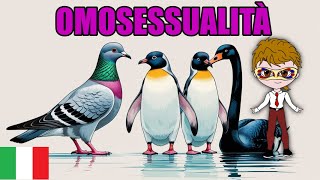
This video explains how homosexuality is common in nature and offers ecological and biological advantages. It aims to clarify misconceptions and highlight the natural occurrence of same-sex behavior among animals.

Animals in nature display homosexuality, which is biologically normal and advantageous. This video explains the presence of homosexuality in wild species from an ecological and evolutionary perspective, clarifying…
If you're curious about extra-pair paternity in birds (why it exists, how it has been studied) you can check out this review paper! And if you're studying bird populations to ask evolutionary questions, check for EPP! It's so much cheaper to do now pmc.ncbi.nlm.nih.gov/articles/PMC...
RT @Jente_O: New story on the #AvianHybrids blog! How does the frequency of extra-pair paternity in birds vary across the globe? https://t…
RT @DMcD_Advocate: How does the frequency of extrapair paternity in birds vary across the globe https://t.co/umkdmTysBZ
How does the frequency of extrapair paternity in birds vary across the globe https://t.co/umkdmTysBZ
RT @Jente_O: New story on the #AvianHybrids blog! How does the frequency of extra-pair paternity in birds vary across the globe? https://t…
How does the frequency of extra-pair paternity in birds vary across the globe? https://t.co/lkvY933rNo
RT @Jente_O: New story on the #AvianHybrids blog! How does the frequency of extra-pair paternity in birds vary across the globe? https://t…
New story on the #AvianHybrids blog! How does the frequency of extra-pair paternity in birds vary across the globe? avianhybrids.wordpress.com/2024/05/08/h... Based on the Molecular Ecology paper by Cristina-Maria Valcu and her colleagues | #ornithology #birds
New story on the #AvianHybrids blog! How does the frequency of extra-pair paternity in birds vary across the globe? https://t.co/jsFepLMwkZ Based on the @molecology paper by Cristina-Maria Valcu and her colleagues | #ornithology
12/15 Conclusions: c) Datasets classifying species according to restrictive definitions should be revised according to an unbiased calculation of reproductive sharing. Unfortunately, we are not the first to point this out… https://t.co/yMNasaejP8
12/15 Conclusions: c) Datasets classifying species according to restrictive definitions should be revised according to an unbiased calculation of reproductive sharing. Unfortunately, we are not the first to point this out… https://t.co/lqC64zly7u https://t.co/yMNasaejP8
@allesevolution Extra-Pair-Paternity. Letztlich der Sinn allen Fremdgehens. Wie sehr da hinsichtlich Begründungen im Dunklen gestochert wird, sieht man exemplarisch an der diesbzgl. bestuntersuchten Vogelwelt https://t.co/8GT8IOmLj7
RT @EBoteroD: A real treat and a must-read for those working with EPP in birds. We need more data for Neotropical species! #ornithology #ev…
A real treat and a must-read for those working with EPP in birds. We need more data for Neotropical species! #ornithology #evolution #birds @molecology @molecologist The macroecology of extra‐pair paternity in birds https://t.co/2gBdxT8qo7
¿Y por qué ocurre esto? Si está tan extendido entre las aves será porque aporta algún tipo de beneficio. Hay varios factores que entran en juego, como el aumento de la diversidad genética, la posibilidad de escoger a la mejor pareja, etc. https://t.co/0qfRMaAQl4
The macroecology of extra‐pair paternity in birds https://t.co/q2cMdA8wUa | Molecular Ecology | #ornithology
The macroecology of extra‐pair paternity in birds https://t.co/2Cid7wZOKo
The macroecology of extra-pair paternity in birds | Molecular Ecology https://t.co/rL86MJ1lkW #ornithology
The macroecology of extra-pair paternity in birds https://t.co/XqTeLcGvFt
The macroecology of extra-pair paternity in birds https://t.co/ylFtYLbG9I
(3/3) “As an intern, I read countless scientific papers on extra-pair paternity in birds,” Tran said. “Wesleyan helped me prepare for this role by fleshing out my communication skills, sense of professionalism and confidence.” #WWVC
The proportion is highest in tropical birds (~20% of chicks!) & is particularly common in waxbills like Red-billed Firefinch https://t.co/qcCSrPCk87. If ♂️s see ♀️s mating with others, they may reduce care to chicks, so there is a cost. Why ♀️s solicit matings is interesting. 4/5 https://t.co/HDkMGFeELZ
New Paper: Extra‐pair paternity in birds. In: Molecular Ecology http://hdl.handle.net/20.500.11755/639cadc7-3f42-48bf-afe5-713251a03b75
New Paper: Extra‐pair paternity in birds. In: Molecular Ecology https://t.co/IDtFzqhTWo
Extra‐pair paternity in birds https://t.co/oIy82YkJtY
RT @Camb_BEgroup: Extra‐pair paternity in birds https://t.co/UvQOmgFxNL #ornithology '#paternity
RT @Jente_O: Extra‐pair paternity in birds https://t.co/MbuDJekehE #ornithology
Extra‐pair paternity in birds https://t.co/okw2d68r39 | Molecular Ecology | #ornithology
RT @LyanneBrouwer: Good to see this out, great collaboration with Simon Griffith! Extra‐pair paternity in birds https://t.co/7NiIvr6gUu
RT @LyanneBrouwer: Good to see this out, great collaboration with Simon Griffith! Extra‐pair paternity in birds https://t.co/7NiIvr6gUu
Extra‐pair paternity in birds https://t.co/UvQOmgFxNL #ornithology '#paternity
RT @LyanneBrouwer: Good to see this out, great collaboration with Simon Griffith! Extra‐pair paternity in birds https://t.co/7NiIvr6gUu
Good to see this out, great collaboration with Simon Griffith! Extra‐pair paternity in birds https://t.co/7NiIvr6gUu
Extra‐pair paternity in birds https://t.co/MbuDJekehE #ornithology
Extra-pair paternity in birds. https://t.co/40BhGuMvPp
Extra-pair paternity in birds. https://t.co/lWMqIjeMVC
 ED
ED EB
EB JH
JH A
A B
B DM
DM B
B GR
GR MH
MH YM
YM R
R HB
HB E
E B
B WW
WW CB
CB NE
NE EF
EF ML
ML FP
FP CG
CG DM
DM M
M