The majority of discussions emphasize the promising diagnostic capability of the PFindex, highlighting its potential to improve clinical decision-making, with words like ‘differentiating’ and ‘screening tool’ underscoring its importance. This tone reflects strong support and high engagement with the article's implications for healthcare practice.
AgreementStrong agreement
Most discussions acknowledge the effectiveness of the new PFindex in distinguishing hyperparathyroidism types, with posts citing cutoff values and clinical relevance.
InterestHigh interest
Posts show high interest by focusing on specific diagnostic improvements and potential clinical applications, like differentiating NPHPT from VDSHPT.
EngagementHigh engagement
Several discussions delve into the methodology and significance, indicating a deep engagement with the research findings.
ImpactModerate impact
The discussions suggest this index could significantly influence clinical diagnostics, though some posts hint at the need for further validation, making the impact somewhat cautious.
Abstract in brief
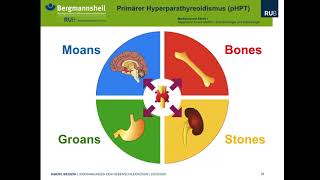
The study introduced a new parathyroid function index (PFindexCaPTHPBR) to help differentiate primary hyperparathyroidism (PHPT), including its normocalcemic form (NPHPT), from vitamin D deficiency-related secondary hyperparathyroidism (VDSHPT), since these conditions are hard to distinguish based on calcium and PTH levels alone.
The research showed that the PFindex was significantly higher in PHPT patients compared to NPHPT, VDSHPT, and healthy controls, with a cutoff value of 34 providing high sensitivity and specificity for diagnosing PHPT and NPHPT.
The PFindex demonstrated excellent diagnostic ability, especially in distinguishing NPHPT from VDSHPT, suggesting it could be a useful, simple screening tool in clinical settings to accurately diagnose different hyperparathyroidism conditions.]
This presentation covers diseases of the parathyroid glands and calcium balance, including radiation impact on the parathyroid, calcium sensing receptors, and management of primary hyperparathyroidism, providing…
 MM
MM SP
SP